.png)
2027 Oscars Short Film Contenders: ‘Corpus Christi’ Director Bea Lema
Stay informed with free updates
Sign up to get our news digest — delivered directly to your inbox twice a week.
Welcome to Cartoon Brew’s series of spotlights focusing on the animated shorts that have qualified for the 2027 Oscars. The films in this series have qualified through one of multiple routes: by winning an Oscar-qualifying award at a film festival, by exhibiting theatrically, or by winning a Student Academy Award.
This year’s first short is Bea Lema’s Corpus Christi (El Cuerpo de Cristo), a 12-minute Spanish film produced by Iván Miñambres at Uniko and Chelo Loureiro at Abano Producións, with Miyu Distribution handling festival distribution. The film qualified for Oscar consideration by winning the Silver Dragon for best animated short at the 2026 Krakow Film Festival.
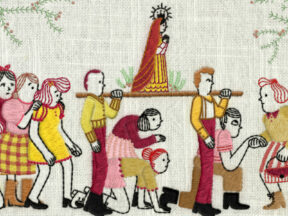
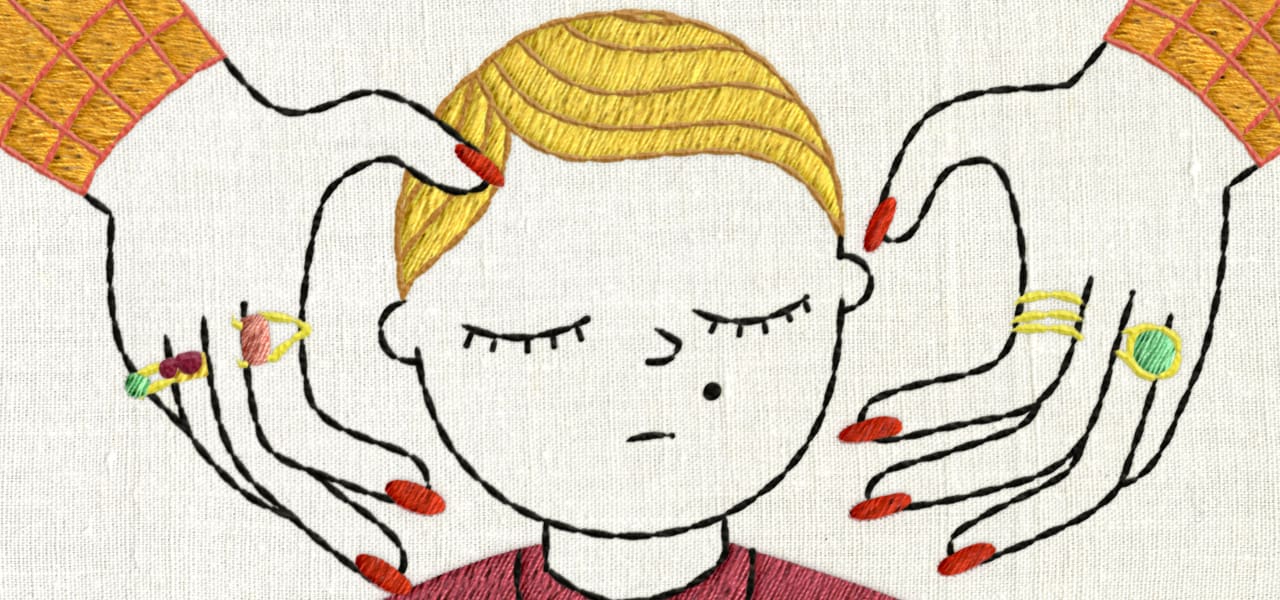
Adapted from Lema’s Spanish National Comic Award-winning graphic novel, Corpus Christi follows Adela, a woman struggling with an undiagnosed mental illness who turns to religion and folk rituals when her family and doctors fail to understand her. The film was a festival standout all year for its unusual hybrid technique: its backgrounds were physically embroidered and scanned, while its digitally animated characters were designed to appear stitched into those textile environments.
Cartoon Brew: What was it about this story or concept that connected with you and compelled you to direct the film?
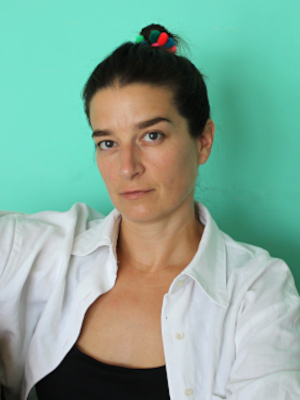
Bea Lema: Corpus Christi is based on my mother’s experience of psychosis. When I was little, she spent a lot of time in bed. Sometimes she would talk about a presence – something like a demon – that touched her and hurt her. So we would visit doctors, but also traditional healers. And I remember constantly finding pills hidden in the drawers. But no one ever explained to me what was going on, and it wasn’t until I reached adulthood that I came across a psychiatric report that labeled it as a delusional disorder. From that moment on, I felt the need to understand what had driven her to madness, and that’s where the project came from. First as a comic and now as a short film.
What did you learn through the experience of making this film, either production-wise, filmmaking-wise, creatively, or about the subject matter?
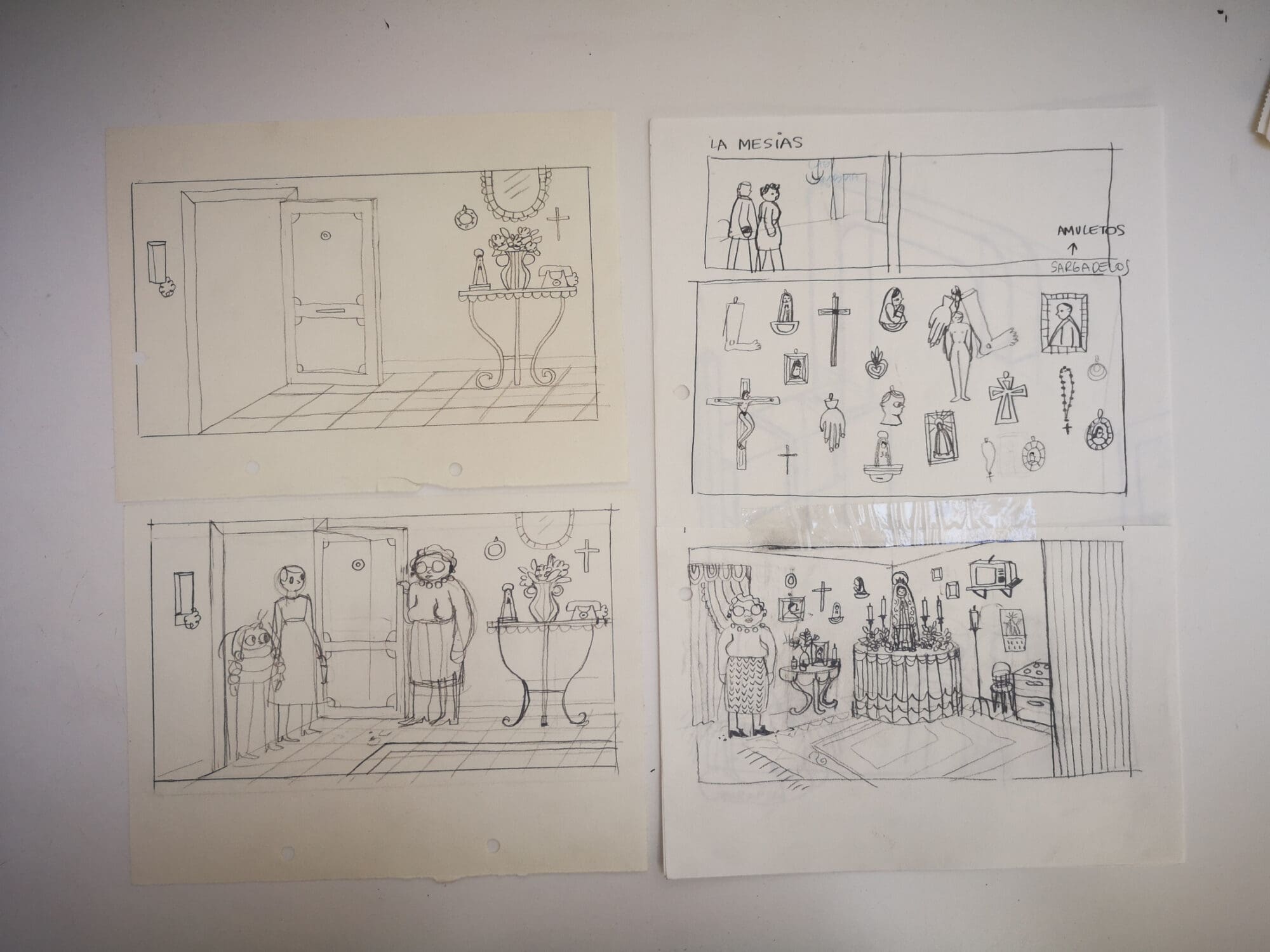
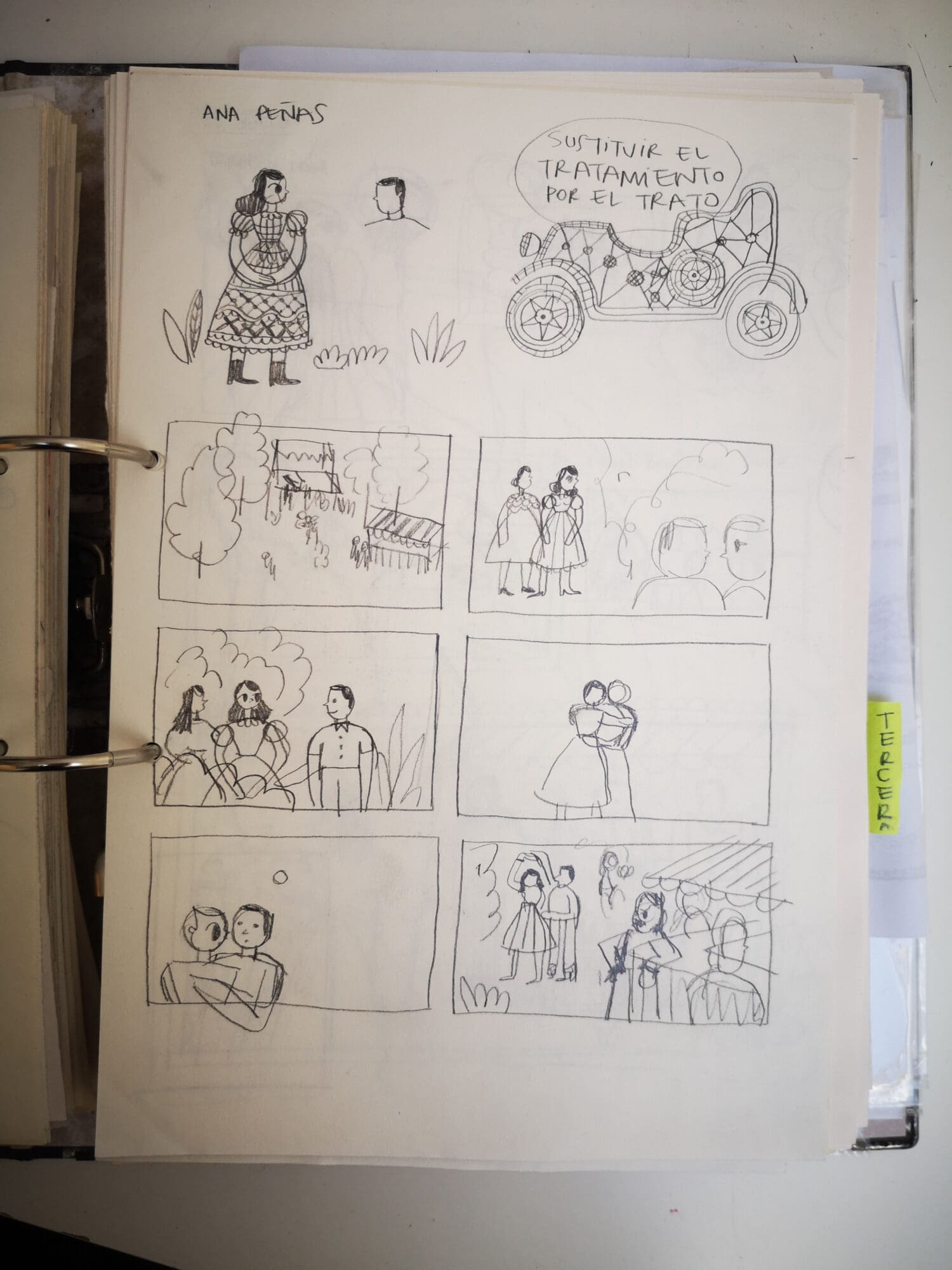
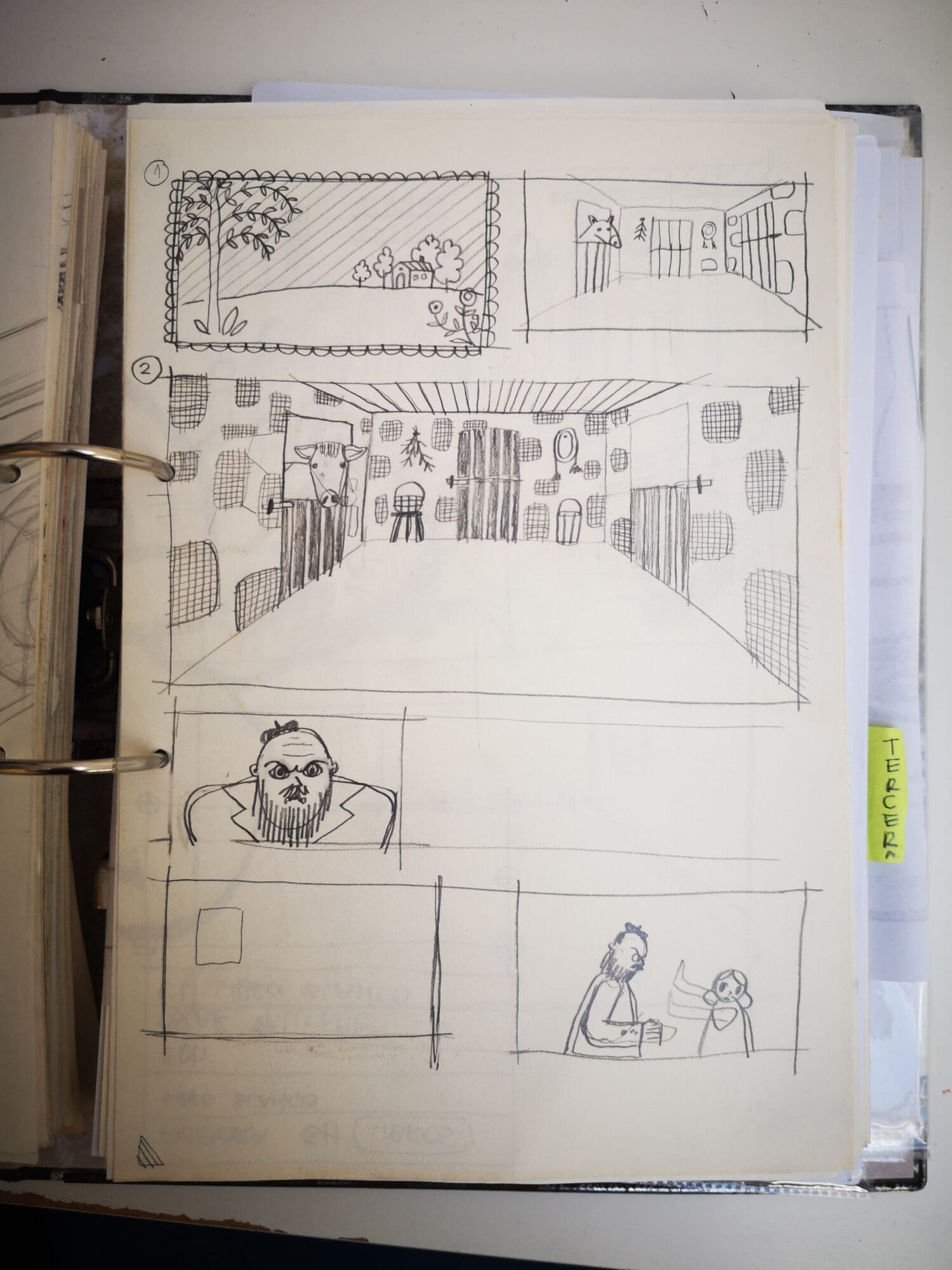
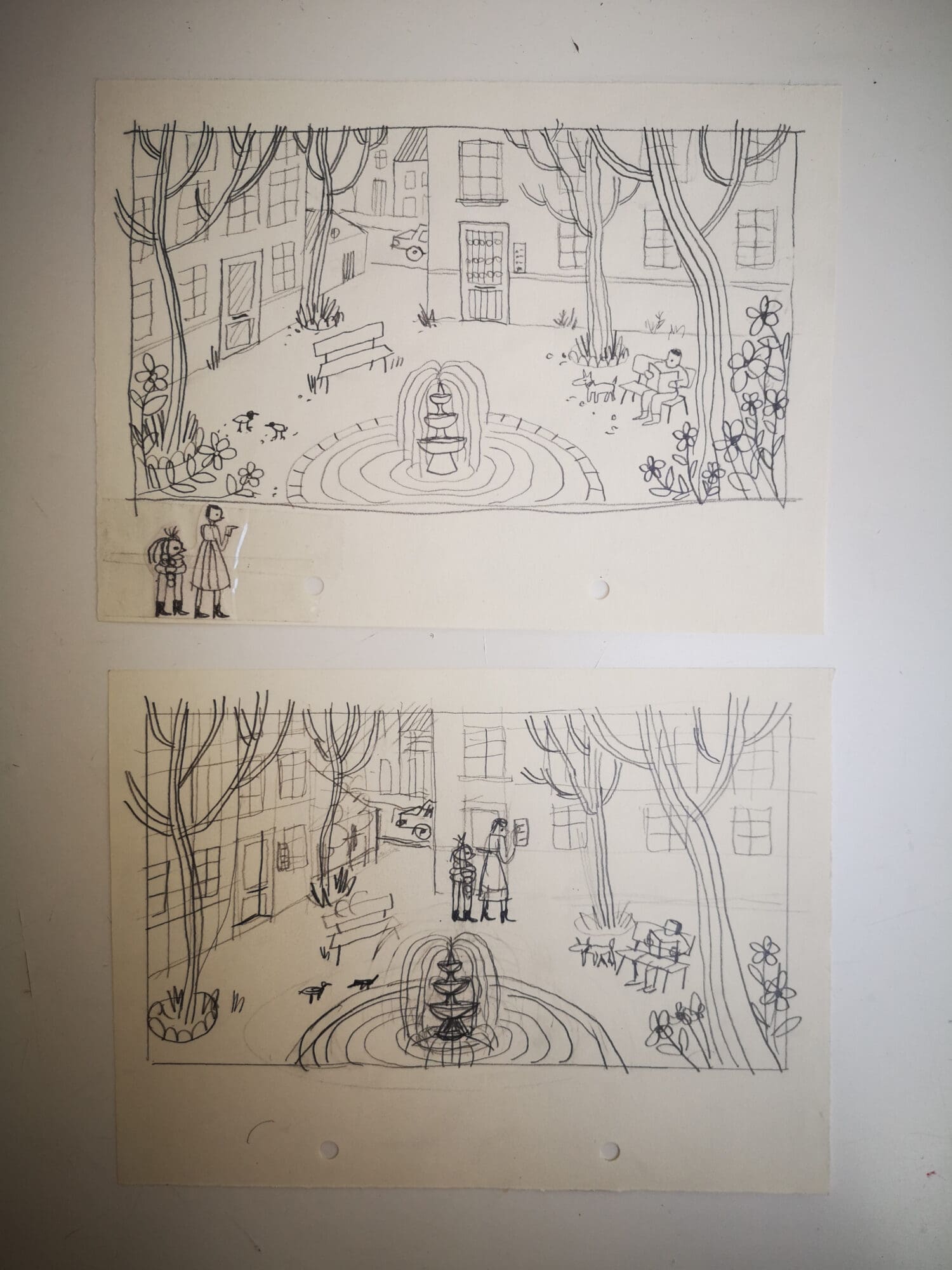
The most fascinating thing has been being able to bring the art of embroidery into animation. Our research led us to expand the possibilities of this craft through a hybrid process. Every background seen in the film physically exists. I embroidered over 170 backgrounds using fabric, thread, and traditional sewing techniques. The digitally animated characters are designed to evoke the logic of sewn textiles and frame-by-frame movement. I’m very pleased with the result because the imperfections and the tactile quality are very much present. I’m interested in the mark left by manual labor.
Can you describe how you developed your visual approach to the film? Why did you settle on this style and technique?
Embroidery is a medium associated with femininity, care, domestic life, and memory, all of which are central themes in the film. I also wanted to explore psychological suffering through empathy, which is why the soft textures of the fabric are a perfect fit.
The film deals with faith and religious devotion alongside an experience that others struggle to understand. How did you approach that relationship between the spiritual and the psychological without reducing one to an explanation for the other?
Part of the short film is set in rural Spain in the 1950s, where religion and popular beliefs carried great weight. The protagonist ends up turning to religion in the face of the lack of understanding she encounters both within her family and from the medical profession. In the traditional healer’s surgery, she finally feels listened to and finds a place of hope and peace.
For me, this has a documentary-like quality. I show it, but I do not judge it. It is an exercise in respect for other people’s beliefs, even if you do not share them. At the same time, I believe that humanity needs ways to express its spirituality, whether through religion or not; it is a need we have had since the dawn of time, and in the West we are not entirely sure how to live it out. In my case, the creative process is a way of keeping it in mind.