.png)


2026 Oscars Short Film Contenders: ‘A Sparrow’s Song’ Director Tobias Eckerlin
Stay informed with free updates
Sign up to get our news digest — delivered directly to your inbox twice a week.
Welcome to Cartoon Brew’s series of spotlights focusing on the animated shorts that have qualified for the 2026 Oscars. The films in this series have qualified through one of multiple routes: by winning an Oscar-qualifying award at a film festival, by exhibiting theatrically, or by winning a Student Academy Award.
Today’s short is A Sparrow’s Song from Animationinstitut of the Filmakademie Baden-Württemberg student Tobias Eckerlin. It qualified for the upcoming Oscars by winning a Student Academy Award earlier this year.
In the short, based on a true story, an elderly widow living in wartime London struggles to navigate her grief as she serves as an air-raid warden in the dim, crowded shelters, surrounded by frightened children and the distant rumble of bombs. One quiet morning, she discovers a dying sparrow and brings it into her small, dimly lit flat, hoping to save its life. As the bird slowly heals, it begins responding to the soft, trembling notes of her piano, forming a delicate bond that brings warmth back into her world. She carries the sparrow with her during bombing raids, where its clear, bright song intertwines with her music to soothe the children and lift the spirits of those huddled underground.
Cartoon Brew: What was it about this story or concept that connected with you and compelled you to direct the film?

Tobias Eckerlin: When I first read the story, I was deeply moved on several levels. I was so impressed by Clare Kipps and how, in the midst of World War II, she takes care of something as small and seemingly insignificant as a sparrow, which in turn brought so much good to her and those around her. Like many others, I often feel the world is overwhelming and in turmoil nowadays, and I wonder what place the individual has in it. This story felt like a kind of guide for these times. About hope, resilience, and connection. In her diary, I also felt melancholy, loneliness, and a longing to be needed. Feelings I can also relate to. So, on many levels, I connected with her story and felt it was important to be brought to life.
What did you learn through the experience of making this film, either production-wise, filmmaking-wise, creatively, or about the subject matter?
In my role as director, I was confronted with quite a few unpredictable challenges. Over the course of the three-year production, I grew in many ways: artistically, professionally, and personally. From creating a project bible and pitching the story hundreds of times to build a team, to managing people, expectations, and navigating the diplomatic aspects of production, it was an enormous learning experience. I learned how to give and receive feedback, how to communicate my vision clearly, and how crucial those first feelings and instincts for a project are. Overall, it was an invaluable experience.
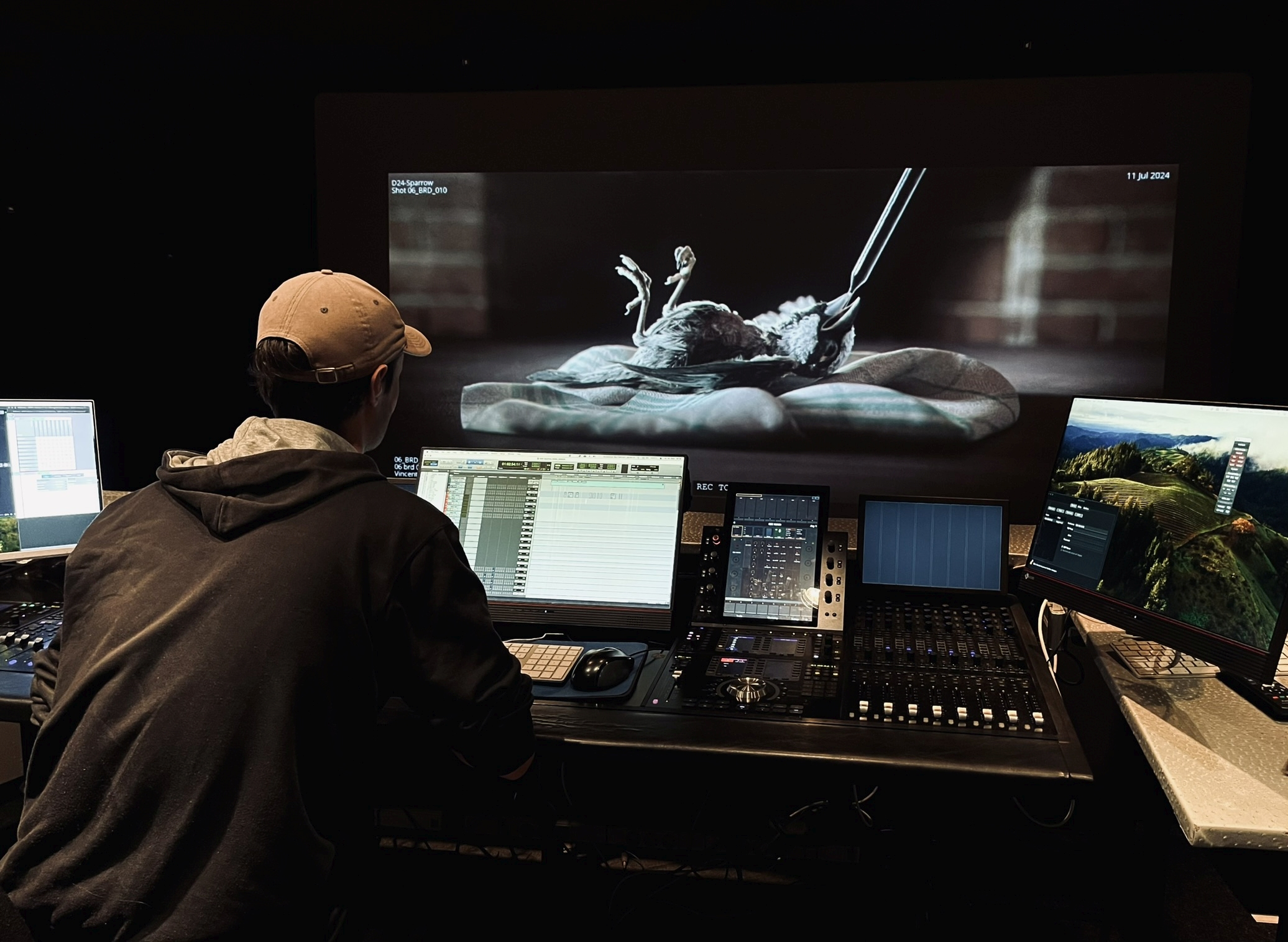
Can you describe how you developed your visual approach to the film? Why did you settle on this style/technique?
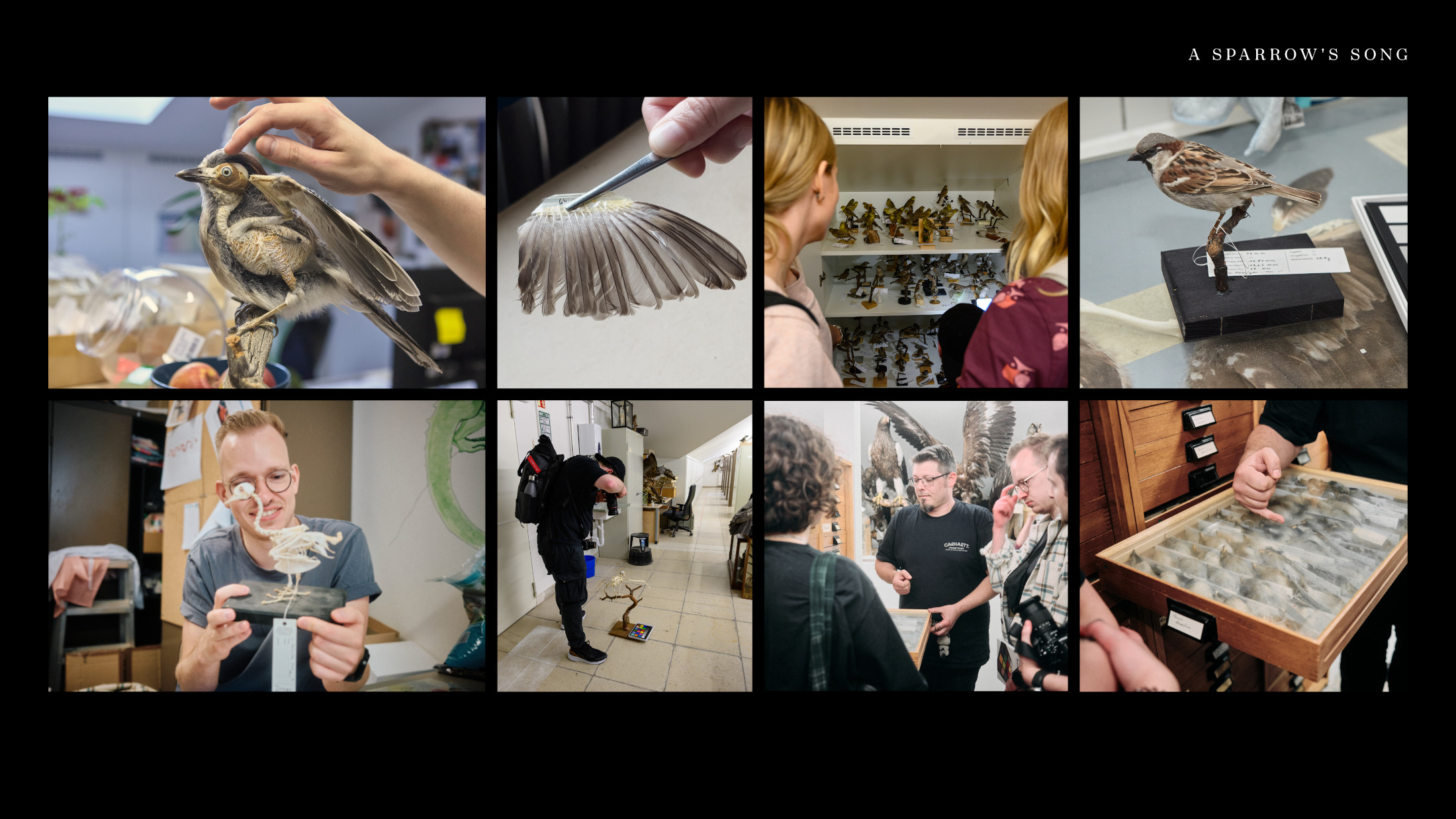
The foundation for our visual approach came largely from my personal background and style. The way we work with light & shadow in this film, the composition, camera blocking, and the overall slow narrative style are things I’ve developed over the years. We had a fantastic team whose expertise also shaped aspects of the film, for example, in the character animation. Additional influence came from the many exchanges we had with our mentors. When it comes to specific production design choices, we drew a lot of inspiration from photography of that era and from art history, particularly chiaroscuro painting. Overall, our approach reflects various aspects, and I think it suits the story and the characters very well.
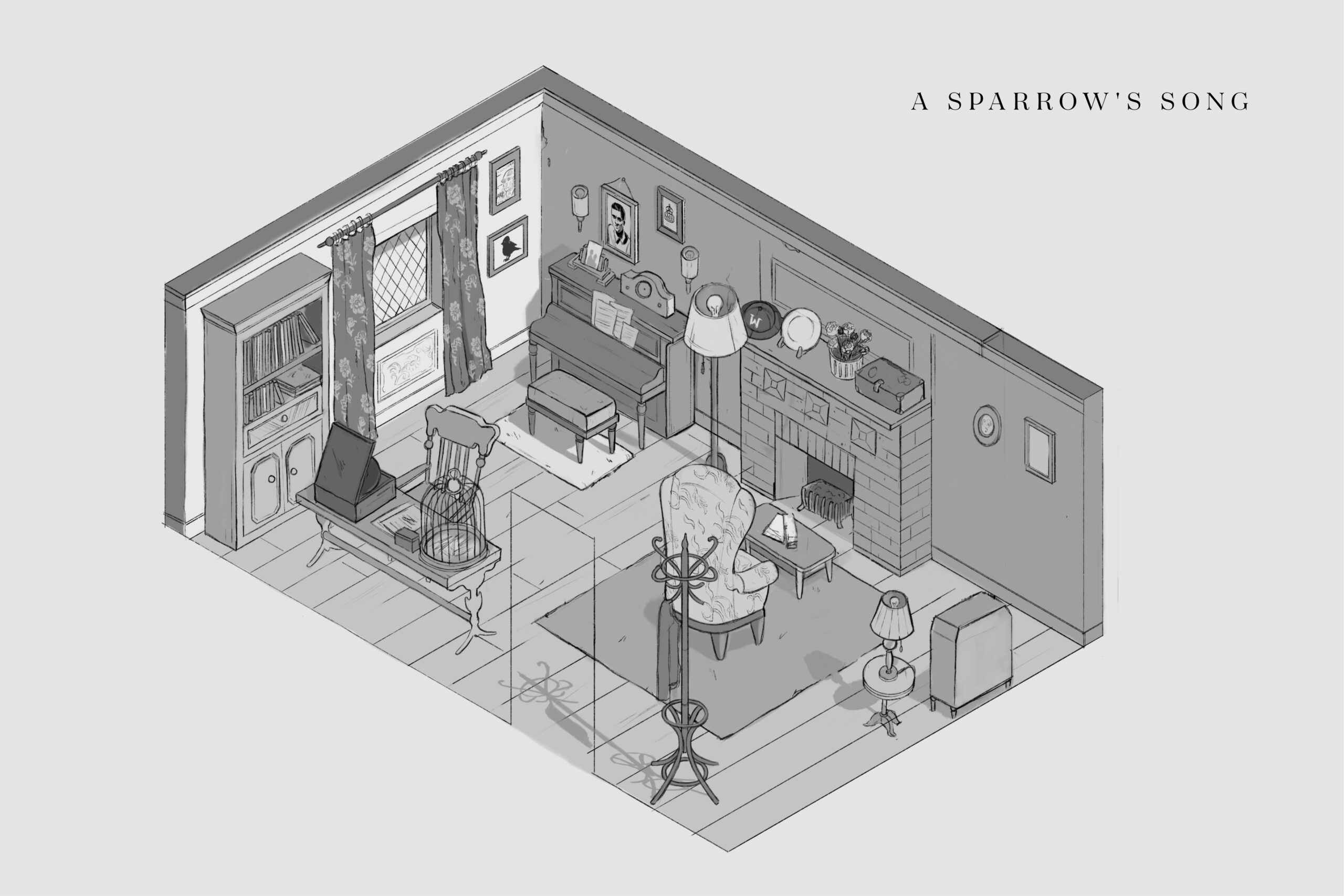
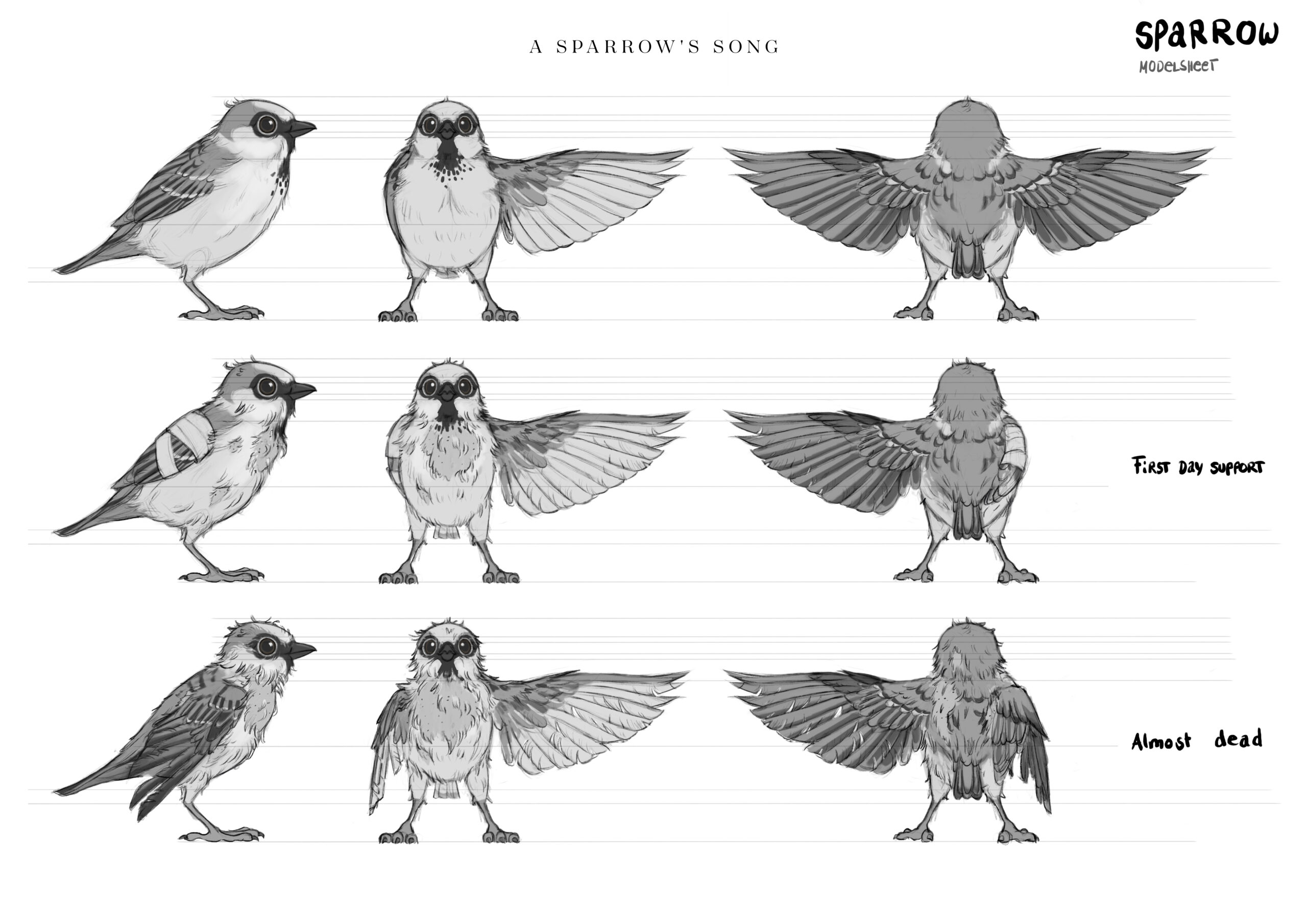
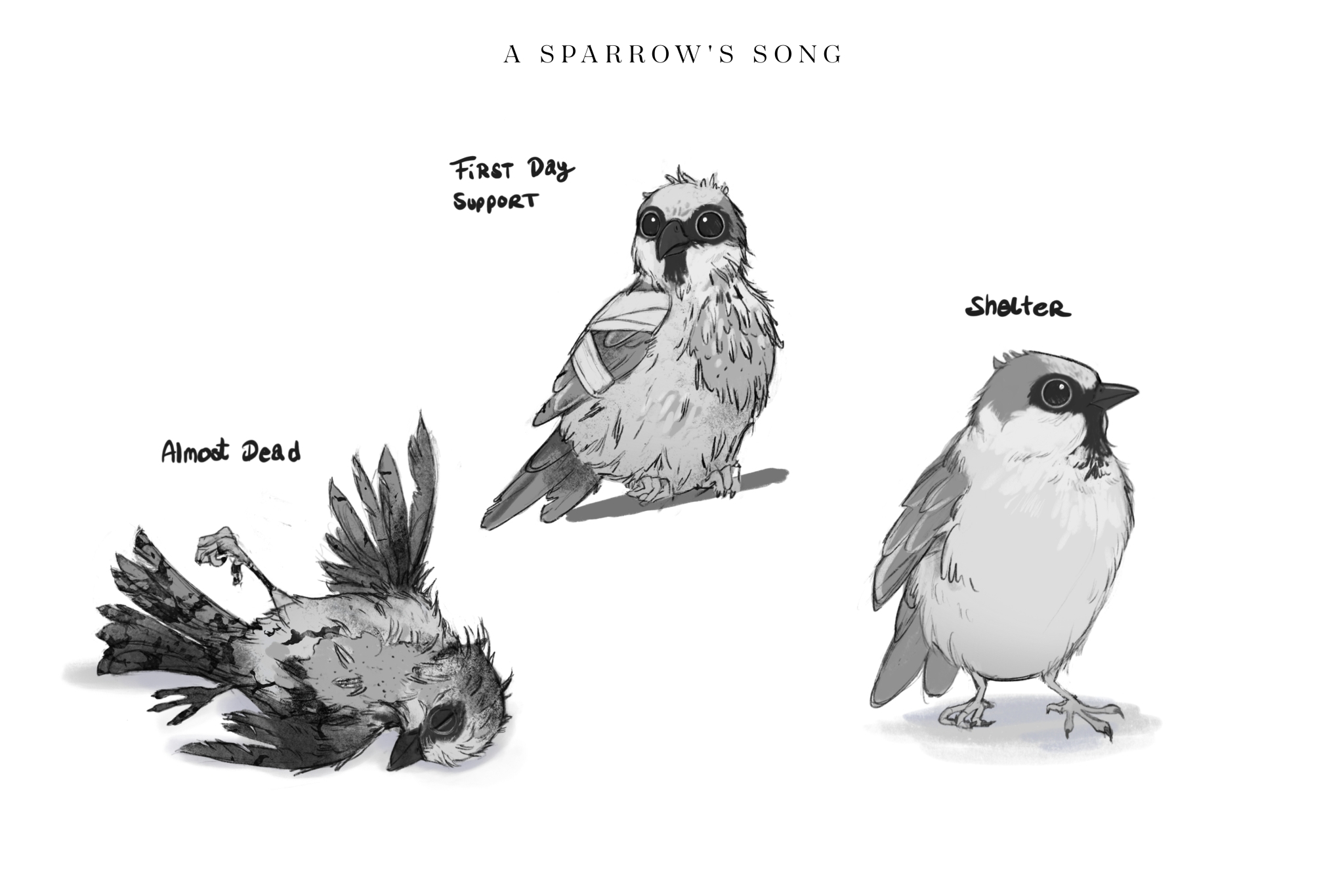
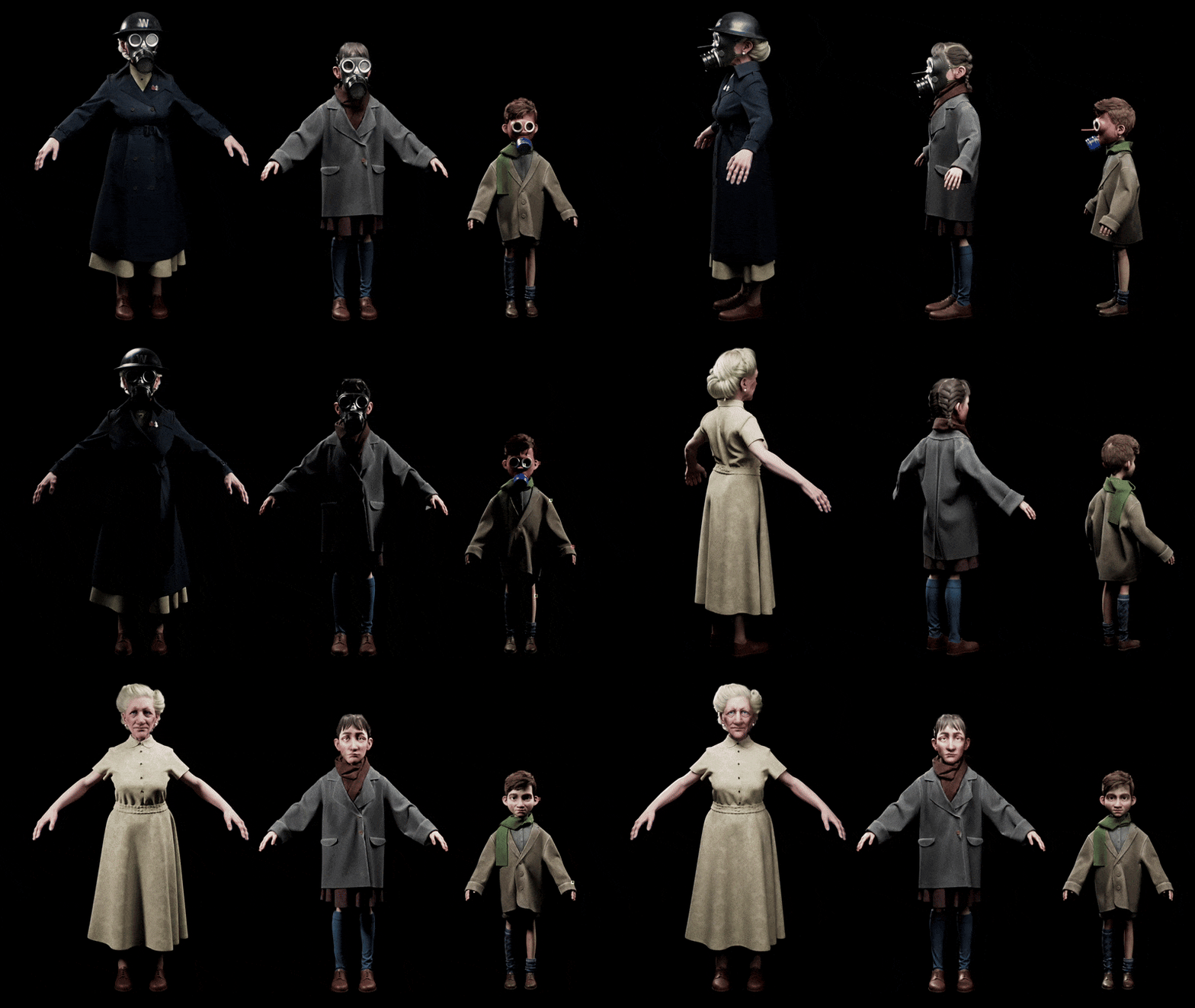
In adapting a real historical narrative like this, how much liberty did you take with the story, and how closely did you stick to the book?
We tried to capture the historical setting as accurately as possible, from clothing and props to the locations and wartime posters in the subway shelter. The story itself and the character of Clare Kipps are clearly my interpretation. Her diary mainly focuses on the sparrow, its behavior, and its development during captivity. There is little detail about her life. So I allowed myself some freedom to adapt certain parts to better serve the narrative. For example, in the film, she sings with the sparrow in the shelter; in reality, they were doing card tricks. Some other moments are similarly reimagined or made up.


