.png)
2026 Oscars Short Film Contenders: ‘Butterfly’ Director Florence Miailhe
Stay informed with free updates
Sign up to get our news digest — delivered directly to your inbox twice a week.
Welcome to Cartoon Brew’s series of spotlights focusing on the animated shorts that have qualified for the 2026 Oscars. The films in this series have qualified through one of multiple routes: by winning an Oscar-qualifying award at a film festival, by exhibiting theatrically, or by winning a Student Academy Award.
Today’s short is Butterfly (Papillon) from director Florence Miailhe, produced by Sacrebleu Productions and XBO Films. Among its numerous festival stops, the short screened at Annecy, Berlin, and Clermont-Ferrand, earning its Oscar qualification with a Grand Prix win at Stuttgart.
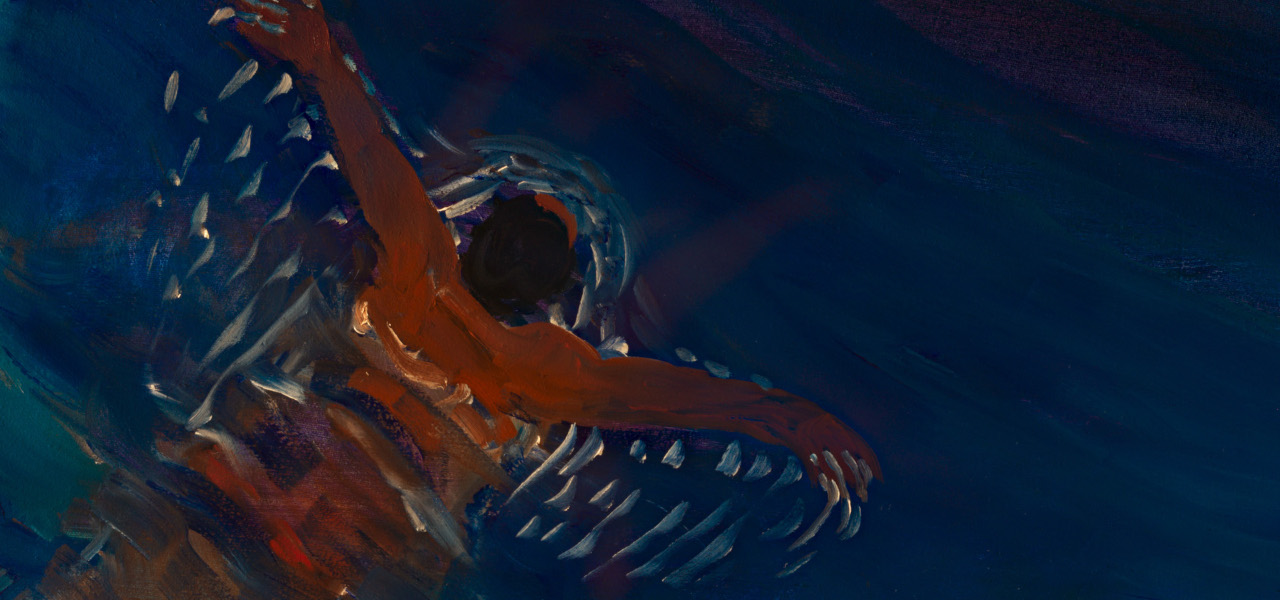
Butterfly adapts the remarkable real-life story of Alfred Nakache, an early 20th-century Jewish Olympic swimmer who faced tremendous racism at the 1936 Berlin games, was later imprisoned at Auschwitz, where he was the only survivor from his family, and eventually returned to compete in the first post-war Olympics in London in 1948. The short uses Miailhe’s signature technique of creating images directly under the camera’s lens with paint, pastel, and sand, to recount memories from his childhood to adulthood, each one tied to water, sometimes joyful, sometimes triumphant, sometimes painfully traumatic. The result feels alive with texture and movement. Colors flow and dissolve into one another like memories, giving the short a hand-crafted aesthetic that mirrors the emotional ebb and flow of Nakache’s real-life journey.
Cartoon Brew: What was it about this story or concept that connected with you and compelled you to direct the film?
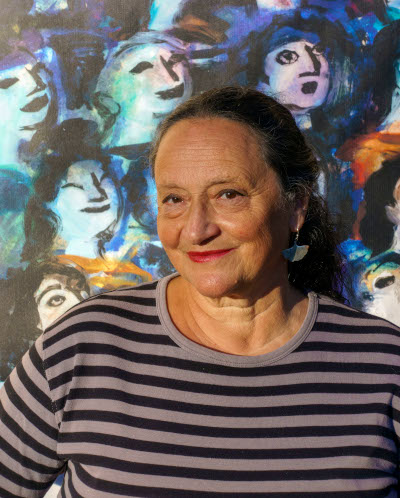
Florence Miailhe: Discouraged by the difficulties of financing my feature film, The Crossing, I thought back to a childhood memory: my encounter with Alfred Nakache, whom my father admired so much. They met during World War II through the French Resistance, and I took swimming lessons with his brother, which allowed me to meet Alfred Nakache. As I learned more about him, I discovered his moving story, one of courage, resilience, and memory. The omnipresence and importance of swimming in his life made it clear to me that I wanted to tell this story. I also really liked the idea of working with water, which, in animation, offers something very subtle, very poetic, almost abstract.
What did you learn through the experience of making this film, either production-wise, filmmaking-wise, creatively, or about the subject matter?
I learned how creative work can become a real historical investigation. At first, very little information existed about Alfred Nakache, even in Toulouse, the city where he lived during the war and where he was denounced and arrested. So I had to search, cross-check, and verify every detail, and then choose how I would interpret his life, because I didn’t want to make a documentary or realistic film. As I dived into Alfred Nakache’s story, I was deeply moved by his resilience and dignity in the face of the injustices he suffered. This experience reminded me of the need to share these stories, especially today. The issue of revoking citizenship is back in the news, and it’s essential to remember how violent and deeply unfair it can be, and what dramatic consequences it can have on a person’s life*.
*Algerian Jews had obtained French citizenship thanks to the Crémieux Decree (in 1870). But during the Second World War, this nationality was taken away from them, which explains why Alfred Nakache was excluded from French competitions: he was no longer considered a French citizen.
Can you describe how you developed your visual approach to the film? Why did you settle on this style/technique?
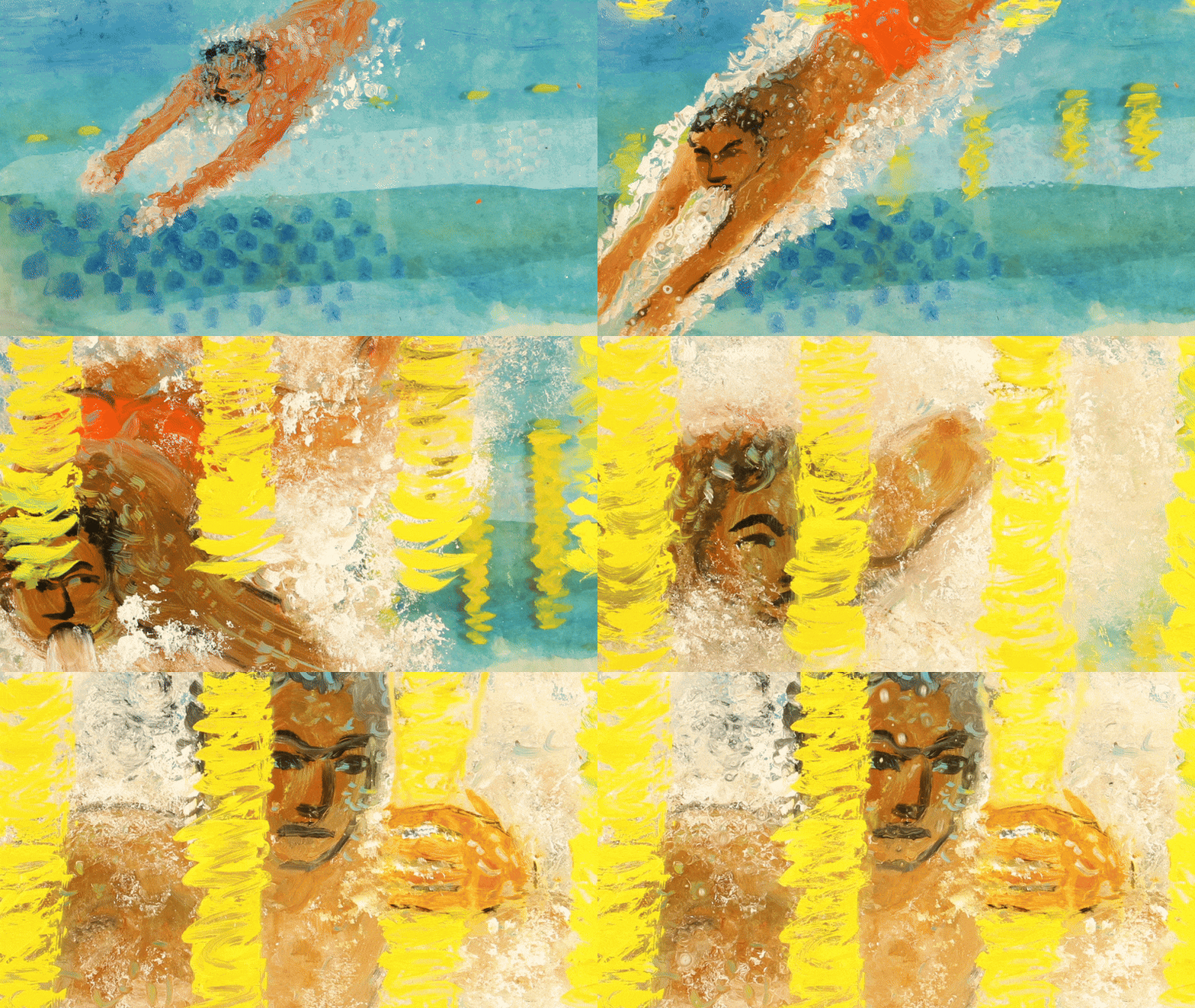
The making of the film came to me quickly: I could already visualize the story, Nakache’s various dives leading to his memories before his death. The animation took a hundred days and a year of work in total. Animated painting was perfect for transitions, age changes, and symbolic passages related to water. What mattered was the gesture, the movement of bodies, like that of water. The drawings are never ultra-precise as they evoke memories, traumas, sensations… Color also played a fundamental role in creating a sensory universe; we associated each moment of his life with a particular color palette.
What are the advantages and challenges that come with making a sport-heavy short in oil paintings? Were there any tricks you used to make the action seem more dynamic?
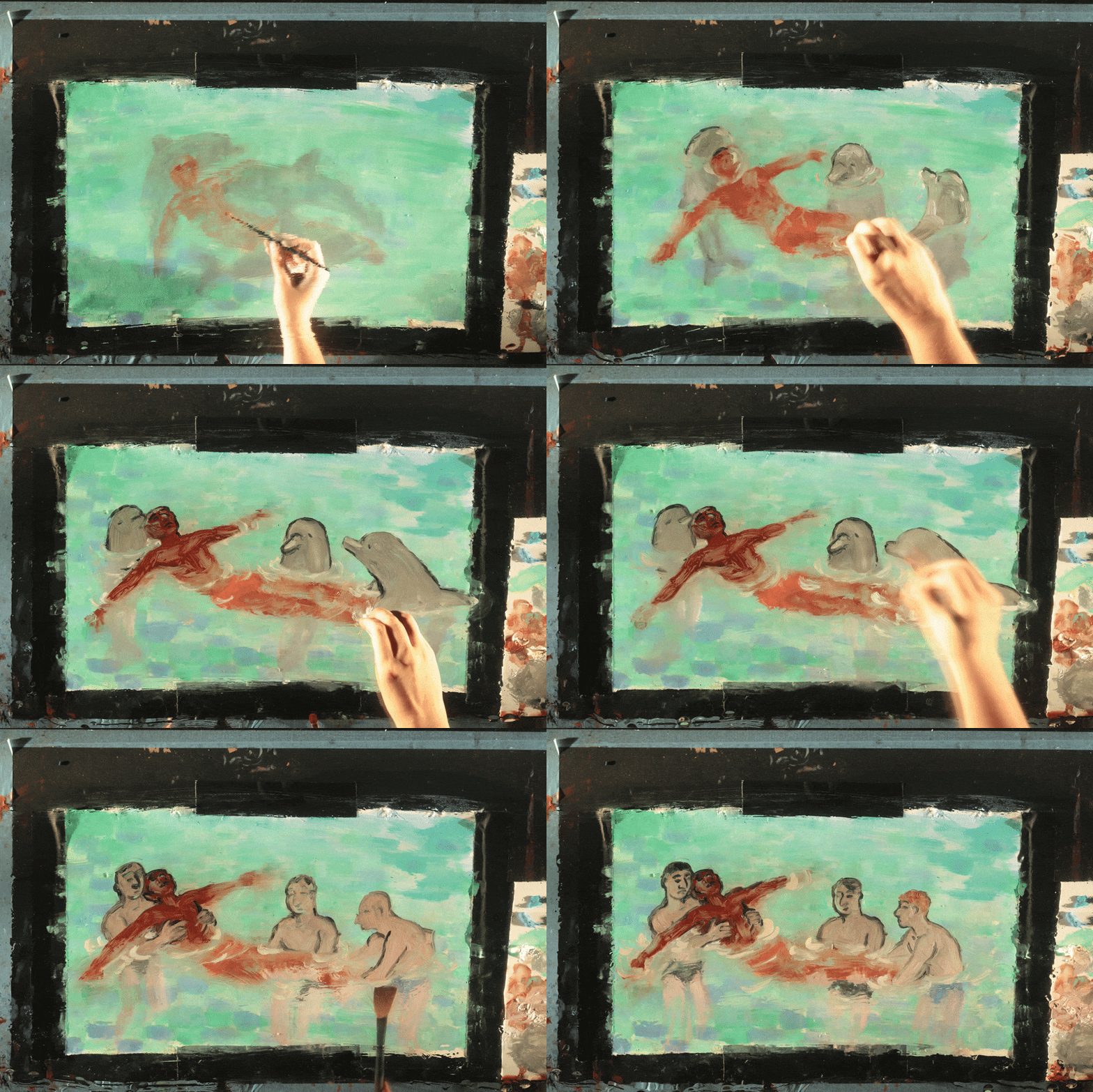
Technically, I worked with several layers: a varnished canvas for the background, especially the underwater ones, on which I could erase and redraw. On top of that, a glass pane on which I could apply layers of oil paint to create blurring, distortions, and aquatic movements. The characters were animated either on the background or on the glass pane. Underwater, I made them more abstract; on the surface, more realistic, in order to distinguish the different memories. The graphic style of the film is based mainly on oil painting, done directly on canvas. It allows a very rich texture through the grain of the canvas, and the brushstrokes add visual density to the film. The speed of the strokes also helped to make the competition scenes more dynamic.