.png)


2026 Oscars Short Film Contenders: ‘Murmuration’ Directors Janneke Swinkels And Tim Frijsinger
Stay informed with free updates
Sign up to get our news digest — delivered directly to your inbox twice a week.
Welcome to Cartoon Brew’s series of spotlights focusing on the animated shorts that have qualified for the 2026 Oscars. The films in this series have qualified through one of multiple routes: by winning an Oscar-qualifying award at a film festival, by exhibiting theatrically, or by winning a Student Academy Award.
Today’s film is Murmuration, directed by Janneke Swinkels and Tim Frijsinger, a Dutch-Belgian co-production from Spotted Bird, Beast Animation, and Murmur Animation. The film, an Annecy best first film winner, earned its Oscar qualification by taking the best animated short prize at Melbourne.
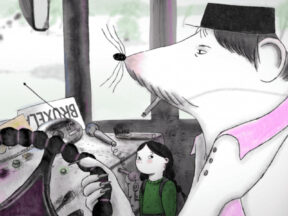
The almost documentary-like stop-motion short uses highly detailed sets and puppets to tell the tale of Piet, an elderly man in a nursing home. As the days pass, he finds himself unable to perform even basic activities as he begins to transform into a bird. Although those around him don’t seem put off by the change, it’s clear that Piet is thinking about flying the coop. Whether or not the changes are real, or only a symptom of mental decline caused by age, is a question left to the viewer to answer.
Cartoon Brew: What was it about this story or concept that connected with you and compelled you to direct the film?
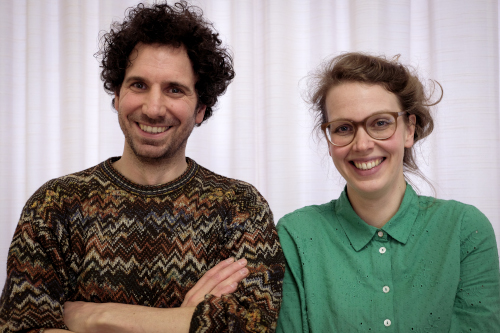
Janneke Swinkels and Tim Frijsinger: When Janneke was making her graduation film (a short documentary about her grandfather), she spent a lot of time with him in the nursing home. The quiet pace of life there was really inspiring. We saw people who did very well in the group and seemed to love the activities and participation, while there were also some of them drifting slowly away from it, mostly because of their mental or physical decline. It felt unavoidable and as a natural part of life, leaving one group because you don’t fit in anymore, and then joining the other group and finding your place in it, with the nursing home as the final stage. Tim already had some ideas of old people with growing noses and some fluffy bits of hair, which have some similarities with birds. When we saw starlings form big murmurations above our house a few years later, we started to draw some parallels and thought we could make a film out of this. An old man changes into a bird so he can join a new group.
What did you learn through the experience of making this film, either production-wise, filmmaking-wise, creatively, or about the subject matter?
We had to learn almost everything: we never worked with a team and never did stop motion before, but we were very lucky to assemble such great and experienced people around us for this project. We experienced that people who work in stop motion (and animation in general) are almost all super kind and willing to give us lots of advice. Eventually, everything took longer than we expected, so we had to compromise a lot on the go. We had to give up some scenes of the animatic, but for all we know, the film might have become better because of that. There’s a lot we would’ve done differently if we had known what we were up for, especially in pre-production. We started shooting while we only had one of our puppets and the bathroom set ready, so it was a race against the clock to make everything ready on time for the animators to work with.

Can you describe how you developed your visual approach to the film? Why did you settle on this style/technique?
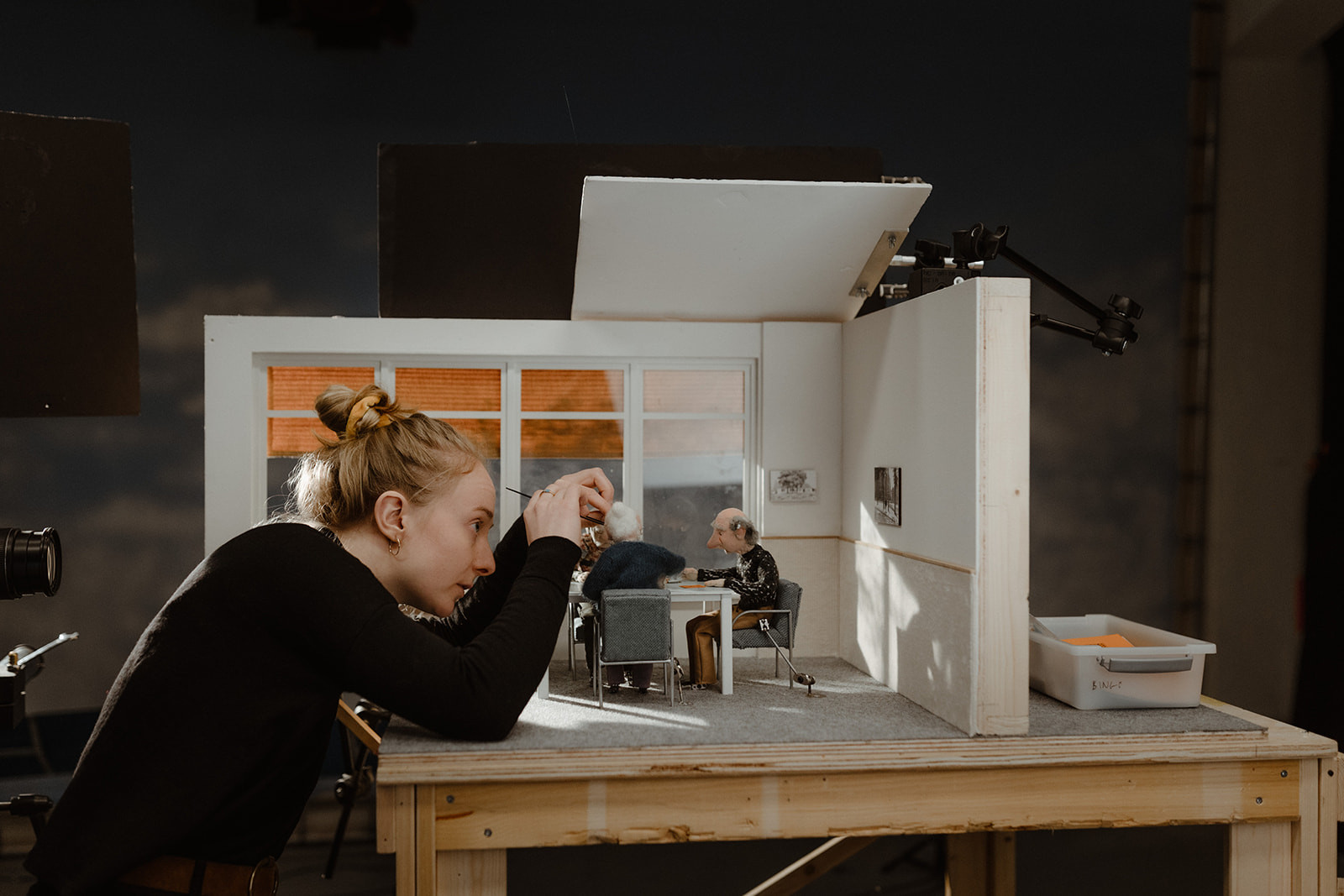
We love stop-motion films, especially the ones where the puppets and sets have a distinguished handmade quality. So that is where we started our research. We saw a lot of films with characters out of felt and wool, and we loved that, but we really wanted it to be something of our own and wanted it to be more fitting to the old age and timeworn skin of our characters. Together with textile artist Elke Lutgerink, we developed our first test puppet with layers of cotton pantyhose for skin and fake fur for hair, which worked surprisingly well for us. Also, our animators Mirjam Plettinx, Rosanne Janssens, and Geertrui De Vijlder did a fantastic job in bringing our puppets to life with very subtle, life-like animation. That really adds a lot to how believable the characters are. For us, this story could only work in stop-motion, as it creates a thin line between abstraction and realism that we need for it to be relatable.
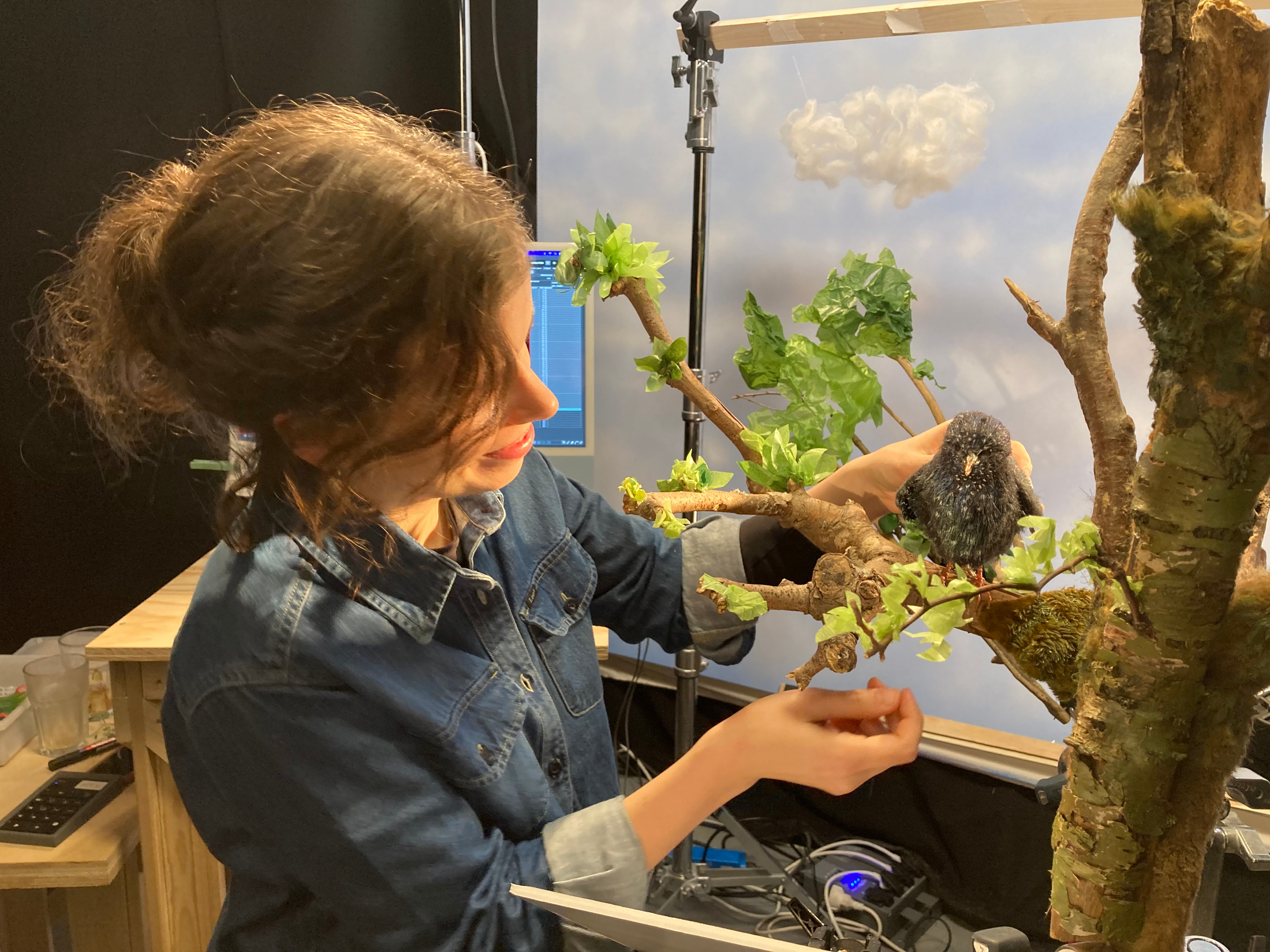

How did you find the right tone between the documentary-like portrayal of nursing home life and the symbolism of Piet’s metamorphosis? And, if you care to share, how did you interpret his change? Was the magic real to you, or was it a sign of age and decline?
The documentary-like portrayal of the nursing home was important to us. That is also why we made the choice to work with very skilled animators to animate almost life-like. The making of the sets, puppets, and props, and the animation are key, we think. For us, the story of a man changing into a bird is more acceptable in animation than in live action. And because of the acceptance that not everything is as it seems, you can accept as well that the metamorphosis really happens. I don’t think we should explain the change; the ambiguity is intentional and makes the film more profound in our opinion. We’ve heard a lot of different interpretations from different viewers, and it is really interesting that we learn more about the viewers’ experiences and views on the world through their interpretations.
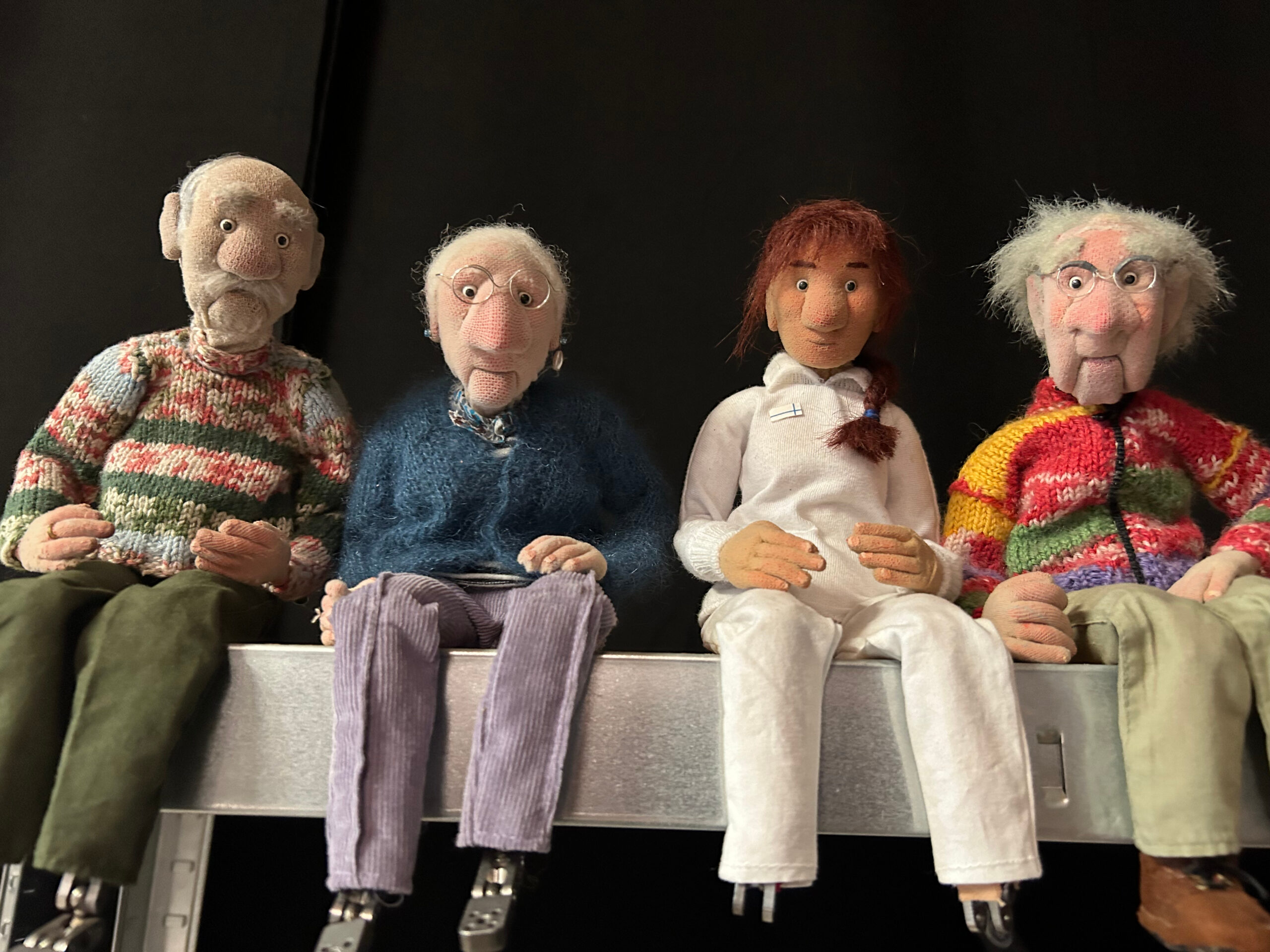
BTS photographs courtesty of Renske Zwaan Photography