.png)
2026 Oscars Short Film Contenders: ‘My Brother, My Brother’ Director Abdelrahman Dnewar
Stay informed with free updates
Sign up to get our news digest — delivered directly to your inbox twice a week.
Welcome to Cartoon Brew’s series of spotlights focusing on the animated shorts that have qualified for the 2026 Oscars. The films in this series have qualified through one of multiple routes: by winning an Oscar-qualifying award at a film festival, by exhibiting theatrically, or by winning a Student Academy Award.
Today’s short is My Brother, My Brother from Abdelrahman Dnewar and his twin brother, Saad Dnewar, who sadly passed away during the film’s production. The short screened in Annecy, won a special jury mention at Clermont-Ferrand, and qualified for the Oscars by winning best animated short at the San Francisco International Film Festival.
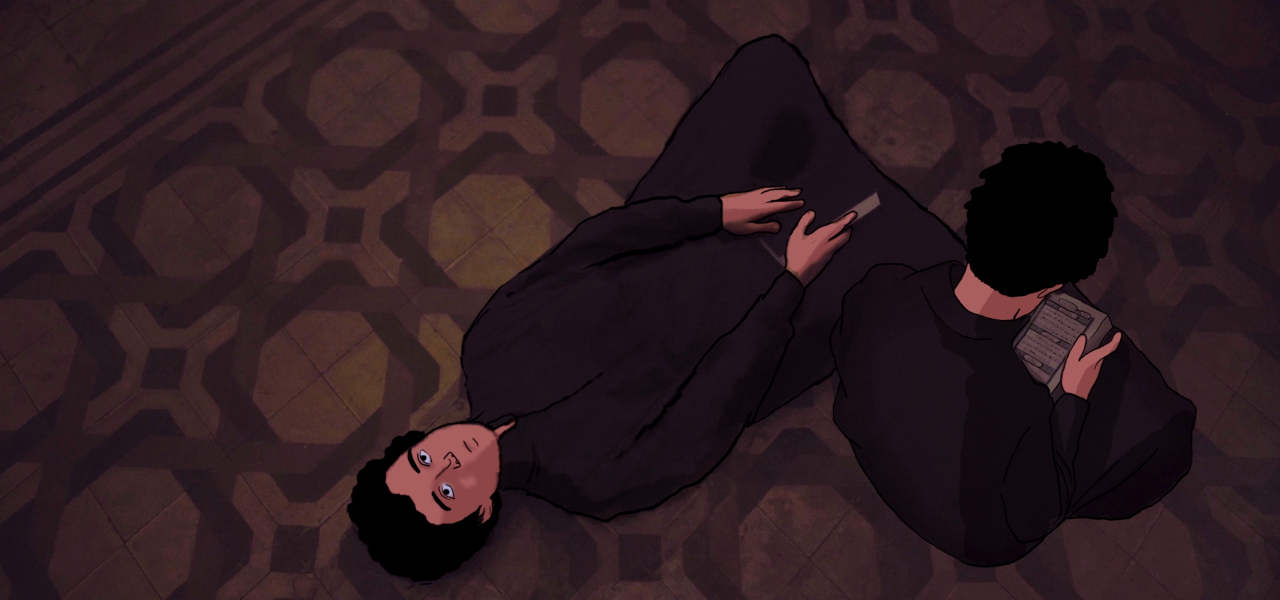
My Brother, My Brother is a semi-autobiographical short that follows identical twins Omar and Wesam as they recount their shared past, from their fused beginnings in the womb to the tragic moment that separates them, through a split narrative that highlights the subjective nature of memory. Their intertwined monologues construct a fluid, dreamlike world in which reality, fiction, past, and present bleed into one another, mirroring the twins’ confusion about identity and existence. Blending 2D animation, live-action backgrounds, ultrasounds, and family photographs, the film’s hybrid aesthetic becomes an extension of the narrative itself, revealing how memories change with each retelling and inviting the audience to experience memory as the twins do.
Cartoon Brew: What was it about this story or concept that connected with you and compelled you to direct the film?
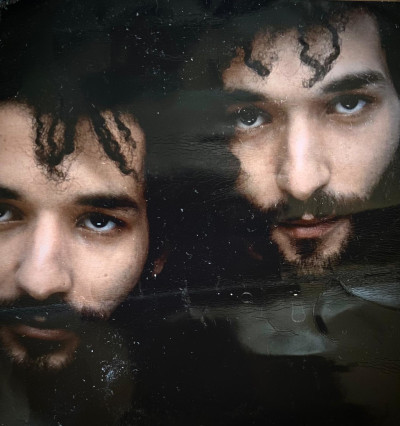
Abdelrahman Dnewar: What compelled my late twin, Saad, and me to make this film was the absence of an archive of our childhood. We wanted to recreate those memories and explore how they overlap or drift apart. Twins are shaped by each other; we formed our understanding of the world together. When Saad died, I didn’t know how to grieve him because I couldn’t imagine how he’d grieve me. We often played each other–he’d take my exams, and I would act as him to escape a situation. I wanted to keep playing, even after his death, so finishing the film became a way to continue that connection and explore how memory and loss intertwine.
What did you learn through the experience of making this film, either production-wise, filmmaking-wise, creatively, or about the subject matter?
When I began making this film, Saad was the animator. After he passed, no one could match his style, so I learned animation from scratch for a year. I studied his notes and voice to also narrate his part, discovering the small differences that made him unique. My hand was not his, but in those flaws I found beauty. The process became a conversation with him. I reworked and finished sequences at home, as we once did as kids. I learned that I could imitate him but never be him. This film became my failure to fully bring back his voice or artistic style — and in that failure, his memory continues to live through the differences that remain.
Can you describe how you developed your visual approach to the film? Why did you settle on this style/technique?
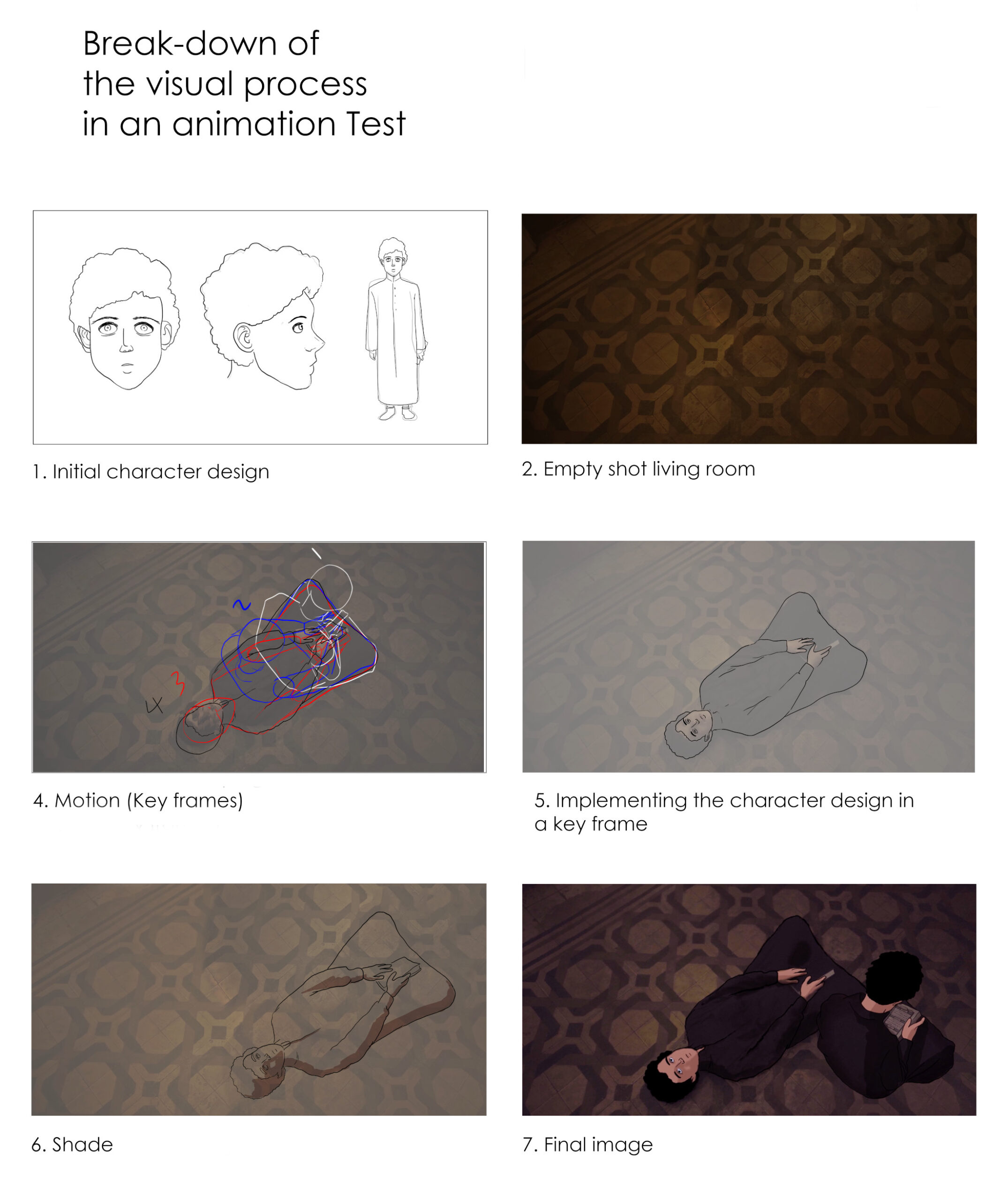
The hybrid of 2D animation and live action emerged from the absence of an archive. Live action feels real, while animation mirrors how memory intrudes and transforms reality. As children, drawing and imagination were our only tools of expression, like in the scene where the twins reconcile through a drawing on Gypsum. That child’s logic guided both narrative and visuals. We worked meticulously on blending 2D and live action so animated figures cast real shadows. The film also uses MRI and ultrasound imagery, growing up in a religious yet medical household. That contrast between science and belief shaped our worldview, turning medical images into fascinating portals revealing hidden, internal worlds of the self.
My Brother, My Brother interweaves autobiographical memory and grief in a deeply personal way, especially as it became both a collaboration with and a tribute to your late twin, Saad. The film’s form — fragmented, looping, and self-reflective — mirrors the inconsistency of memory with great impact. How did the process of constructing this film help you navigate the tension between remembering and reconstructing your own memories?
We wanted the audience to experience memory’s shifts by revisiting the same locations, sometimes twice. In the only family photograph, my brother and I stand with our backs to the camera, staring into an animal cage. For years, we believed we were looking at monkeys. When I returned to the zoo, I discovered it was the hippo cage. That revelation fascinated me, how memory and time had turned hippos into monkeys. After Saad’s passing, I entered the film differently, moving between remembering and reconstructing. Each act of remembering reshapes that shared past. Our memories merged, and through reinterpreting in animation and audience reception, they continue to evolve.


