.png)
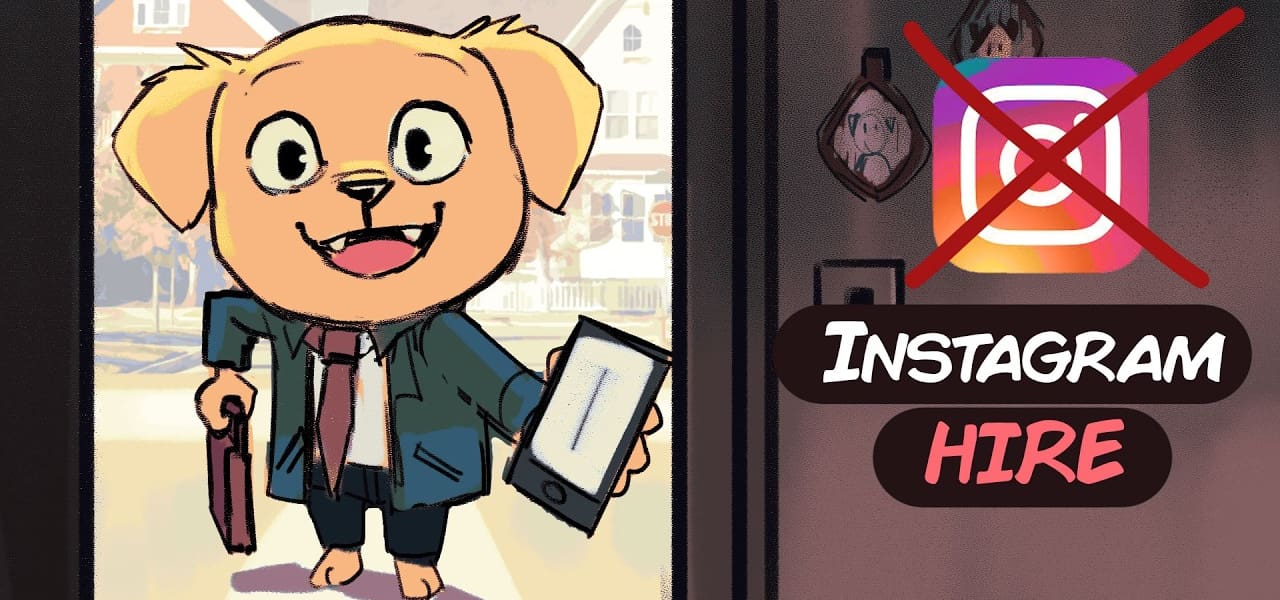
Why ‘Instagram Hires’ Sometimes Struggle In Studio Animation
Stay informed with free updates
Sign up to get our news digest — delivered directly to your inbox twice a week.
Social media has been an important recruiting ground for animation studios and filmmakers for years now, letting artists put their work directly in front of directors, producers, and recruiters. But an impressive Instagram portfolio doesn’t necessarily demonstrate that someone can immediately step into a production pipeline.
In a candid new video essay, animator, story artist, and animation YouTuber Toniko Pantoja examines the phenomenon of the “Instagram hire,” also known as a “social-media hire” or “clout hire”: an artist recruited after gaining attention for personal work posted online.
Pantoja argues that studios sometimes hire artists whose personal work they admire without determining whether their experience matches the available role. Someone who creates appealing character drawings or short films may never have designed for a series, boarded to a director’s specifications, responded to competing notes, or prepared material for a larger pipeline.
In the video, Pantoja says he has experienced that disconnect himself. “I do feel like people sometimes overestimate me. I guess that’s why I relate to the social media hire.”
He recalls being praised for his films and online work, then struggling to match a production’s specific tone or expectations. On some projects, he was given little time to adjust before being judged unsuitable. On one, he got the brutally critical note: “Oh, I thought you were good.”
The productions on which he performed best introduced him gradually through revisions, cleanup work, or lighter sequences. Those assignments allowed him to study the project’s visual language before taking on more demanding scenes.
Other productions handed him ambitious assignments immediately and expected him to adapt within weeks or less. “There’s no middle ground,” he says.
For Pantoja, the problem extends beyond artists recruited through social media. It reflects the industry’s declining willingness to train workers and the disappearance of positions that historically provided that training.
“Entry-level positions are still very important,” he says, citing jobs such as storyboard revisionist and inbetweener. These roles let artists learn a production’s methods while working under more experienced colleagues.
Pantoja doesn’t say indie backgrounds should excuse unprofessional behavior. Artists, regardless of their training or experience, must communicate, meet deadlines, accept feedback, address notes, and keep their egos in check.
But studios must also assess artists realistically, provide clear direction, and allow them time to understand a project. “Decisions are made way too fast,” he argues.
An artist can be talented, dependable, and professionally experienced without fitting every production. Hiring someone is not the same as preparing them to succeed.