brewmasters
JERRY BECK
bio & contact
view posts by jerry
AMID AMIDI
bio & contact
view posts by amid
TAG FOR
“BrewTV”
by brewmasters
June 5, 2009 1:05 am


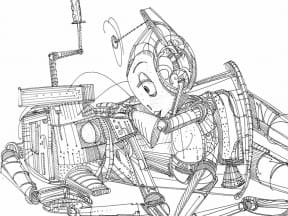
Today on Cartoon Brew TV we proudly present The Terrible Thing of Alpha-9! directed by Jake Armstrong. It was created as his thesis film at the School of Visual Arts. If you have a question for Jake, he’ll be participating in the comments section below, and if you’d like to find out more about his work, visit his blog at JakeHatesYou.blogspot.com. He’s also provided us with some notes about the making of the film:

Making this short was really fun, mostly for the research it involved. I got to reconnect with shows like “The Outer Limits” and “The Twilight Zone”, watch weird old soft sci-fi movies like “Forbidden Planet,” and the occasional big-monster-themed Looney Tunes episode. I felt these shows are so over-brimming with crazy style that it felt relatively easy to find things to put in visually. The comic book feel was strongly based on a lot of people, but the big ones that come to mind are Dan James (Ghostshrimp), Rui Tenreiro, Brecht Evens, Thomas Herpich , and Kazimir Strzepek. There are plenty more, but these all heavily influenced my style.

For the look I wanted to start out with an almost nour-ish, very serious soft-science-fiction feel. I chose red as the main color in the opening mainly because I love that stark red color choice in Raoul Servais’ “Sirene.” I was kind of hammering in the idea that this man is a serious bounty hunter, and that this was a very serious story. I think I intended to, for the most part, stay with that feel until the monster gets playful. Then it just turns into my take of the Looney Tunes short, “The Abominable Snow Rabbit,” where the big dumb yeti chases Bugs Bunny around calling him “George.” I wanted to play up the light mood and make the monster as cute as possible, really just to emphasize the large change that happens later when the characters are suddenly hit with reality (at the “splat!”).

To me, the spaceman is kind of boring. He’s basically me in most respects: he kind of looks like me, he’s kind of a grumpy old man. I feel there’s also the side that feels some remorse for what he does. He feels guilt, but pretty much stays the straight and narrow. The monster, I think, is really interesting. He starts off as a big, dumb beast, and then shows more cognition as the story gets more tragic for him. He understands what’s happening, but he just tries to ignore it. I like that the monster is a pretty absurdist character overall.

This short took about 6-8 months to write and figure out most of the design and stylistic choices, and another 8-9 months of drawing and coloring. It was a totally digital process, past the initial boards. I drew it completely using Flash, which was a trying thing since I needed a Cintiq to do anything on it. I was so busy with drawing, that my grandiose plans of writing music for it were kind of put on the shelf. The only bit that’s still there is the sad organ during the credits. Though I feel it would be better with music filling the space, I’m still pretty proud of the way it turned out. The project feels over now, and maybe on the next project (when I don’t’ have a deadline) it can be more complete with music.

by brewmasters
February 11, 2009 12:50 pm


We’re wrapping up the first season of Cartoon Brew TV today with a spectacularly animated student short called To the Moon (2008) created by Jacob Ospa at the School of Visual Arts. The dialogue-less film follows a British adventurer’s journey to the moon (which bears a striking resemblance to Ralph Kramden). Ospa’s amazing grasp of cartoon animation, with shades of Tex Avery and Bob Clampett throughout, is made all the more incredible by the fact that he was only twenty-one years old when he made the film. We expect to be hearing a lot more from him in the coming years.

If you have a question for Jacob, he’ll answer them in the comments section. And if you’d like to find out more about his work, visit him at JacobOspa.com. Below are some notes about the film from the director:

I first got the general idea for this cartoon back in my third year at SVA (School of Visual Arts) when I read an article about The Great Moon Hoax of 1835, in which the old New York Sun published a series of articles claiming that an astronomer had discovered fantastical life on the moon when he looked through a powerful new telescope. I thought, “Gee! What if the newspaper articles were actually accurate and someone was actually intrigued enough by the discovery to actually go to the moon and actually make contact!”

At first I wanted to think of a somewhat scientifically plausible way to get fictional 19th century explorer Professor G.H. Emerson to the moon, but when it came time to storyboard I decided to throw reality out the window and have him use a hot-air balloon. I also altered the “life on moon” angle. I think I finished the first storyboard some time in August or September ‘07, but I really don’t remember. What I do remember is having a tough time coming up with a good beginning and ending. It was difficult to reconcile the differences between the explorer and the moon.

For the look of the film, I wanted it to have a somewhat dreamlike quality, especially in the scenes in space. At first I intended to draw everything on paper and scan it in and color it in Photoshop, but I just wasn’t happy with the line quality I was getting. Instead, I decided that I would ink everything in Flash. I soon realized however, I would never finish it that way and decided to draw everything directly into the Flash using my Wacom tablet. It was very tempting to use all of those wonderful tricks and shortcuts that Flash offers, but I resisted as much as possible. Daniel Neiden (a friend of the family, a composer, and a Cantor) came up with the idea of using Holtz’ “The Planets” as the basis for the musical orchestrations. He brought in Charles Czarnecki to do the arrangement and composition. Charles and I worked together on timing the animation to the music, and vice-versa. Doug Crane was a great advisor who gave me good advice and lots of encouragement.

Looking back on it, there are a ton of things I wish I’d done differently, but I won’t go into too much detail with that. The biggest one is that I wish I’d kept it shorter and simpler with quicker pacing. I had only managed to finish coloring everything on the actual day of the screening. Unfortunately, I wasn’t able to transfer it in time. I can’t tell how embarrassing it was to look up at it on that big screen with every single jagged edge (due to not working at a higher resolution) blown up to gargantuan proportions for all to see, seeing unfinished20lo-res rough animation, quite a bit of sloppy inking and background rendering, the limited animation in many places, and so on. I always intended to work further on it and really finish it, but after not working on the film for over half a year I want to move on. Despite all of that, I’m still proud of what I did accomplish, and of how much I learned.

by brewmasters
February 1, 2009 9:45 pm


This week we open the Brew Vaults to examine the various ways the world’s first super-hero was animated, portrayed and even lampooned in the years between his comic book inception (1938) and prior to the iconic live-action TV show of the 1950s.

Jerry Beck first provides a running audio commentary over scenes from the classic Max Fleischer Superman cartoons, then uses rare film clips to trace how the character was interpreted by other Hollywood animators—some authorized, others unauthorized.

Superman was one of the most famous American creations of the 20th Century. The first true comic book super-star and a cultural icon, the caped character quickly leapt from ten cent comic books to daily newspaper stardom and a popular radio show. Then Hollywood called. Republic Pictures tried to license him for a twelve chapter serial, but Paramount placed a higher bid and the Man of Steel became a cartoon pioneer—the first science fiction adventure cartoon, setting the bar for all action animation to come.

Naturally, Warner Bros. was the first studio to spoof Superman. Bob Clampett painted him as a buffoon in Goofy Groceries (released March 29th 1941), a Merrie Melodies cartoon. Terrytoons came up with a parody, casting our superhero as a mouse in The Mouse of Tomorrow (1942). This proved so popular several sequels were produced, leading to a full-fledged series of Mighty Mouse cartoons. Chuck Jones kidded the Superman legend using Bugs Bunny as his Super Rabbit (Warner Bros.) in 1943.

Paramount, the studio who paid handsomely for the rights to Superman, used the character in trio of animated shorts after the 17 Fleischer/Famous Studio masterpieces. First, they created a classic Popeye cartoon, She Sick Sailors (1944), which cast a star struck Olive Oyl, smitten with the Man of Steel, as the object of affection between her rival Supermen, Popeye and Bluto. Next they allowed George Pal to use the famed red & blue costume and shield in a Puppetoon short—A Hatful Of Dreams (1945)—as little Punchy dreams himself as Superman to win the heart of beautiful Judy. Finally, a strange combination of two comic strip legends, as Little Lulu defeats a fairy tale giant as Super Lulu (1947), a cartoon directed by the legendary Bill Tytla.

In 1948, Superman was personified in a weekly live action movie serial by actor Kirk Alyn. The Sam Katzman chapterplays (Superman in 1948, Atom Man Vs. Superman in 1950) were produced on the cheap. Unable to come up with a low cost way to make his actor fly, Katzman turned to cartoon animation. Director Howard Swift (Fantasia) set up his own commercial animation studio shortly after the Screen Gems studio shut down (Swift was a director there) and was brought in to add several shots of Superman in flight. You decide whether he succeeded or not; it didn’t fool any of the kids in the audience.

These odds & ends of super-minutiae from the 1940s reflect the fame and popularity of the character’s early years. Superman has been a TV hero, a movie star and a staple of animation programming almost continuously since his creation, as this episode from the Brew Vaults aptly demonstrates.

(Thanks to Steve Stanchfield for recording the commentary track, and Randall Kaplan for sound and picture editing.)

by brewmasters
January 27, 2009 2:00 am


We’ve got a special treat today on Cartoon Brew TV. Instead of our usual short film presentation, we’re offering an 11-minute excerpt from Nina Paley’s animated feature Sita Sings the Blues. Regular readers of Cartoon Brew already know that both Brewmasters are huge fans of this animated film which is a startlingly original mashup of Indian mythology, contemporary heartbreak and 1920s American jazz.

We’ve praised it a number of times on the website, including here and here. Another big fan of the film is Roger Ebert who will be showing Sita at his Illinois film festival in April.

The film, however, cannot be distributed because of copyright issues related to its use of songs recorded by Annette Hanshaw eighty years ago. Paley, who made the film entirely by herself and is currently in debt, cannot afford to legally license the music. She is exploring alternative distribution models but for the moment the film is only playing in select festival venues.

This excerpt is from the start of the film and offers a glimpse of the different animation styles used throughout the film.The director, Nina Paley, will be participating in the Brew comments if you have any questions for her. For more information, visit the film’s website at SitaSingstheBlues.com or NinaPaley.com.

by brewmasters
January 14, 2009 3:43 am


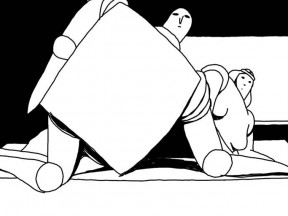
Cartoon Brew TV is back from the holidays and we’re ready for action—19th century style! This week’s offering, Love on the Line (2008) by G. Melissa Graziano, offers the tale of a pair of star-crossed lovers who yearn to communicate with one another in a time before texting, IMing and the Internet. A combination of stop-motion cutouts and 2D computer animation, the short was made at the UCLA Animation Workshop, where it won the Dan McLaughlin Award at the 2008 Animation Prom, the school’s year-end animation screening It has also won the Best Visual Storytelling Award at the ASIFA Student Film Festival and has also been shown at the Bradford Animation Festival (BAF), NextGen Film Fest, and Dam Shorts Film Festival.

The director, Melissa Graziano, will be participating in the Brew comments if you have any questions for her. Here are a few thoughts from her about the making of the film:

My background is mainly in writing and art, but I’ve done a little bit of everything. Growing up, I could never decide which form of art I liked best. I played violin, wrote poems, plays and short stories, took tons of photographs, made videos, drew incessantly, even dabbled in experimental sculpture…but I could never decide on which medium to settle on. When I discovered that animation was the only art with the potential to include every other kind of art, that did it for me. I was no longer forced to choose between my loves; I could use them all to make a single work. I think that’s partially why I like to combine different animated media in my films, too. I can combine different elements to create something that couldn’t have been accomplished by its separate components. And, more importantly, it makes the story stronger.

The first night Love on the Line played in front of an audience, I was nervous as hell. I’ve been performing in front of people since I was six, and I’ve rarely been nervous. I was afraid that nobody would laugh; it seemed like every time I presented my storyboards and animatics in class, I would hear crickets. My teachers and fellow students would tell me it was funny, that they just needed to see it timed out to get the full effect. Once I started animating and watched the finished sequences, I started laughing–and the people I’d drag in to see my dailies started laughing, too. I felt much more confident about it.

The film had such an overwhelmingly positive response at Prom (UCLA’s end-of-the-year screening for Animation), I could hardly believe it. Even my most conservative relatives were cracking up (maybe that’s why I was nervous, all that Catholic guilt). Every time I watch it with a different audience and they laugh in all the right places…it’s the best feeling in the world. I know I’ve done my job right. It gives me confidence as a filmmaker, to know I’m capable of doing what I set out to do: to have the audience react a certain way, to feel what I wanted them to feel, and feel it strongly. That’s very important to me as an artist and as a storyteller.

I’m currently working on my thesis film, When Walls Could Talk, which will be a hybrid of different animation techniques and live-action puppetry. I want to go into storyboarding after graduation, eventually working my way to director for animated features.

by brewmasters
December 24, 2008 8:47 am


(Alternate commentary-free version: This link will allow you to watch the cartoon without audio commentary)

This episode from the Cartoon Brew TV Vault features a rare episode of A Few Quick Facts, a companion series to Warner Bros. Private Snafu shorts. This cartoon was originally shown to servicemen during World War II as part of the Army/Navy Screen Magazine, a newsreel program produced from June 1943 until early 1946 by the Army Signal Corps under the supervision of director Frank Capra. This 3-part episode honors the Navy’s latest battleships; praises the American soldier’s brain; and explains the cost and care of a G.I’s shoes.

A Few Quick Facts were produced by several Hollywood studios, including MGM, Hugh Harman Productions and United Film Productions (later known as UPA). The budgets were low, but the artists were allowed a lot of freedom to experiment with graphics and pioneer limited animation techniques which would soon, for good or ill, become commonplace in the industry.

Jerry Beck and Mark Kausler provide audio commentary on this short. Thanks to Keith Paynter for providing this rare film to us. Special kudos to Michael Geisler for recording the commentary track, and Randall Kaplan for sound and picture editing.

by brewmasters
December 17, 2008 11:14 am


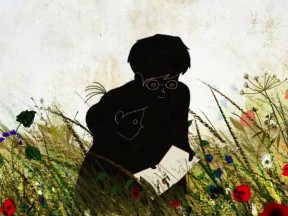
Like Me, Only Better is a film that made us laugh in Annecy last spring, and then made us laugh even harder when we saw it again in Ottawa last fall. That’s when we knew we had to find a way to share it with viewers of Cartoon Brew TV. Directed by Martin Pickles as a graduation project at the Royal College of Art in London, the film has been a big hit on the festival circuit appearing in over fifty festivals to date. Prior to studying animation, Martin had been primarily a live-action filmmaker and many of his earlier films can be seen on his film company website.

Martin Pickles will be participating in the Brew comments if you have any questions for him. Here is his artist’s statement about the film:

Like Me, Only Better is about our day-to-day neuroses and compulsions. I treat a serious subject with sympathy and humour to try and make a film that is both pertinent and entertaining.

Before the RCA I made mainly live-action films, in which the apparatus of filming was often integral to the story. But my experience on the MA course and my sideline as a Flash animator led me towards more traditional animation and my graduation film is almost entirely hand-drawn on paper.

Afterwards I would like to do more commercial work whilst pursuing my own projects and perhaps, in the distant future, even combine the two.

by amid
December 9, 2008 12:11 am


(Warning: This film contains strong language.)

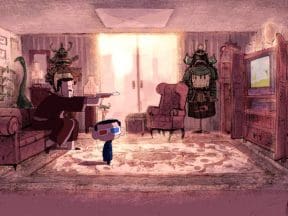
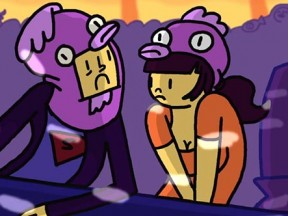
As I was watching Dan Mountain’s Adventures in Broccoli at the year-end Pratt screening a few months back, I was thinking to myself that not only is this a damn good student film, it’s also something I wouldn’t mind seeing every week on television. The setup is draped in mystery—a boy wakes up in a broccoli (or is he even awake?)—and odd characters and events are introduced into his life in rapid-fire stream-of-conscious fashion. It’s somewhere between Avatar and Adventure Time with equal mixes of action and whimsy. Frankly, I wouldn’t mind seeing more of any cartoon that gives the hipster-on-a-bicycle his comeuppance.

Dan Mountain will be participating in the comments section so fire away if you want to know anything. Here are some comments from Dan about how the film came about:

Adventures in Broccoli got its title in early May 2008, after about eight months of production, and about forty hours before it was due. This was a very haphazard time, because when I came back to Pratt for the Fall 2007 semester, I had a completely different story already storyboarded, and I was eager to start ASAP on that particular story. However, Pat Smith and Andy London (our class’ thesis advisors) kept telling me that it wasn’t even a story; it was just a bunch of random ideas with the only thread being that it takes place in giant broccoli. This greatly discouraged me, but was the first driving factor to making this.

The problem was that this film is a mere idea of a greater story I have been working on that is sort of an on going social commentary placed in an alternate reality to point out things I think about in this reality. Its a pretty epic story I hope to develop into a series, which is loosely based on The Mars Volta album “De-Loused in The Comatorium”, the evolution of music and the images that come to mind when I listen to music, the colonization of North America, technology, and every day human nature. Also super heroes and the idiots that become them.

I started drawing in October, knowing what I wanted to put in the film, but not how to organize it. I didn’t even have a storyboard; just a few scene animatics that I started placing here and there. Only then did I begin to figure out how to segue between them. This ended up with me accruing a total of about two weeks of all nighters during the Spring 2008 semester. I think that is what made this film so ridiculous; the fact that it was put together on the fly, as it went, while being completely sleep deprived.

Adventures in Broccoli is my first animated film, and I plan to make many more, because I had so much fun making it. It’s funny to sit back and think seriously about how ludicrous you can make a story.