.png)

New Nielsen Report Makes It Clear: Underestimating Anime Is Bad Business
Stay informed with free updates
Sign up to get our news digest — delivered directly to your inbox twice a week.
A new report from Nielsen makes a familiar argument in increasingly unavoidable terms: anime is no longer a subculture, and the people who love it may be among the most commercially powerful entertainment audiences today.
A Rising Tide
Anime’s growth is closely tied to the expansion of platforms like Netflix and Crunchyroll, which have dramatically increased their global footprints over the past few years.
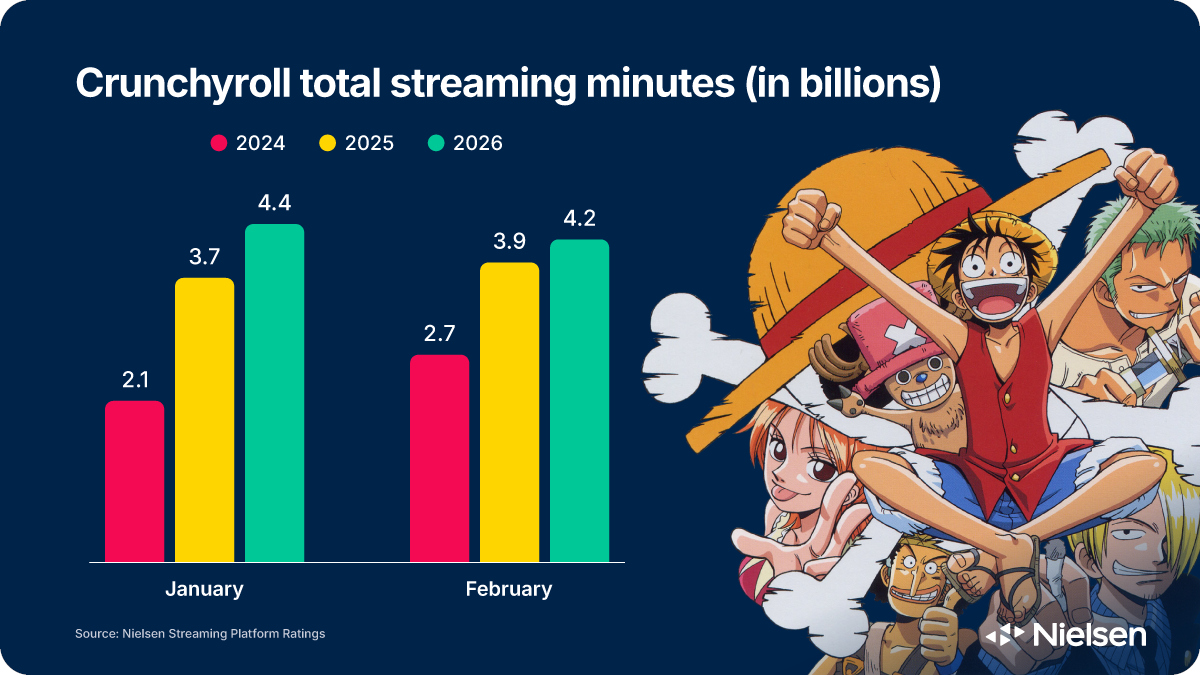
That reach is spilling outward. Breakout hits like Alice in Borderland, KPop Demon Hunters, and Squid Game point to a growing mainstream appetite for Asian storytelling, while adaptations like One Piece show how anime IP is translating into massive global viewership. The bar for entry into IPs with years of lore and hundreds of episodes is being lowered, creating entirely new audiences who want a way in but haven’t had a way to do so in the past.
In that sense, anime isn’t just growing on its own; it’s helping drive broader interest across adjacent formats and cultures.
Engaged Everywhere
The report pushes back on the persistent industry framing of anime as a “genre” or niche vertical. Instead, Nielsen positions anime fandom more like a behavioral identity that cuts across platforms, formats, and spending categories.
Anime fans aren’t just watching shows and movies. They’re participating in a broader and more interactive ecosystem that includes streaming, gaming, social media, merch, music, fan creations, and live events. As the report says, they’re “multi-faceted enthusiasts” with above-average engagement across the digital landscape.
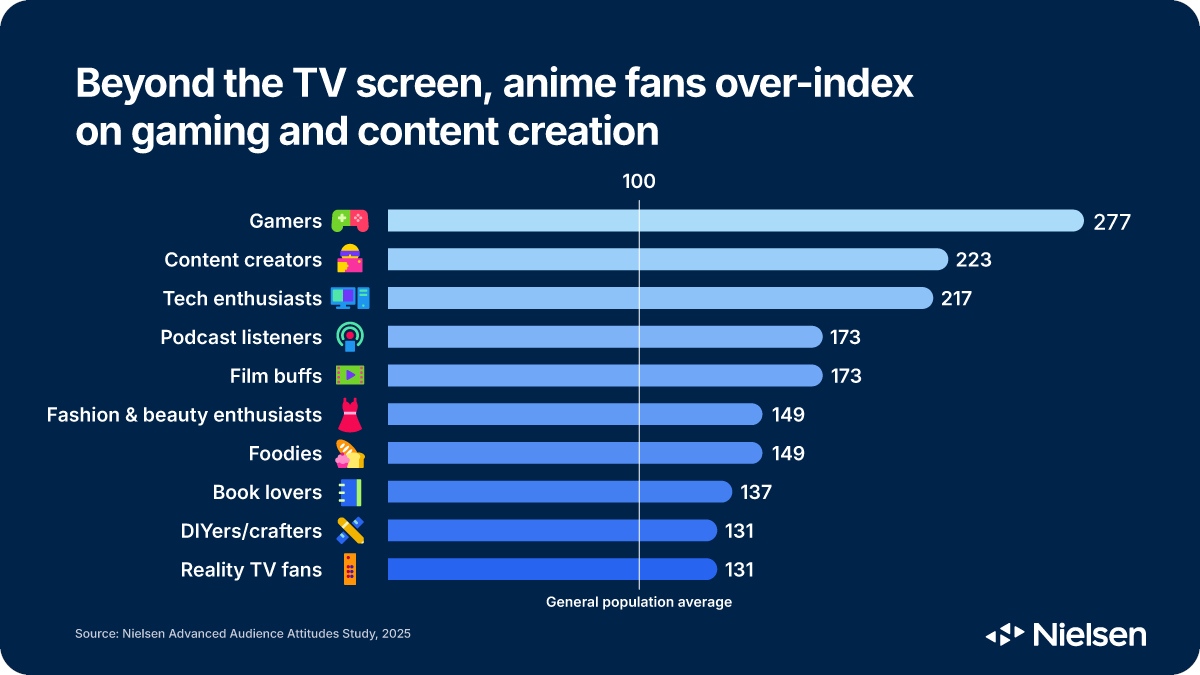
That kind of cross-platform intensity is exactly what traditional media companies are struggling to build elsewhere. It’s also something far more akin to what we’re seeing in the independent animation space in the West, and one likely reason for the rise in popularity of non-studio work.
Audience Affluence
One of the report’s most notable points is that anime fans aren’t just engaged, they’re economically significant. The myth that anime is just for kids and a small section of adults is obliterated by the study’s figures:
- 60% are the primary income earners in their households
- That rises to 68% among millennial anime fans
- Nearly 25% of millennial fans earn over $100K annually
Nielsen’s report paints a picture of a financially empowered, inspired group of consumers that actively invests in its interests. In this case, anime.
Fandom Identity
The report also emphasizes that anime fandom behaves more like a lifestyle than a content preference. Fans often literally wear their fandom on their sleeves, using anime for identity, community, and self-expression.
By the 2020s, anime had already become a mainstream cultural force influencing fashion, online communities, and entertainment worldwide. Major non-industry brands, celebrities, and athletes have openly embraced their own fandom, with many integrating popular IPs into their own commercial products.
Inside the industry, that distinction matters even more. Identity-driven audiences are stickier, more loyal, and often more likely to spend.
Stop Underestimating Anime
Nielsen’s core message is blunt: anime remains undervalued by parts of the entertainment and advertising industries.
Despite its global reach and widely diverse fanbase, it’s often pigeonholed as a niche category rather than treated as a core growth driver. The report argues that brands and media companies ignoring anime audiences are effectively leaving high-value consumers on the table.
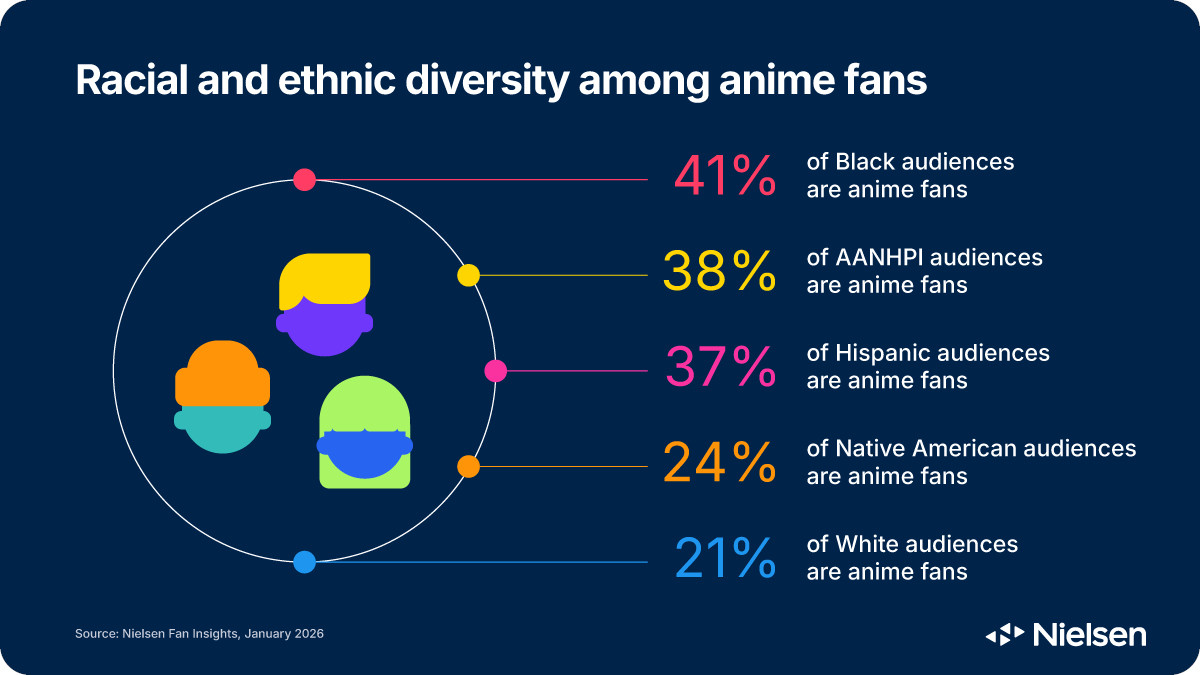
The report doesn’t explicitly explain why the West is keeping anime at arm’s length, but many Western decision-makers still have limited experience with the art form beyond a handful of breakout titles, and the production ecosystem, rights structures, and audience behaviors can feel less predictable than those of domestic content. Ask anyone in the industry, and they’ll tell you that working with Japan can be a challenge for the uninitiated, and the onboarding process is neither quick nor easy.
Add to that a tendency to prioritize in-house IP and proven formats, and anime continues to be treated cautiously even as its audience continues to grow.
The Cost of Growth
One critical issue not addressed by Nielsen’s analysis is whether anime’s production system can keep up with its global surge.
As demand accelerates, Japan’s animation pipeline is showing signs of strain. Tighter schedules, labor shortages, and mounting pressure on studios and artists are omnipresent. The result is a growing disconnect between the scale of audience demand and the industry’s capacity to meet it sustainably.
It’s a tension worth watching. The same forces driving anime’s commercial rise may also be testing the limits of how it’s made.
Bottom Line
For those who have been paying attention, Nielsen’s report doesn’t reveal anime’s rise so much as confirm it. The audience is already here, already engaged, and already spending, and these are just more figures that prove it.
The real question is whether the rest of the industry is ready to treat anime not as a niche, but as a cornerstone to build upon.