

Does GenAI Belong At Animation Festivals? Annecy, Ottawa, And Manchester Programmers Weigh In
Stay informed with free updates
Sign up to get our news digest — delivered directly to your inbox twice a week.
Manchester Animation Festival (MAF) announced alongside its 2026 winners that it will stop accepting films made with generative AI (genAI) starting with its 2027 edition. Under the new policy, a film is ineligible if a genAI model creates or alters any part of its final moving image.
Manchester’s decision brings into focus a question facing the festivals that help shape tastes and reflect the animation community. When does genAI function as a tool for making animation, and when does it produce something festival directors consider a different medium? Cartoon Brew spoke with programmers in Manchester, Annecy, and Ottawa about where they draw that line.
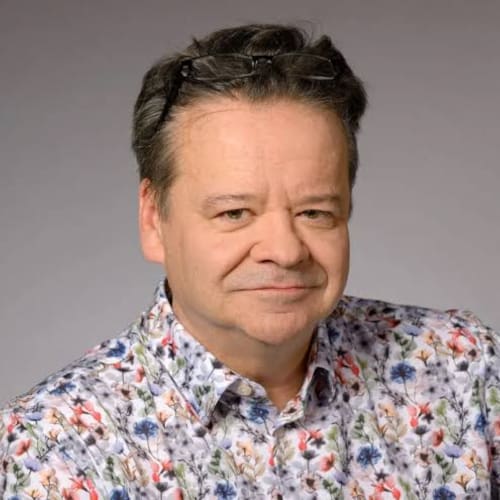
Marcel Jean, artistic director of the Annecy International Animation Film Festival, says whether a film qualifies as animation depends on how it uses AI. “Just giving some commands to the computer, telling it to adapt some short story in a Ghibli style, this is not animation,” Jean tells Cartoon Brew. “However, historically, experimental filmmakers were the first to use new tools like computers. They were an important tool for people like Stan VanDerBeek or the Whitney brothers, and this is basically the same thing that we’ve noticed with AI. Experimental filmmakers adopted it very early on.”
Chris Robinson, artistic director of the Ottawa International Animation Festival, also puts AI in historical context. “I can’t help but keep looking back, probably because it’s our 50th anniversary, but I keep feeling like this is similar to when computer animation arrived and took over,” Robinson says. “Everybody was freaking out. It wasn’t the end of animation as we knew it. It just changed. How many computer programs were creating shortcuts for animators that didn’t exist before? How was that not affecting the creative process? The AI-generated stuff, for now, stands out. You can tell it’s not very good anyway.”
Steve Henderson, director of the Manchester Animation Festival, takes a harder line. “We’re really lucky at MAF because we have a fantastic audience who love animated filmmaking as much as we do,” Henderson says. “People come to MAF to see animation and personally, I don’t view the methods used in producing genAI films as being the same as producing an animated film. GenAI is a service people use to receive something from an algorithm. A genAI film is not created in the same terms as an animated film is, so it doesn’t belong in an animation festival. Just as live-action films are not produced like animated films, so we wouldn’t select live-action films.”

Determining how much genAI went into a film depends in part on filmmakers disclosing its use. “What bothers me is the animators clearly lying on their forms,” says Robinson. “Probably because we’re only offering you an option to mark it as AI-assisted, but some are not even marking that. They just mark it as 3D or something. When we look at some of these, it’s clear there’s something else going on here.”
Ahead of the policy announcement, Henderson described a similar issue at MAF. “There have been instances of people who have clearly been using AI and labeling it as ‘experimental’ or ‘abstract,’” says Henderson. “This year, we have received more genAI films than ever in our submissions. This is something we will need to reassess for our next call for entries to get more information from filmmakers about how and where they used AI and in what stage of production.”
At Annecy in 2024, audience members booed “Étoile Filante,” a music video made with genAI in the commissioned films section. Jean says he selected the film to reflect what was happening in the industry at the time. “It was important at that time to do this gesture from our side, because if we want to talk about AI, if we want to think about AI, we have to understand what it is and where we are at with it. If I had received this film this year, I would not have selected it, and I would not have thought about it for more than 30 seconds,” Jean says. “Why? Because this is not the point anymore. Everybody’s aware now that AI exists. That was the point two years ago.”
That same year, Annecy faced criticism for screening Ryo Nakajima’s Who Said Death Is Beautiful?, a CG feature that used Stable Diffusion in post-production. The festival continued to program films that used genAI in 2025, screening Ulu Braun’s Gerhard, an experimental short about painter Gerhard Richter, in its Off-Limits competition.
The debate resurfaced this year with the screening of Hisko Hulsing’s Danse Macabre. The production used tools trained on Hulsing’s own oil paintings to create custom shaders, which the team applied to the finished character animation.
Jean says he leaves room for filmmakers to make their own decisions about the ethics of using AI. “It reminds me of Formula 1, where they allow one kind of technical equipment but not others,” Jean says. “I don’t see myself as having the final judgment on that. You see veteran filmmakers with a very strong and personal style suddenly use AI as a tool. I don’t think I have the authority to tell that guy that he’s wrong.”
For Henderson, genAI runs up against what he considers fundamental to animation. “Animation has always advanced with technology, with processes that were once seen as essential, such as cel painting, becoming niche,” Henderson says. “However, the rate at which genAI is advancing is alarming because it wipes clean what I believe makes animation what it is. genAI is sold as a tool, and we’re told to embrace it as the evolution of the artistic process, but it works much more like a service. You order something, then you receive what you ordered, or a close approximation. That’s not what artistic progress is.”
Robinson is inclined to defer to filmmakers’ intentions and calls for a more measured response to the technology. “I think everybody needs to calm down a bit,” Robinson says. “This is what always happens. Something enters the room, and everybody starts screaming and throwing things around and going into hysterics. I get it. There are people in the industry who are potentially losing jobs. At the same time, there’s that side of me that thinks so much of what the industry produces is so generic that it feels like it’s already created by a computer. What’s the difference?”

Henderson raises ethical concerns about how genAI models are built and questions the originality of their output. “If the genAI being used is working from an open LLM, then there are a lot of ethical issues that would arise as the entire production is influenced by machine-made outputs and we find that the originality and ingenuity of the finished product simply isn’t there,” Henderson says. “For MAF, it’s the selection committee’s place to decide what’s right for the festival and for our audiences. As an animation festival, we owe it to ourselves and to the artists working in animation to distance ourselves from practices that do not celebrate animation as a human endeavor.”
Jean says festival programmers have a responsibility to protect creators’ intellectual property. He sees decisions about the use of AI to replace workers as a matter for the industry. “The most complicated problem to deal with is the question of the workforce, and it’s a problem for the industry, not the artist by themselves,” Jean says. “Thousands of people could lose their jobs if all the studios decide to use AI to disappear some steps that were done by hand. There’s nothing we can do in that case. We don’t have a voice in this debate.”
As festivals work out their own rules on genAI, Robinson says Ottawa will take its cues from its community. “There’s still a punk spirit in Ottawa,” Robinson says. “We don’t want to be told what to do. We’ll figure it out on our own and the audience will as well. We’re not existing here as our own private little organization. The festival is a mirror. It’s part of the community.”
Jean wants more time to see how filmmakers use genAI before setting a festival policy. “Maybe these projects will disappear by themselves. Maybe it will become an important part of the activity of the industry. Maybe we will have to rethink our selection in the festival to have a section especially for AI,” Jean says. “I don’t think we’ve reached the point where we can have a clear view of that. Maybe next year, because it evolves very, very fast. As a citizen and as a human, I’m more preoccupied by the use of AI outside the animation world than inside the animation world. AI is a game changer, turning our world into the Wild West. You can bear a gun and shoot at anyone.”
Before Manchester announced its new policy, Henderson argued that festivals should make their positions clear to filmmakers and audiences. “As an animation community, I don’t think we can continue to operate in a gray area or we will risk further conflation of animation and genAI in the public mind,” Henderson says. “Animation, in the U.K. at least, has always suffered from the public perception that it is only a children’s medium. The last thing we want is that same public to think animation is all generated using AI.”
“We need to deliver clarity,” Henderson adds. “I don’t want genAI filmmakers wasting their money on a festival that won’t screen their work. I also don’t want me or my team to spend hours going through non-animated films when I’m putting on an animation festival. I feel it is really important that audiences and filmmakers have a clear picture of where a festival stands on genAI, so we are developing a more robust policy. I strongly feel 2026 is the last year any forward-facing animation festival can be complacent about it.”
That policy is now in place for the 2027 edition. Filmmakers who dispute an eligibility decision can submit evidence that their work complies with the rules.
Pictured at top: Danse Macabre, Who Said Death Is Beautiful?, “Étoile Filante”