.png)
Annecy Defends Hisko Hulsing After AI Protest Disrupts ‘Danse Macabre’ Premiere
Stay informed with free updates
Sign up to get our news digest — delivered directly to your inbox twice a week.
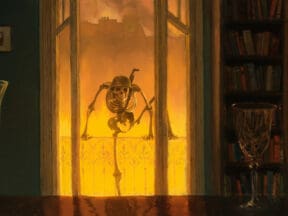
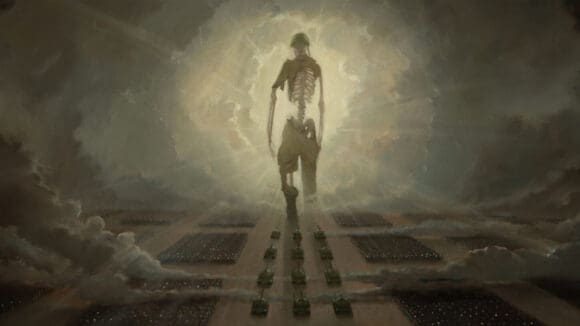
The debate over artificial intelligence in animation reached a new flashpoint at this year’s Annecy International Animation Film Festival when the world premiere of Hisko Hulsing’s Danse Macabre was disrupted by audience members protesting the film’s use of AI-assisted production techniques.
The incident, which unfolded during the festival’s official short film competition, prompted an unusually direct public response from Annecy artistic director Marcel Jean (copied in full below), who condemned the demonstrations while acknowledging the broader concerns many animation artists have about AI’s impact on the industry.
The Protest
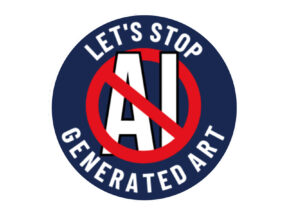
According to Hulsing, the disruption began before his film even started, as crowds of spectators wearing matching “Lets Stop Generative AI” stickers, similar to a graphic used by and international coalition of unions at last year’s Annecy.
“What happened was, my film was the last film on the block,” Hulsing told Cartoon Brew in an interview following the screening. “People walked out before the film started, like 100 people. And then a group who remained started booing before the film started.”
Hulsing said the sequence of events led him to believe the demonstration had been planned in advance.
Background
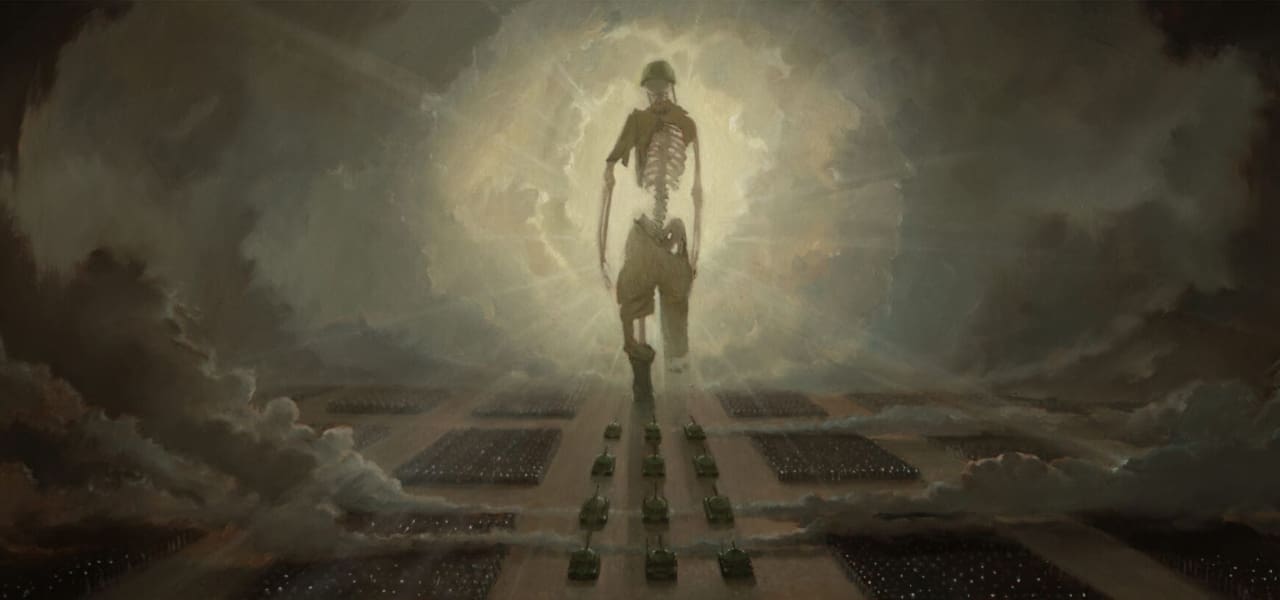
The filmmaker, whose credits include Undone and the Annecy-selected feature documentary The Last Hijack, has been forthright about the production of Danse Macabre. Rather than attempting to conceal the film’s hybrid workflow, he has published interviews and behind-the-scenes material that explain how his team combined hand-painted artwork, 3D animation, and machine-learning models trained on his own paintings to achieve the film’s distinctive visual style.
When we debuted the trailer on Cartoon Brew, Hulsing explained how his team used a large toolkit to train models to mimic his own oil paintings and shared a behind-the-scenes video that went into even greater detail about the process.
For Hulsing, the most disappointing aspect of the controversy has been that discussion of the technology has largely eclipsed discussion of the film itself, an anti-war allegory inspired by the rise of authoritarianism and ongoing global conflicts.
“The sad thing about this whole thing is that nobody talks about the content of the film,” he said. “This film is very current. It’s about what’s going on in the world right now.”
Marcel Jean Calls Protest A “Witch Hunt”
In a statement shared with Cartoon Brew on Thursday morning, Jean defended Hulsing while stressing that concerns over AI remain legitimate:
I deplore the demonstrations that followed the screening of the short film Danse Macabre, directed by the renowned Dutch filmmaker Hisko Hulsing.
While I understand the concerns raised by the potential use of artificial intelligence within the industry, as well as the worries surrounding intellectual property and employment, I cannot condone a witch hunt targeting the work of artists who explore the possibilities of these new tools with transparency.
Hisko Hulsing won the Grand Prix at the Ottawa International Animation Festival (OIAF) in 2014 with Junkyard. He served as art director and director of the series Undone (2019), created by Kate Purdy and Raphael Bob-Waksberg, which was awarded at Annecy in 2020. He also created the animated sequences for the feature film The Last Hijack, directed by Tommy Palotta and screened in competition at Annecy in 2014. That an artist with such a track record and such legitimacy should be targeted, when his work honestly raises questions about how these tools can be used to address certain technical challenges, seems to me utterly unjustified.
AI exists, it affects every area of our lives, and it is not going away tomorrow. Burying our heads in the sand will not solve the problem. We have a collective responsibility to pay attention to what is happening, to reflect, and to experiment in order to establish proper boundaries for its use.
The statement is one of Annecy’s strongest public defenses of an individual filmmaker during the festival and reflects a position Jean has maintained as AI has become an increasingly contentious topic within the animation community.
A Debate Years In The Making
This year’s confrontation did not emerge in a vacuum. Annecy has found itself at the center of the industry’s AI debate for several consecutive editions.
In 2024, the festival faced criticism after selecting a short film created in part with generative AI for competition. That is far more common here, and at many other festivals, but at the time, Jean defended the decision, arguing that festivals have a responsibility to engage with emerging technologies rather than ignore them, while emphasizing that programming a film should not be interpreted as endorsing every tool used in its creation.
Last year, concern over AI reached another milestone when an international coalition of animation unions and worker organizations issued a declaration describing artificial intelligence as an emergency facing the industry and held an in-person meeting in Annecy. The coalition warned that rapid adoption of AI threatened jobs, artistic authorship, and copyright protections, while calling for stronger safeguards for animation workers.
Those concerns remain widespread across the industry. Many artists have objected to generative AI models trained on copyrighted work without permission, while others fear studios could use the technology to reduce staffing or replace creative roles altogether.
A Way Forward?
Hulsing says he shares many of those anxieties.
“I understand what they’re scared of. I lost my storyboard job,” he explained, saying that throughout his career, he has spent one day a week storyboarding for ads and commercial projects to help pay for the other six days a week that he worked on more experimental, personal, and less financially-rewarding projects.
Where he parts company with his critics is in how those concerns should be expressed.
During the screening, Hulsing responded to the audience with a raised middle finger, a gesture that later drew criticism online and in Annecy. He told Cartoon Brew he has no plans to apologize.
Hulsing said his instinct years ago might have been different.
“I used to be very Old Testament,” he said, laughing and assuring that he was using the Bible as a metaphor and was still an atheist. “If you punch me, I’d punch you back ten times harder. I come from the construction world. But I’ve changed. I’m more New Testament now.” That’s why, he says, after the middle finger, he chose to simply pose with his arms wide and soak in the emotions coming from the room. “Now my new mantra is, ‘Kill them with kindness.'”
Rather than continuing the confrontation, Hulsing said he tried to answer questions about the film and its production process as openly as possible during a public discussion the following day. “I have nothing to hide,” he said. “I was transparent.”
Whether one views AI as an exciting creative tool or an existential threat to animation, the events surrounding Danse Macabre suggest that some in the industry aren’t ready or willing to discuss the use of any AI in animation.
What began as debates in conference halls, union statements, and online forums has now spilled into festival screening rooms, raising not only questions about the technology itself but also about how the animation community chooses to confront it.
If you were at the screening, participated in the protest, or simply walked out and want to discuss what you saw or did, please reach out –