.png)

2026 Oscars Short Film Contenders: ‘Black Man, Black Man’ Director Frank Abney
Stay informed with free updates
Sign up to get our news digest — delivered directly to your inbox twice a week.
Welcome to Cartoon Brew’s series of spotlights focusing on the animated shorts that have qualified for the 2026 Oscars. The films in this series have qualified through one of multiple routes: by winning an Oscar-qualifying award at a film festival, by exhibiting theatrically, or by winning a Student Academy Award.
Today’s short is Black Man, Black Man from former Pixar (Coco, Soul), DreamWorks (Kung Fu Panda 3 & 4), and Sony Imageworks (Spider-Man: Across the Spiderverse) animator Frank Abney, produced by Hodge Brothers Productions. The film qualified for the Oscars through a theatrical run at the Laemmle Monica Film Center.
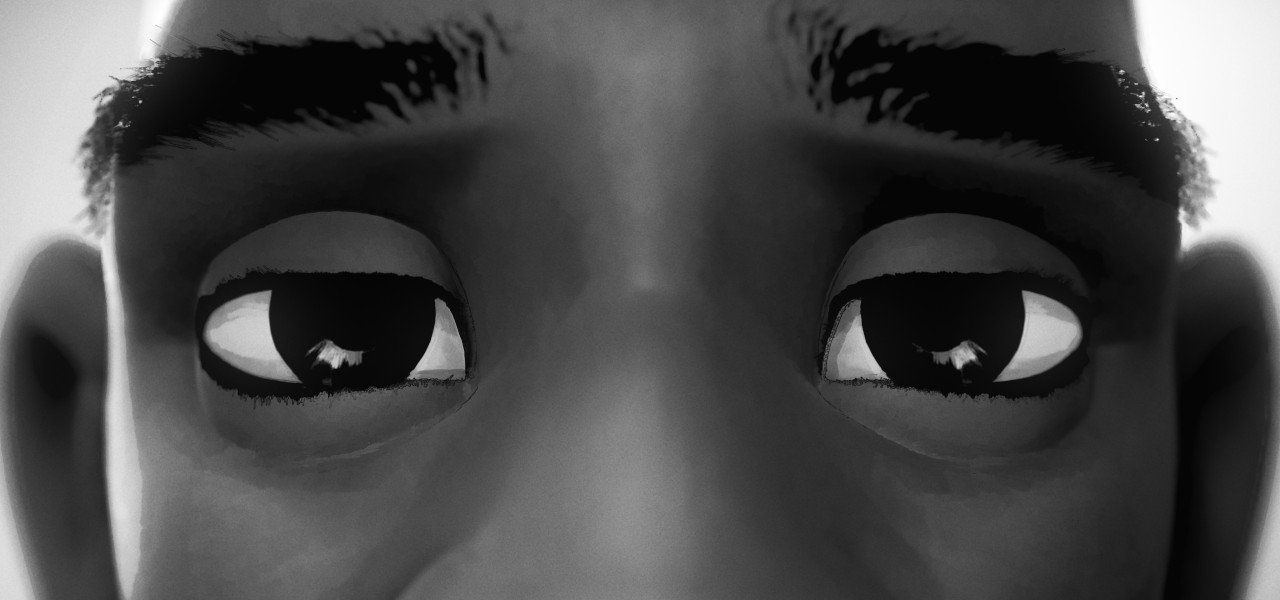
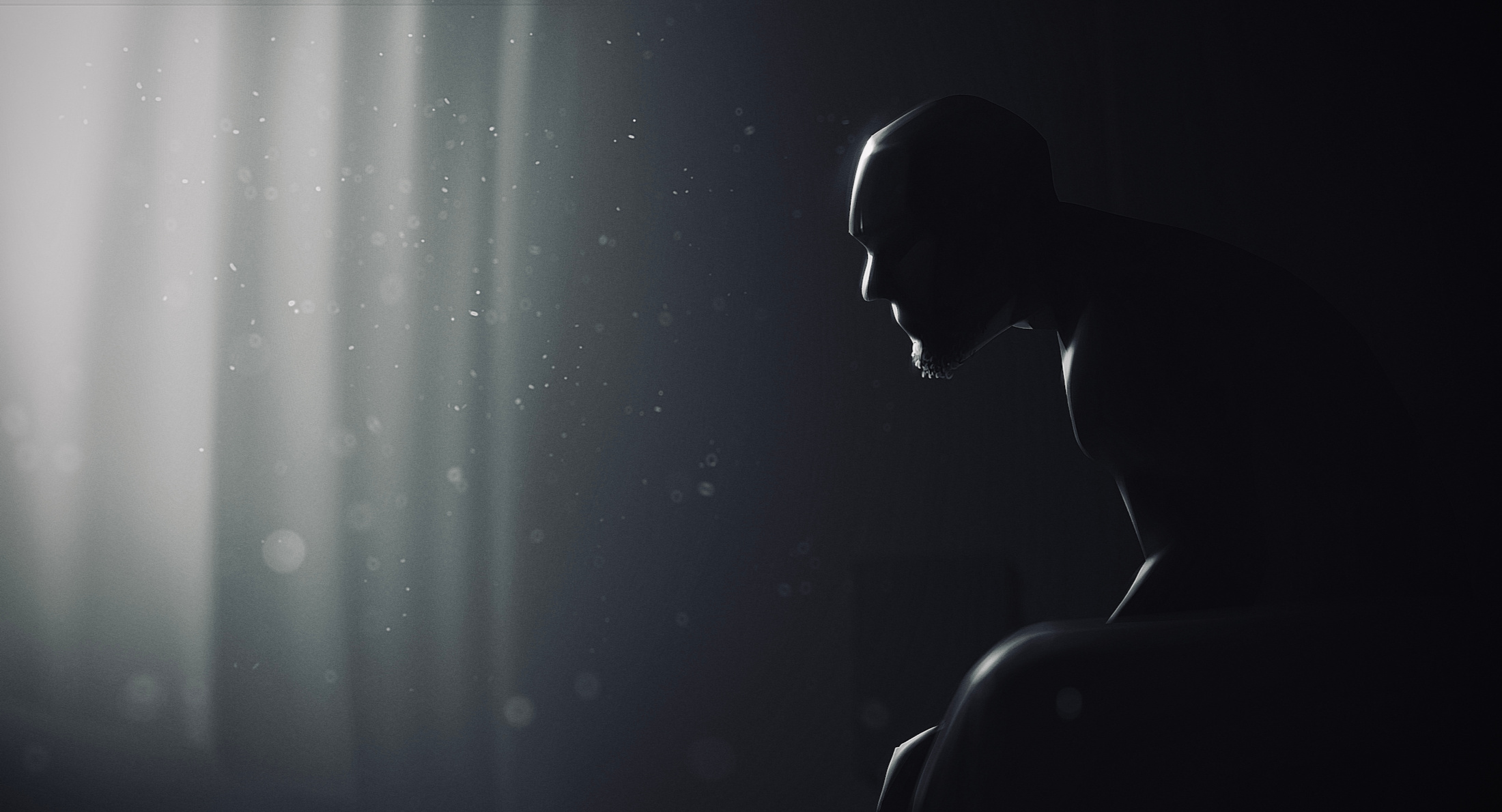
The film is a deeply personal adaptation of an original poem by Abney that meditates on identity, vulnerability, and healing. Rather than following a conventional narrative, it flows through evocative imagery and emotional rhythm, exploring what it means to navigate the world as a Black man while confronting the child within. Aesthetically, the black-and-white short blends painterly textures, expressive movement, and symbolic visual storytelling to create a dreamlike atmosphere that feels both universal and deeply specific. Working within modest means, Abney transforms every creative limitation into poetic intention, turning constraint into a powerful visual metaphor.
Cartoon Brew: What was it about this story or concept that connected with you and compelled you to direct the film?
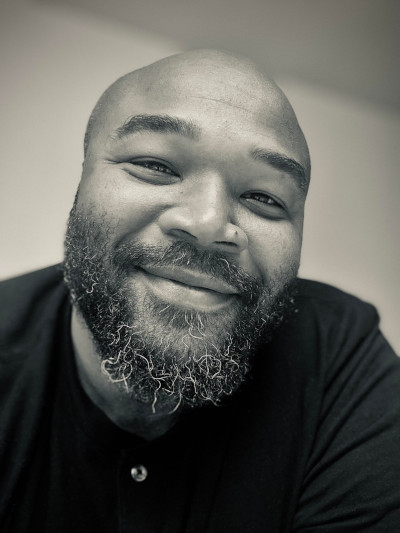
Frank Abney: What compelled me to write and direct this film was simply that it is my navigation in this world, and sometimes the feelings are so large that it’s difficult to keep in. As a Black man in the animation industry, I feel a responsibility to tell stories that reflect myself and the community I come from, especially after spending almost two decades lending my talents to many stories that did not. As an animator, I always found my way into a character, but using my own voice is something special.
What did you learn through the experience of making this film, either production-wise, filmmaking-wise, creatively, or about the subject matter?
Making Black Man, Black Man I learned many new skills with new tools I haven’t used like Unreal Engine, and wearing many hats, but the number one thing I learned is more on a personal level. I learned to release myself from the expectations of the industry and what the animation medium has to be. I learned to simply not care anymore. This film was for me, and for everyone out there that moves through this world feeling unable to be, and those discovering their worth, healing that child within that couldn’t see it.
Can you describe how you developed your visual approach to the film? Why did you settle on this style/technique?
For the visual approach to the film, I pulled inspiration from Gordon Parks’ black and white photography and the amazing cinematography work of Bradford Young. Their influences are reflected in my framing choices, limited light sources, and the absence of color, specifically. I chose to do the film in black and white to reflect how my navigation through this world has been seen from the outside, as well as the colorblind acceptance some of us face. For the animation style, I wanted to keep everything contained to allow the emotion to take center stage.
The film’s message is affirmational and uplifting. Who did you write it for? And did you benefit from writing it and hearing these lines repeated back at you throughout production?
I wrote this film for myself, and the feelings I was dealing with at the time. Feelings that can be quite suffocating. Feelings that no one ever sees through our smiles at work, school, etc. I wrote it for my childhood self who needed it. Hearing the lines throughout production kept me fueled to finish. I owe a huge thank you to the small team we had. Yvette Nicole Brown and Aldis Hodge for lending their voices. Hodge Brothers Productions, producing this project and helping to find resources alongside our Executive Producers Nicholas Maye, Archie Davis, and 9B Collective.