2027 Oscars Short Film Contenders: ‘Busy Bodies’ Director Kate Renshaw-Lewis
Stay informed with free updates
Sign up to get our news digest — delivered directly to your inbox twice a week.
Welcome to Cartoon Brew’s series of spotlights focusing on the animated shorts that have qualified for the 2027 Oscars. The films in this series have qualified through one of multiple routes: by winning an Oscar-qualifying award at a film festival, by exhibiting theatrically, or by winning a Student Academy Award.
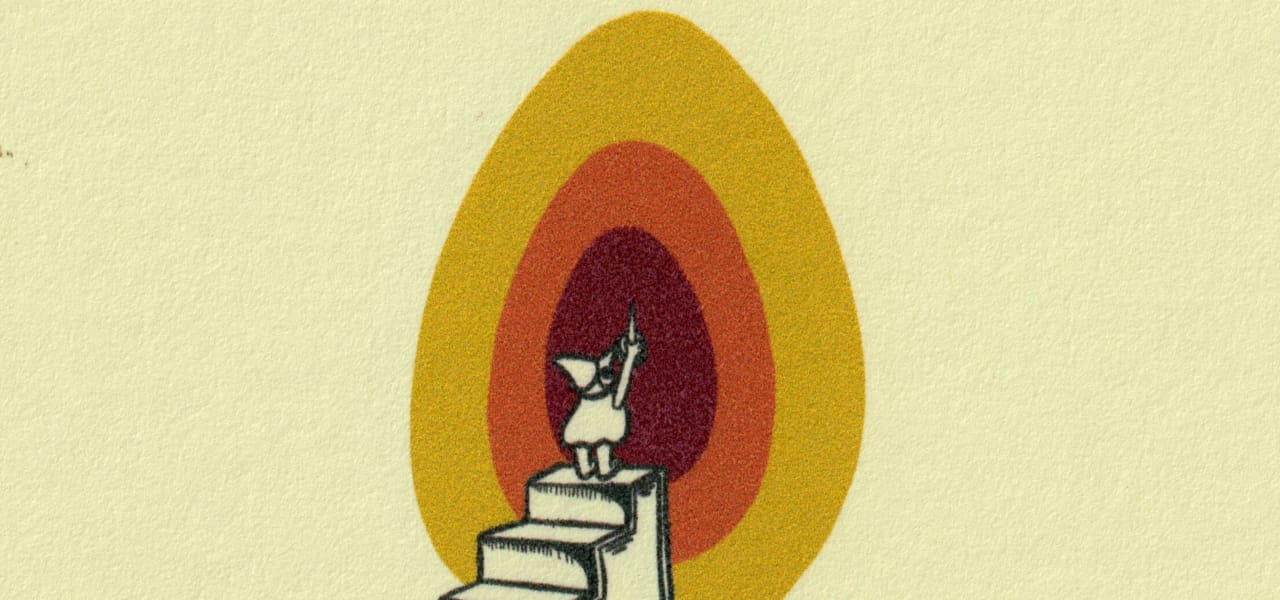
Today’s short is Busy Bodies, an American production written, directed, and animated by Kate Renshaw-Lewis and produced by Eric Ackerman through Ackzilla Entertainment. The film blends hand-drawn animation with inkjet and screen printing, with each frame printed at approximately 1.5 inches before being enlarged for the screen. It qualified for Oscar consideration by winning the Grand Jury Award for Animated Short at Slamdance.
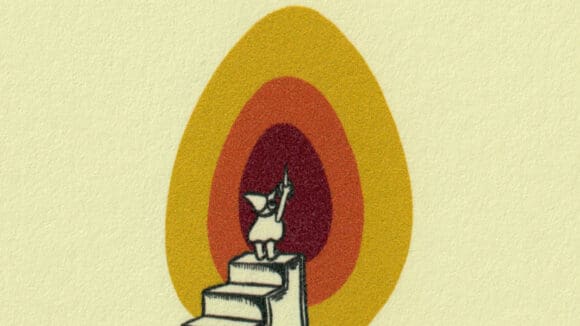
Inside a domestic factory, tiny workers manufacture disposable objects under the supervision of giant hands. Inspired by Rube Goldberg machines and a “made by hand” sticker on a supermarket wrap, Renshaw-Lewis turns everyday convenience into an elaborate, unsettling production process. The printed sequences progressively deteriorate as they cycle, while a soundtrack built from vintage synthesizers, household objects, and even a pet rabbit’s chewing adds an ominous undertone to the miniature workers’ activities.
Cartoon Brew: What was it about this story or concept that connected with you and compelled you to direct the film?
Kate Renshaw-Lewis: This was my first film where the choice of medium came first. I had the opportunity to make a film using printed animation, and I wanted to create a narrative that reflected its mechanical, step-by-step process.
The idea for the narrative came to me while I was grabbing lunch during my lunch break, when I noticed a small sticker on my prepackaged tuna wrap that said, “made by hand.” I started wondering: Whose hand? How did they make it? Will I ever know what goes on behind the fluorescently illuminated presentation of the grocery store? I started thinking more and more about the unknown mechanisms and production processes behind everyday, mundane items — things that tend to go unnoticed.
A big inspiration for the film was the salmon cannon tube: a large silicone tube suspended above the water that transports salmon over large dams. It is such a surreal invention that has become part of practical reality. Rube Goldberg machines were another huge inspiration for the film. Their logic felt so important to the film because of its redundancy and delicacy. I think our production systems are absurd when you break them down — very efficient, and very absurd. So much engineering and process goes into delivering something as simple as rubber gloves, or even something as natural as a lemon.
What did you learn through the experience of making this film, either production-wise, filmmaking-wise, creatively, or about the subject matter?
A small detail that truly saved me hours of work was learning about the contact sheet automation function in Photoshop. I highly recommend looking into it if you’re printing animation or making contact sheets. Big thanks to Sam Gurry and Brian Smee, who shared that knowledge with me.
I also learned that maintaining mystery throughout the narrative feels so incredibly important to me. Busy Bodies follows a strict set of rules, but the film doesn’t explain them. I find it incredibly exciting and fulfilling to watch films that feel like a window into an entire world. I recently watched a retrospective of Jan Švankmajer’s short films that really highlighted this concept for me.
I find it incredibly important to have a very structured mind map and storyboard before beginning production to ground the film, even if the storyboard is only really legible to me. I also really love creating playlists for my films to listen to throughout production.
Can you describe how you developed your visual approach to the film? Why did you settle on this style and technique?
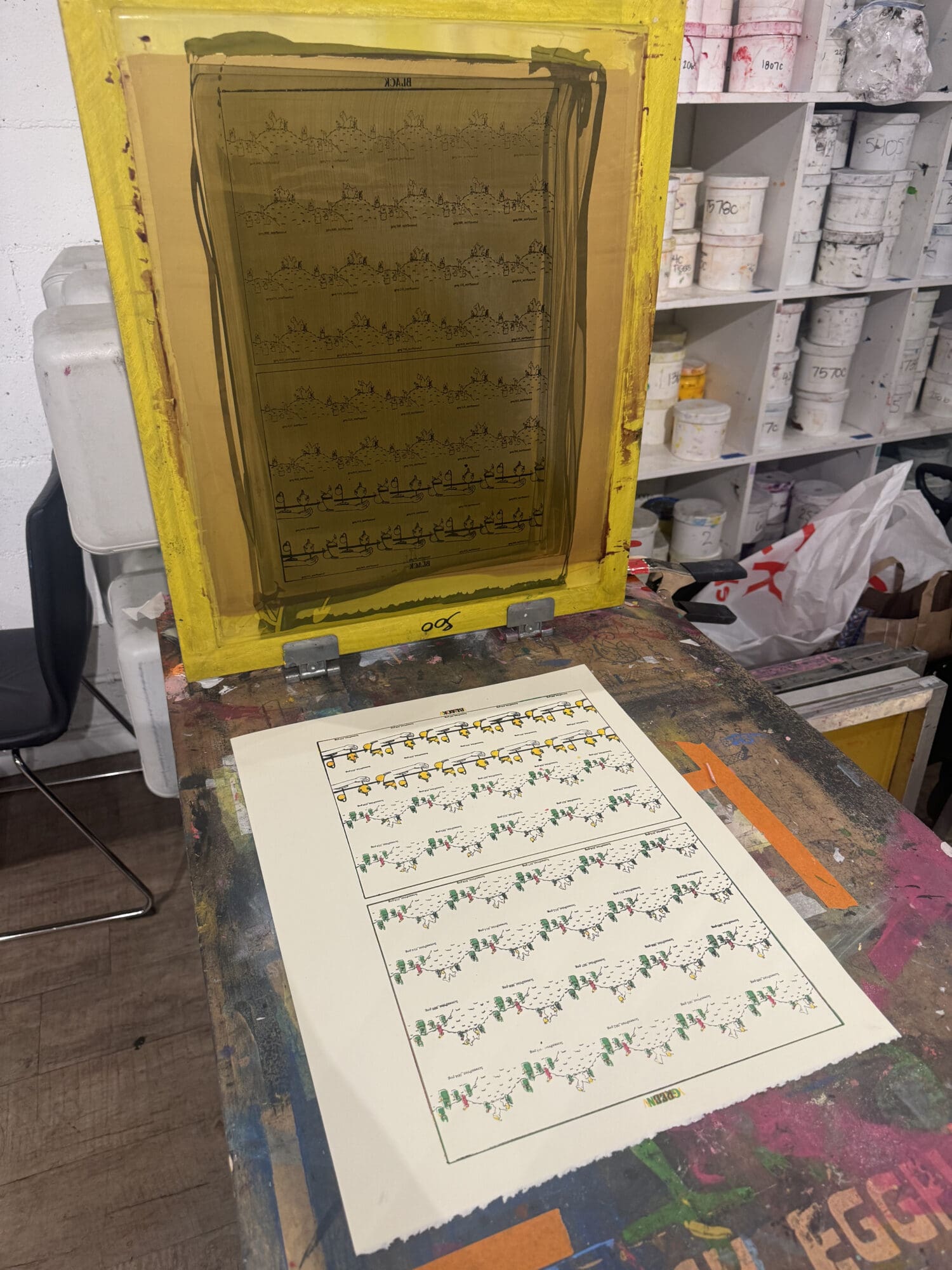
I was teaching printed animation classes at the time and had free access to a print studio. Many choices for the film’s visuals and narrative came from the restrictions of the printing process.
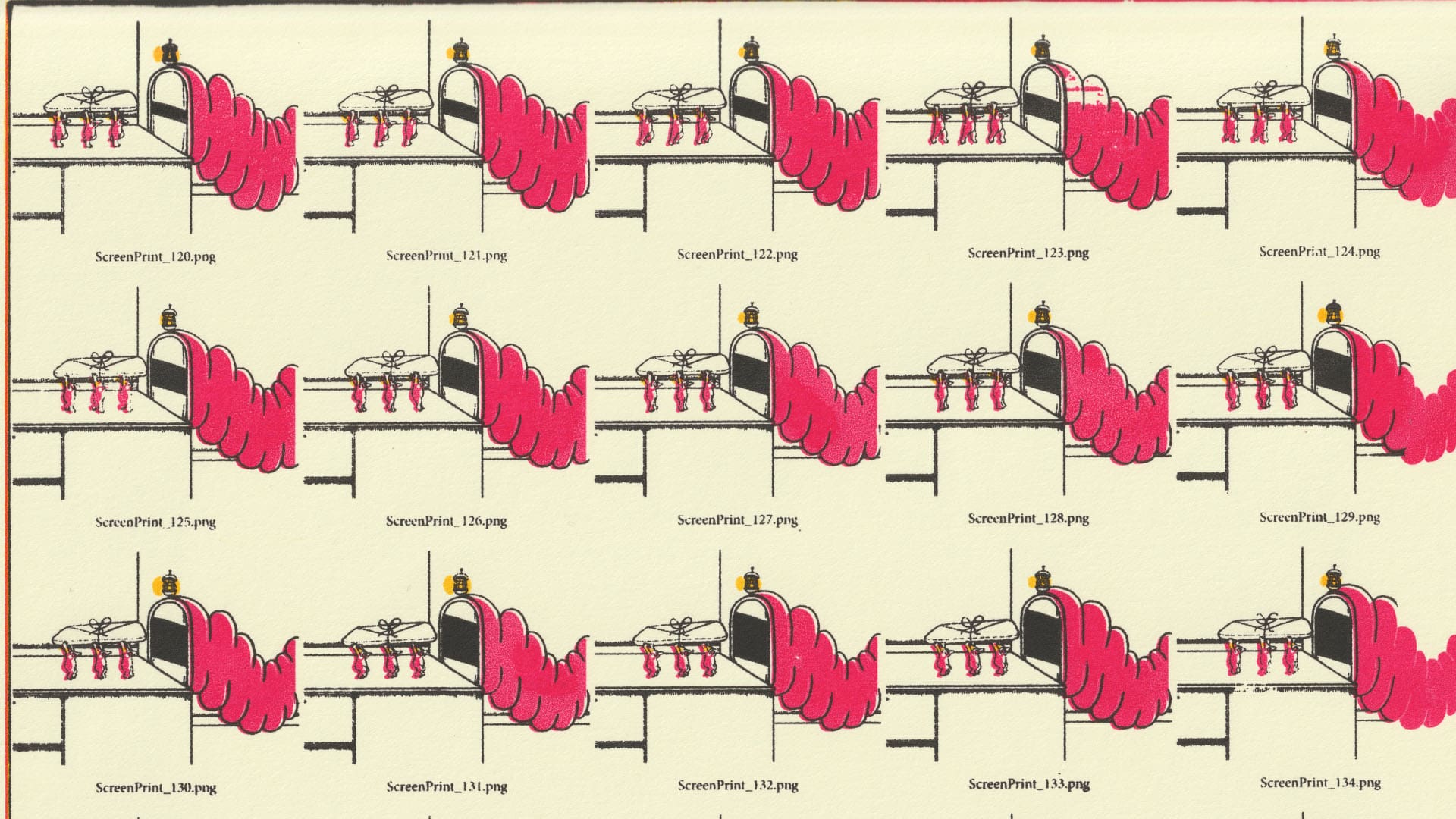
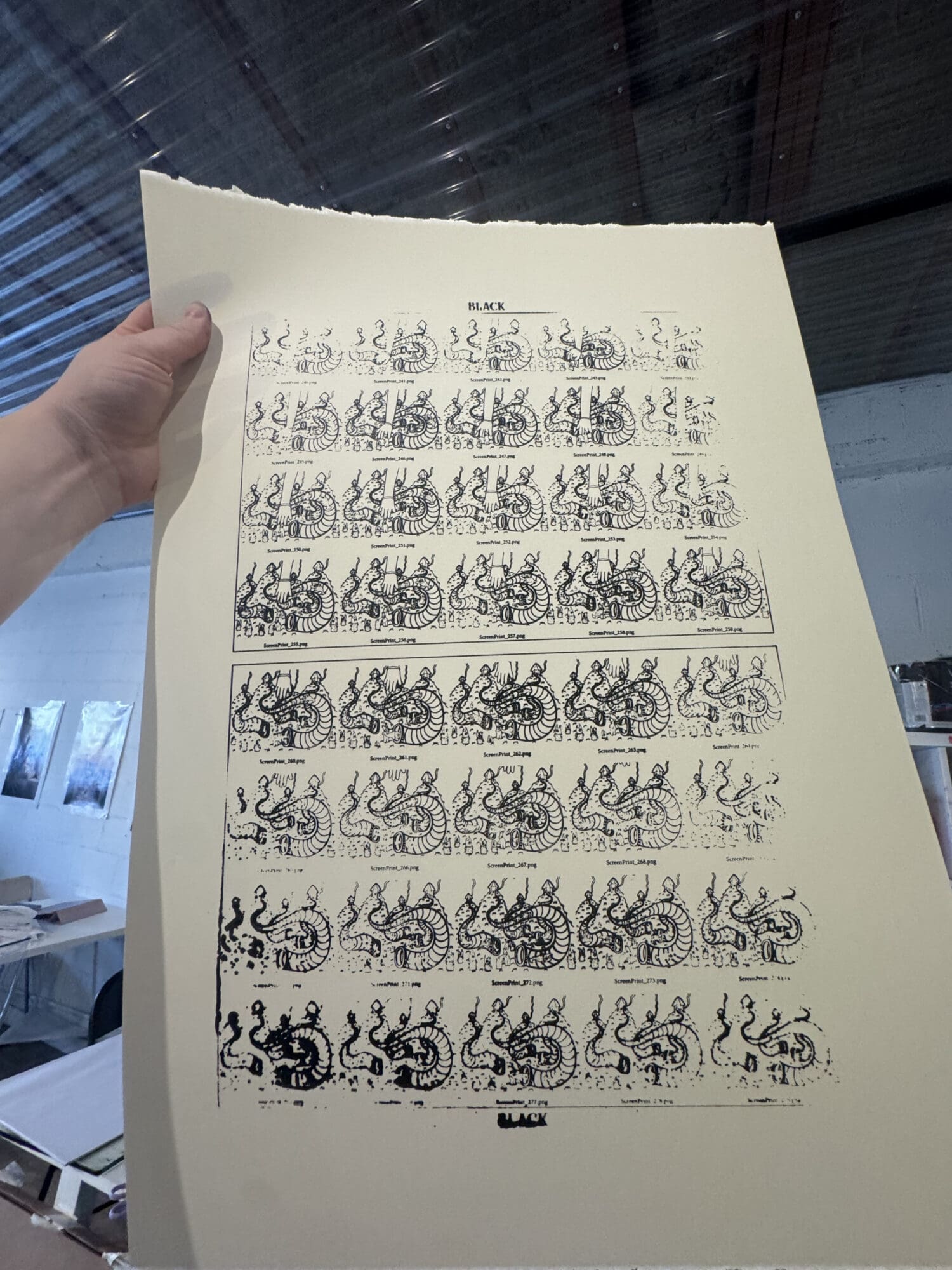
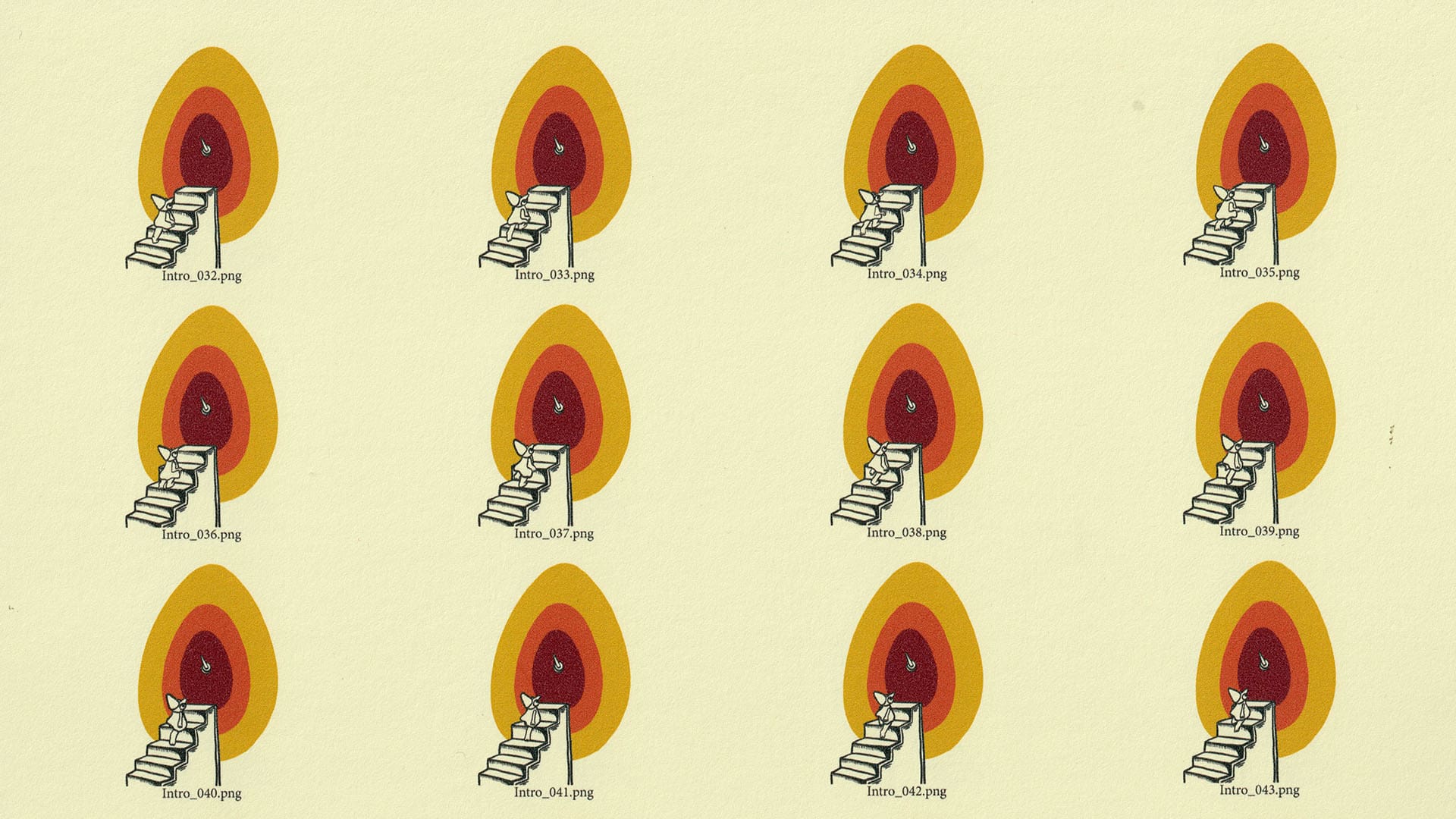
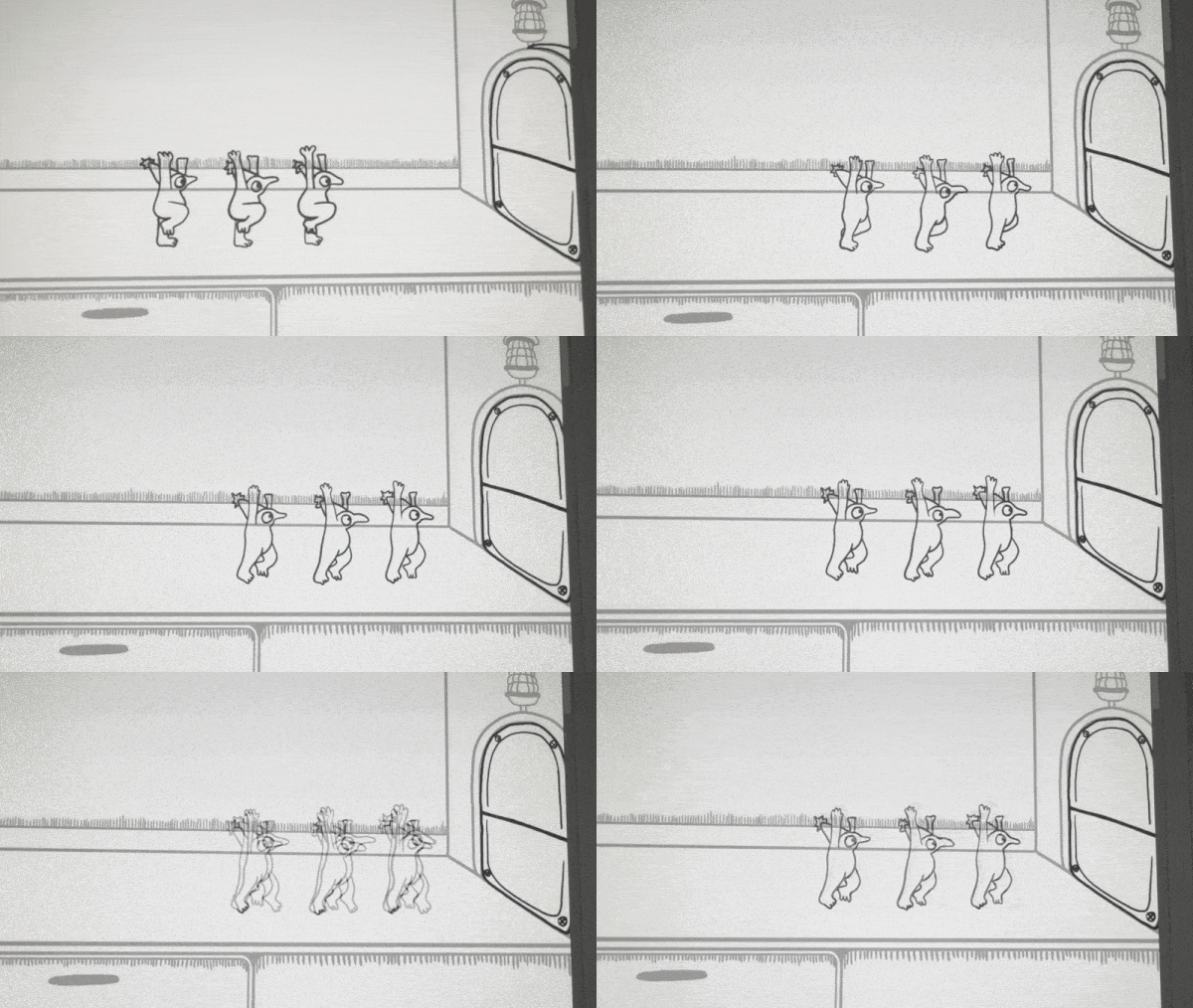
The film uses a combination of inkjet printing, using individual color passes, and screen printing. Screen printing requires separate screens burned for each color, which limits the film’s color palette. Because every line, even the still background lines, is printed for every frame, slight variations create a beautiful rhythm, similar to animated boils but with a different tone.
The animation and background style are pretty limited, too, because I knew the final printed frames would be very small and fine detail would be lost. I scaled every frame down to about 1.5 inches so 20 frames could fit on one sheet, then printed them. The paper texture really comes alive because the images are printed so small and then scaled up. The texture in Busy Bodies isn’t noticeable on the printed sheets in person, but it’s a big part of the film’s visual language.
How did you develop the film’s soundtrack, and what role did sound play in shaping its tone?
Most of the sounds in Busy Bodies were recorded at the Vintage Synthesizer Museum in L.A. I went with my two dear friends and incredible musicians, Arius Ziaee and Alex Edgeworth. The three of us spent two straight hours recording a whole library of sounds that I then sampled and built the film’s score from, with help from Arius and Alex.
I also used a keyboard, a clarinet, and a harmonium. I recorded all sounds outside of the synthesizers on my phone in my bedroom during odd hours of the night to avoid street noise. I built the Foley and sound design using recordings of various items, such as vacuums, pillows, water pouring into bowls, sheets of metal, various vintage buttons, and even my pet rabbit chewing hay.
I particularly love the moment when the glove filled with the small workers disappears, and they scatter, running away: All their footsteps are ASMR-style recordings of my fingers tapping on a small piece of wood.
Major sonic inspirations for this film were Raymond Scott, Joe Meek, and Ursula Bogner, who became a key reference point for the film’s sound design. I’m very particular about sound in my films, and I love sound that blends Foley, soundscapes, and music together. It feels incredibly important that the sound adds a subtle, ominous, dark tone to my films. My animation style, and animation in general, can seem quite cute, like a medium intended for children, and I love adding sound that gently nods toward the film’s darker subjects and layers.