2027 Oscars Short Film Contenders: ‘The Flesh Dress’ Director Joachim Hérissé
Stay informed with free updates
Sign up to get our news digest — delivered directly to your inbox twice a week.
Welcome to Cartoon Brew’s series of spotlights focusing on the animated shorts that have qualified for the 2027 Oscars. The films in this series have qualified through one of multiple routes: by winning an Oscar-qualifying award at a film festival, by exhibiting theatrically, or by winning a Student Academy Award.
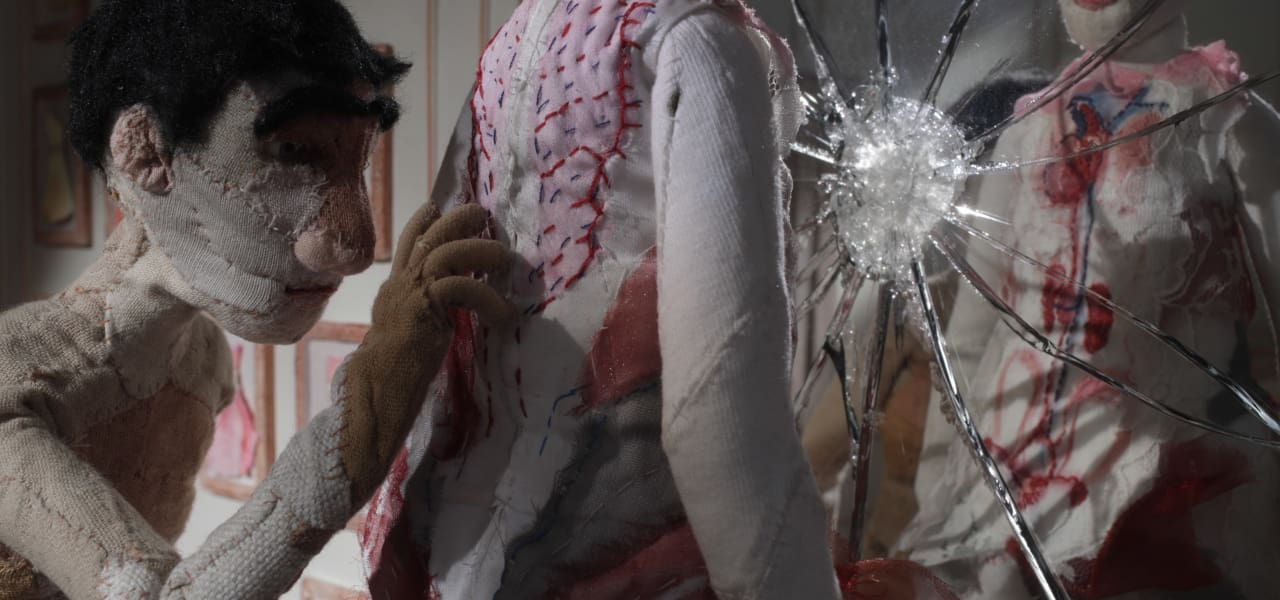
Today’s short is Joachim Hérissé’s The Flesh Dress (La Robe peau), a French stop-motion horror story co-written with Emma Degoutte and produced by Stéphanie Launay at Komawé. Featuring original puppets by textile artist Aline Bordereau, the film uses the physical qualities of fabric and flesh to explore aging, control, and artistic creation. It qualified for Oscar consideration by winning Best Animation at LA Shorts 2026.
The story follows an aging tailor whose fear of growing old and attachment to his past take a macabre turn when a disturbing event inspires a new creation. For Hérissé, the premise offered a way to confront bodily anxieties that he finds difficult to express in words, alongside his fear of reproducing patterns of domination. Elaborate camera work and tactile puppet animation give those concerns a physical form, blurring the boundaries between clothing, skin, and the bodies beneath them.
Cartoon Brew: What was it about this story or concept that connected with you and compelled you to direct the film?
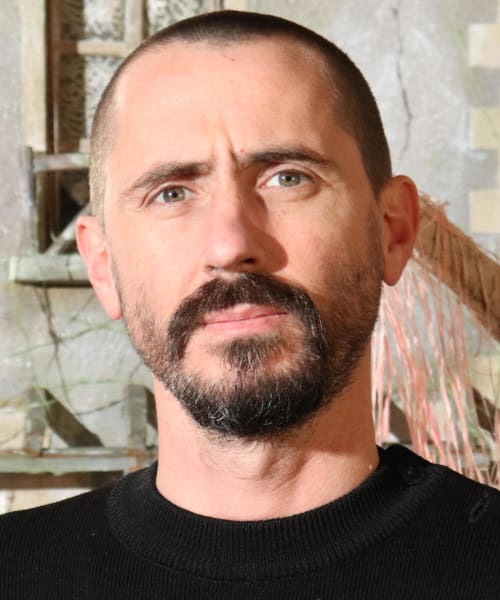
Joachim Hérissé: Stop-motion cinema is the only way for me to express feelings of anguish linked to the body that are very hard for me to verbalize. The fear of aging is a central theme in this film. I believe this fear is one of the driving forces behind many behaviors of domination in human beings — particularly in men, and even more so among creators. As both a man and a creator, I have a deep-seated fear of reproducing these behaviors that have conditioned us since childhood. By making this film, I wanted to examine that fear — perhaps in order to exorcise it?
What did you learn through the experience of making this film, either production-wise, filmmaking-wise, creatively, or about the subject matter?
As an author, making this film has had a cathartic effect on me that only dreams — and maybe psychoanalysis? — can trigger. That catharsis began with the writing, alongside my co-writer Emma Degoutte, and developed through directing. I cannot thank my team enough for allowing me to express myself. It now continues to bloom through screenings that spark many deep discussions with audiences.
Can you describe how you developed your visual approach to the film? Why did you settle on this style and technique?
Feelings of anguish are very strong in my body. Extremely real. Only the physical material of animation could allow me to echo this hypersensitivity. Only stop-motion cinema could. But I had to find an artistic universe strong enough to resonate with my feelings. Textile artist Aline Bordereau brought me this visual power through her amazing original puppets.
The film blurs the line between fabric, flesh, and skin. What were the biggest technical challenges in making those materials behave convincingly in stop motion?
The first technical challenge is the mise-en-scène. I work extensively on the animatic, using real-time 3D to test and establish quite elaborate framing, camera movements, and editing rhythms that are essential to making the materials behave convincingly.
Then the biggest challenge is finding the perfect stop-motion team: cinematography, production design, puppet making, animation, composition, sound design… I had the chance to work with some of the greatest talents in France.