.png)
2027 Oscars Short Film Contenders: ‘Bread Will Walk’ Director Alex Boya
Stay informed with free updates
Sign up to get our news digest — delivered directly to your inbox twice a week.
Welcome to Cartoon Brew’s spotlight series on animated shorts that have qualified for the 2027 Oscars. Films in this series qualified through one of three routes: winning an Oscar-qualifying award at a film festival, screening theatrically, or winning a Student Academy Award.
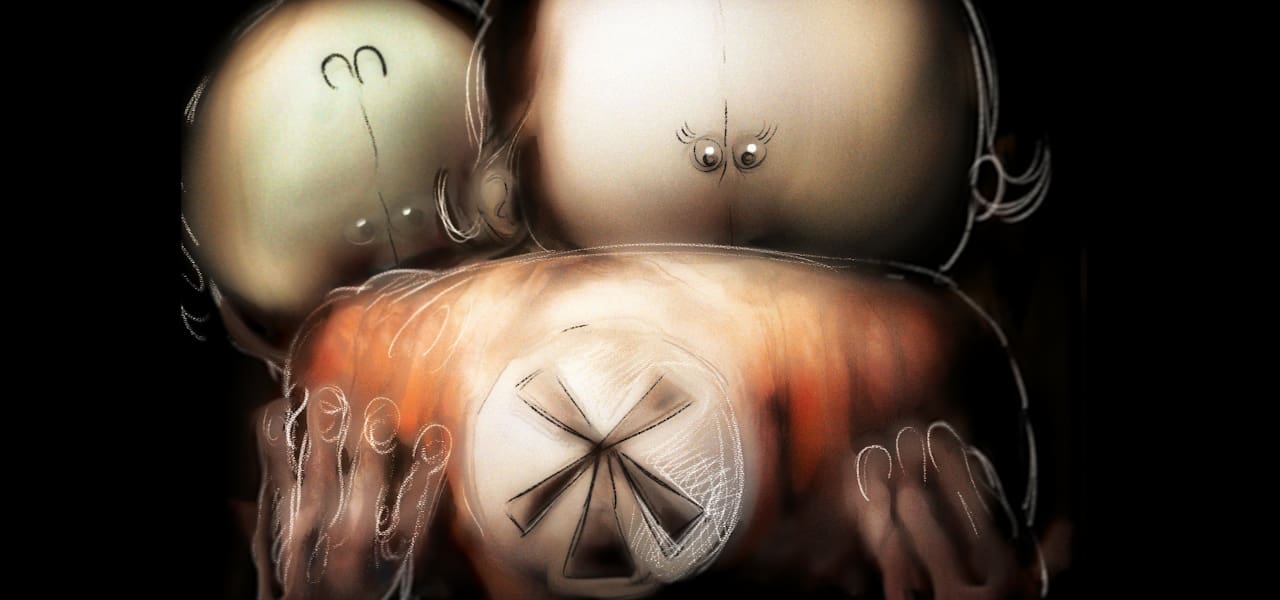
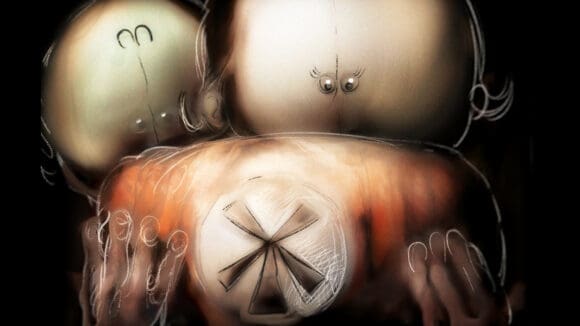
Today’s short is Alex Boya’s Canadian film Bread Will Walk, produced by Jelena Popović for the National Film Board of Canada. Designed as one continuous shot, the short combines hand-drawn animation with photographic textures, including real bread, and features Jay Baruchel voicing all the characters in its English version. It premiered at Cannes’ Directors’ Fortnight, qualified for the Oscars through exhibition, and is available to stream free worldwide starting today.
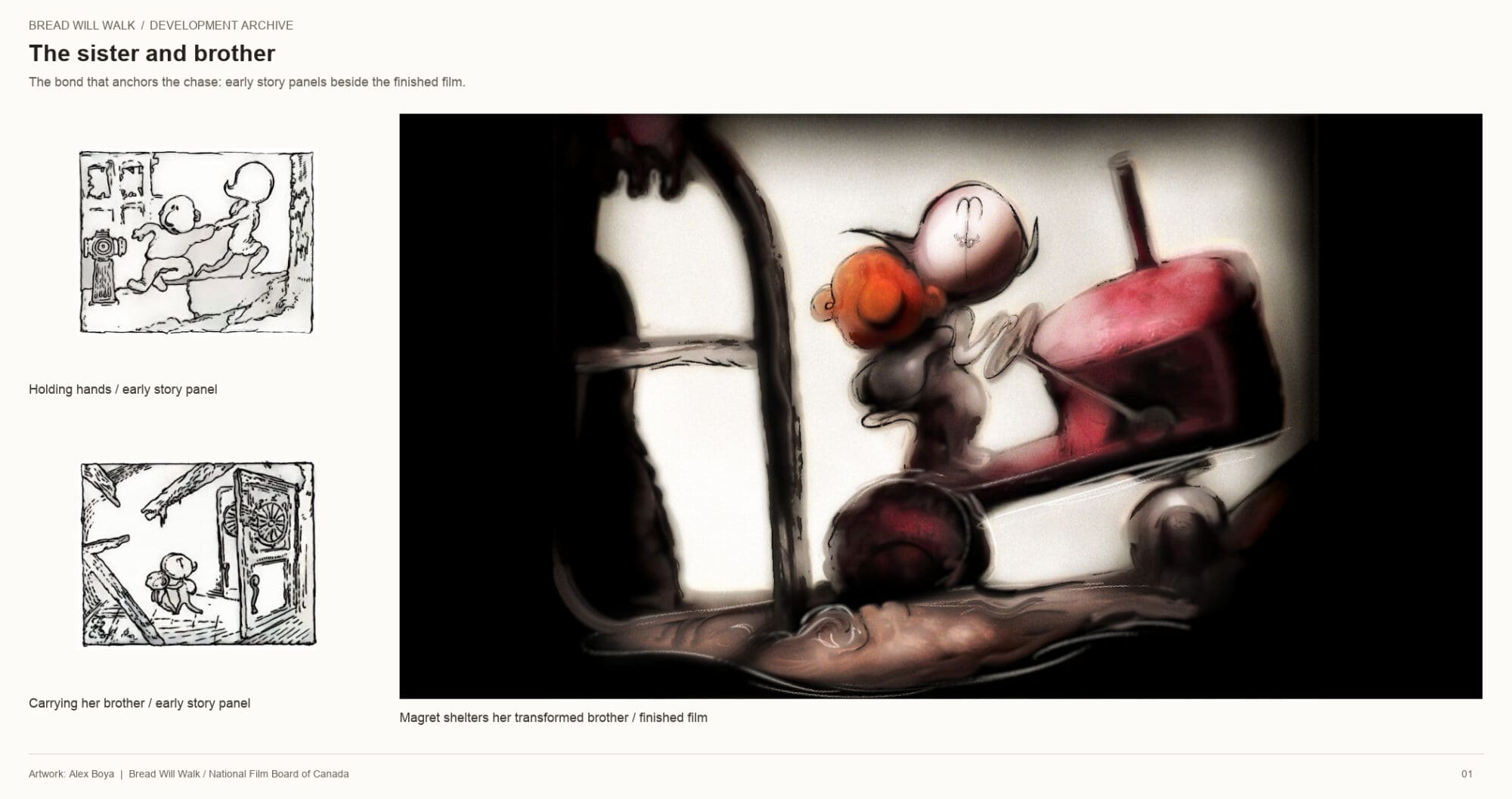
Set in a starving world where a corporation’s miracle bread turns those who eat it into walking loaves, Bread Will Walk follows a devoted sister protecting her transformed little brother from a hungry mob. The absurd chase anchors Boya’s satire of overconsumption and dehumanization: where others see food, she still sees family. Shifting bodies and twisting streets make that loss of humanity physical, while the uninterrupted shot keeps viewers caught inside the pursuit.
Cartoon Brew: What was it about this story or concept that connected with you and compelled you to direct the film?
Alex Boya: I imagined Bread Will Walk as a surrealist satire of overconsumption: a sister tries to protect her little brother in a town where people have begun to see him as food. I was drawn to the idea of reversing the meaning of bread, turning a symbol of comfort and nourishment into an instrument of propaganda. What compelled me was the human relationship within this absurd scenario: she still sees her brother when everyone else sees something to consume. Her love resists a hunger that is becoming a way of thinking. Animation allowed me to make that dehumanization physical, through transforming bodies and an increasingly unstable world.
What did you learn through the experience of making this film, either production-wise, filmmaking-wise, creatively, or about the subject matter?
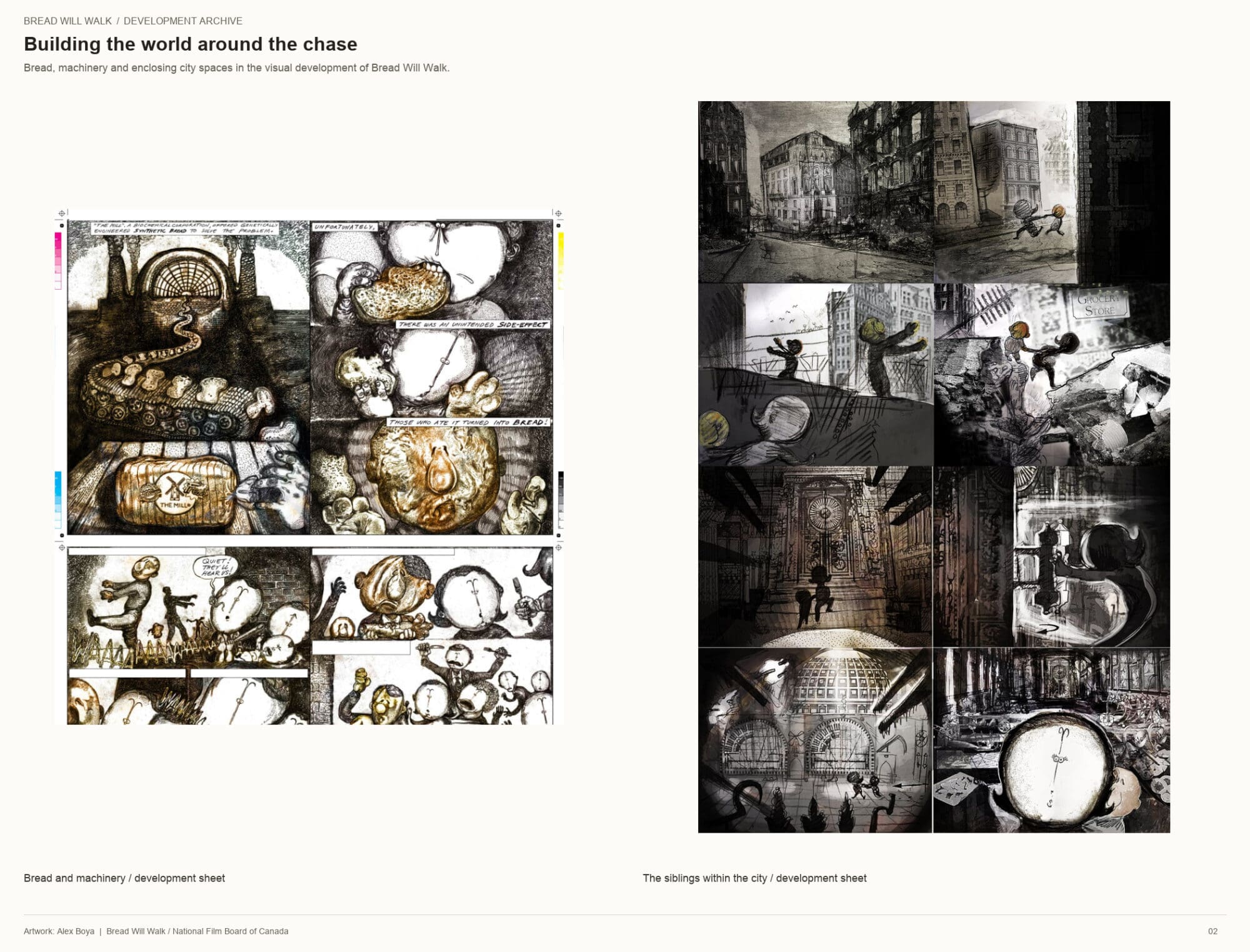
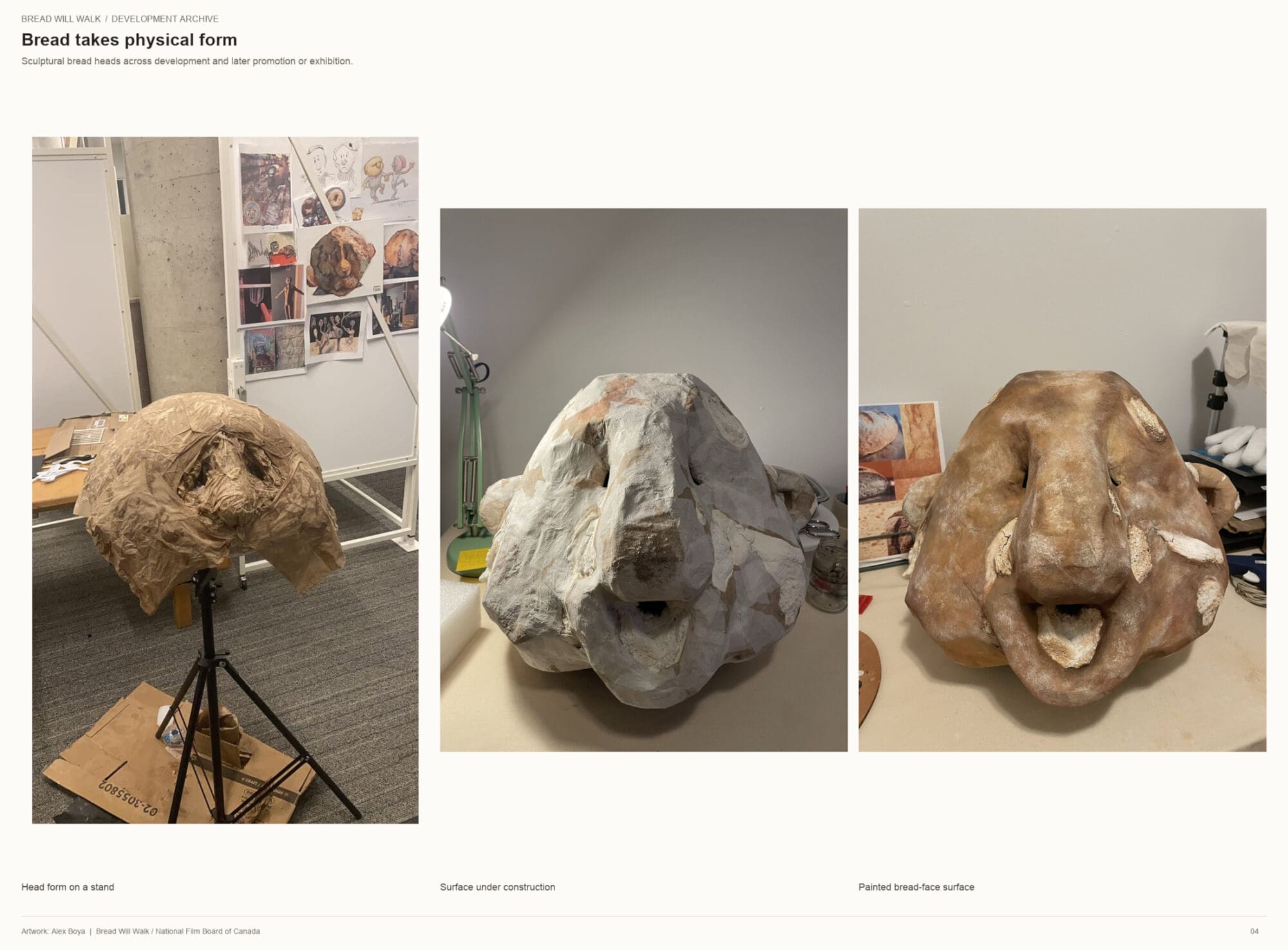
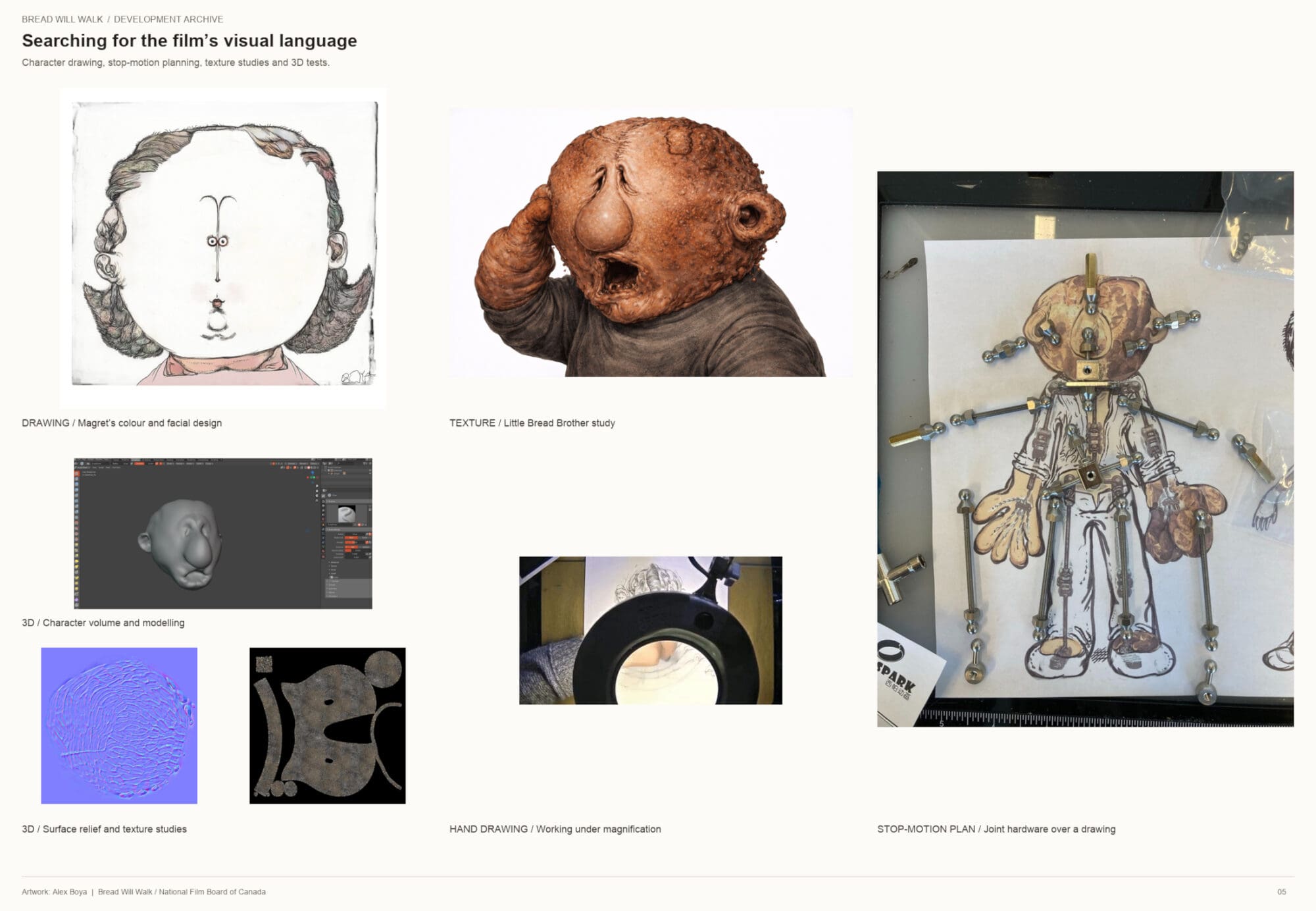
I learned that experimentation can reveal what a film should refuse. Over four years at the National Film Board of Canada, we explored bread-based stop-motion, 3D-printed objects, virtual environments and different compositing methods. Paradoxically, those experiments kept leading us back to drawing. The instability of the handmade line could express something the more controlled techniques could not: a world physically coming undone. Working with my producer Jelena Popović and the team taught me to treat techniques as part of storytelling rather than spectacle. Every experiment left something behind, even when the images disappeared, because each one made the film more certain of itself.
Can you describe how you developed your visual approach to the film? Why did you settle on this style/technique?
I began with thousands of ink drawings on paper, animating straight ahead and allowing each image to provoke the next. I wanted the world to feel as though it were constantly becoming something else. We scanned the drawings, separated them into layers and collided them with photographic textures, including real bread. That tension became the visual language: drawing gave the characters life, while collage gave them physical weight. They could feel tangible enough to be edible yet unstable enough to transform at any moment. The technique ultimately emerged from the same contradiction that drives the film itself.
Why did you decide to tell the film as one continuous shot, and what challenges did that create?
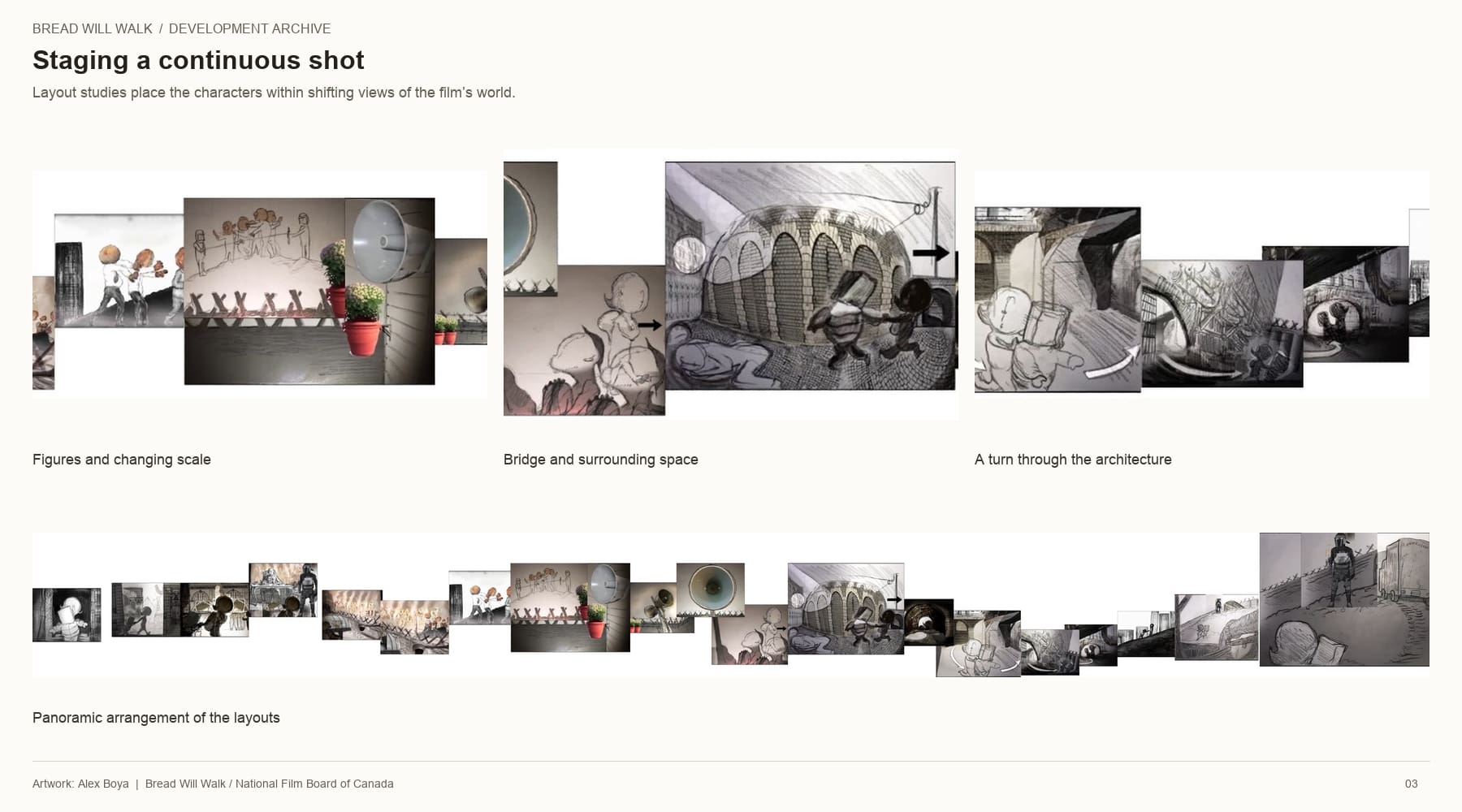
I wanted the audience to be trapped inside the chase, without the relief or distance that a cut can provide. The continuous shot turns the town into something the characters must endure rather than simply move through, while each transformation becomes the cause of the next. The challenge was sustaining that momentum without losing the sister and brother inside the spectacle. With no cuts to redirect attention, rhythm had to be created within the image itself. Camera movement, bodies and architecture became part of the same choreography, so the entire film could feel less like a sequence of scenes than one accumulating consequence.