2027 Oscars Short Film Contenders: ‘Melk’ Director Filip Anthonissen
Stay informed with free updates
Sign up to get our news digest — delivered directly to your inbox twice a week.
Welcome to Cartoon Brew’s series of spotlights focusing on the animated shorts that have qualified for the 2027 Oscars. The films in this series have qualified through one of multiple routes: by winning an Oscar-qualifying award at a film festival, by exhibiting theatrically, or by winning a Student Academy Award.
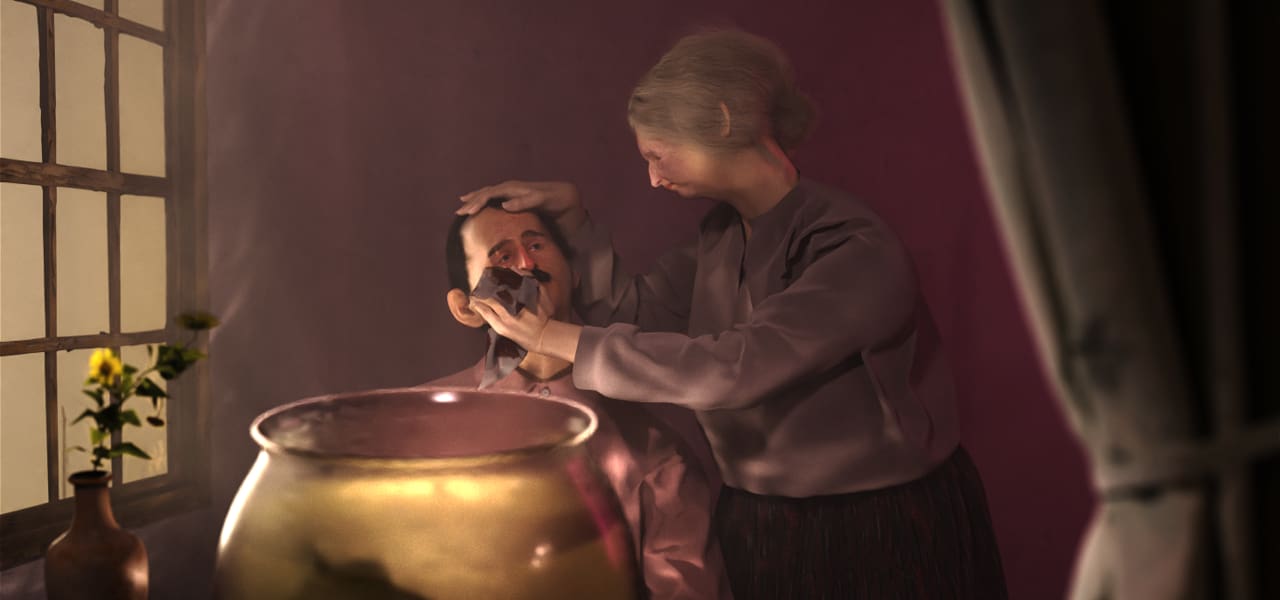
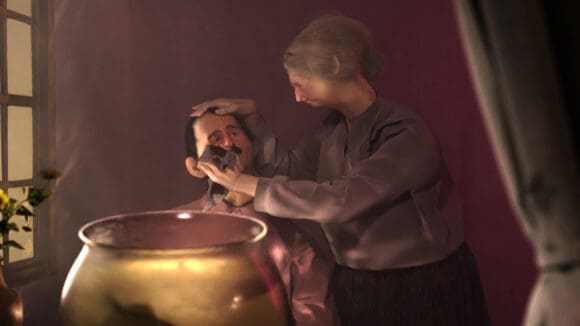
Today’s short is Melk, written and directed by Belgian filmmaker Filip Anthonissen and produced by Brecht Van Elslande for Animal Tank. His first professional film, it won the Pardino d’Oro for Best International Short Film at Locarno, where it also became the festival’s short film candidate for the European Film Awards. Set in a remote 19th-century village, it follows an elderly woman searching for her adult son after a drunken incident, before the apparent arrival of the devil sends events spiraling into chaos.
Drawing on his childhood on a farm, Anthonissen explores the destructive effects of expectations and the pressure to fit in. His CG approach incorporates motion capture and simulation techniques, while the visual design takes inspiration from the Flemish Primitives. After working primarily in video installations, he used Melk to explore more structured storytelling, balancing clarity with ambiguity as a small family incident grows into a tragedy of near-mythological proportions.
Cartoon Brew: What was it about this story or concept that connected with you and compelled you to direct the film?
Filip Anthonissen: The concept for Melk stems from thinking about my own childhood, growing up on a farm in a small town. Being different wasn’t encouraged, and there were a lot of expectations to fit in with everyone else. This idea of expectations, how they are internalized, and how destructive they can end up being was something I really wanted to make a film about. At the same time, the story itself isn’t overly personal, which allowed me to still have fun with it.
What did you learn through the experience of making this film, either production-wise, filmmaking-wise, creatively, or about the subject matter?
It was my first narrative short, so I learned a lot about dramatic structure and pacing. Before this short, I made mostly video installations, heavy on concept and visuals, but without a clear story. The scenes were slow and wide, with minimal editing. So Melk was a big change for me, as storytelling became central. I had to learn how to guide the audience enough for them to understand what’s happening, while still leaving enough room for interpretation and ambiguity.
Can you describe how you developed your visual approach to the film? Why did you settle on this style and technique?
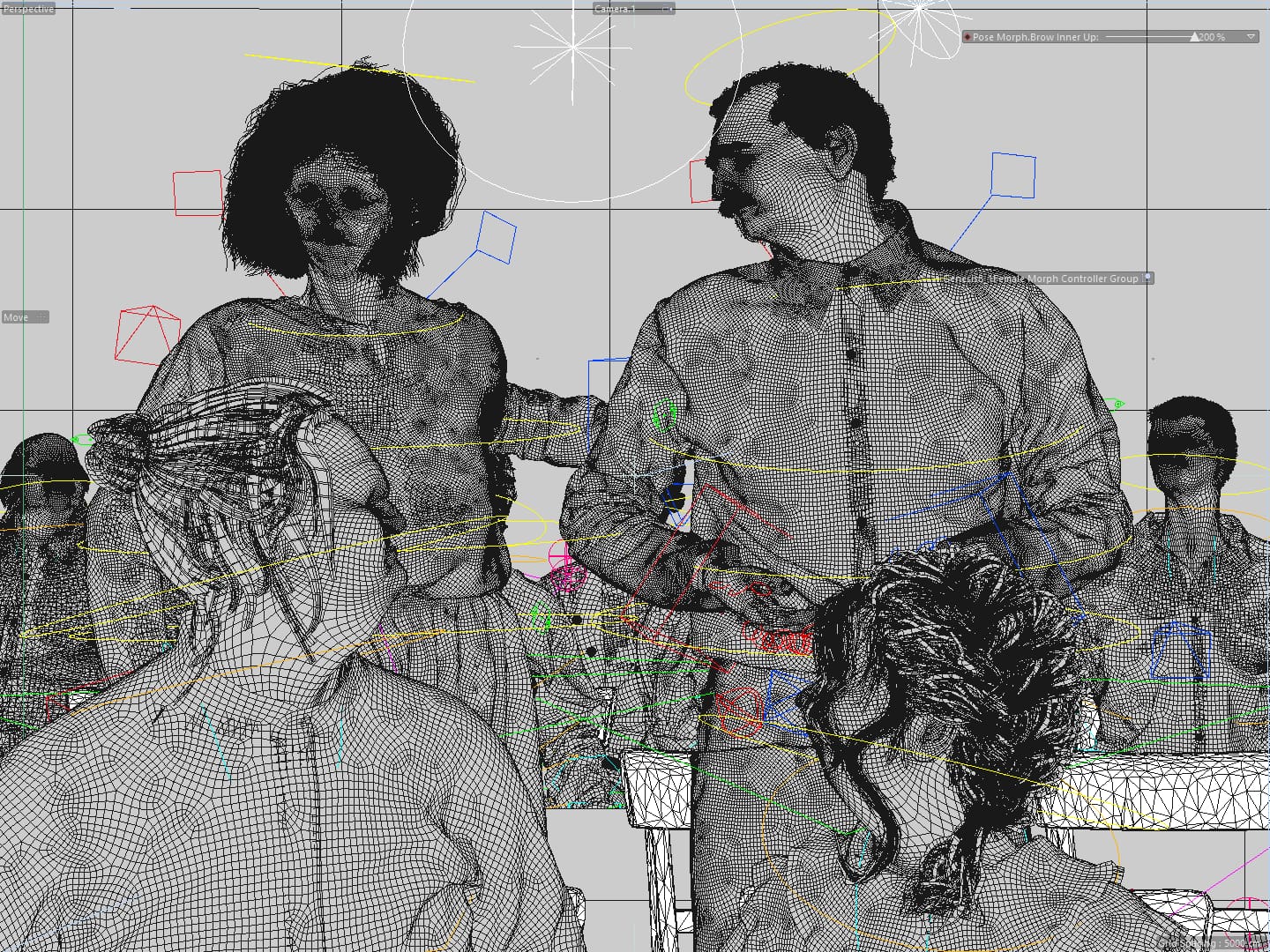
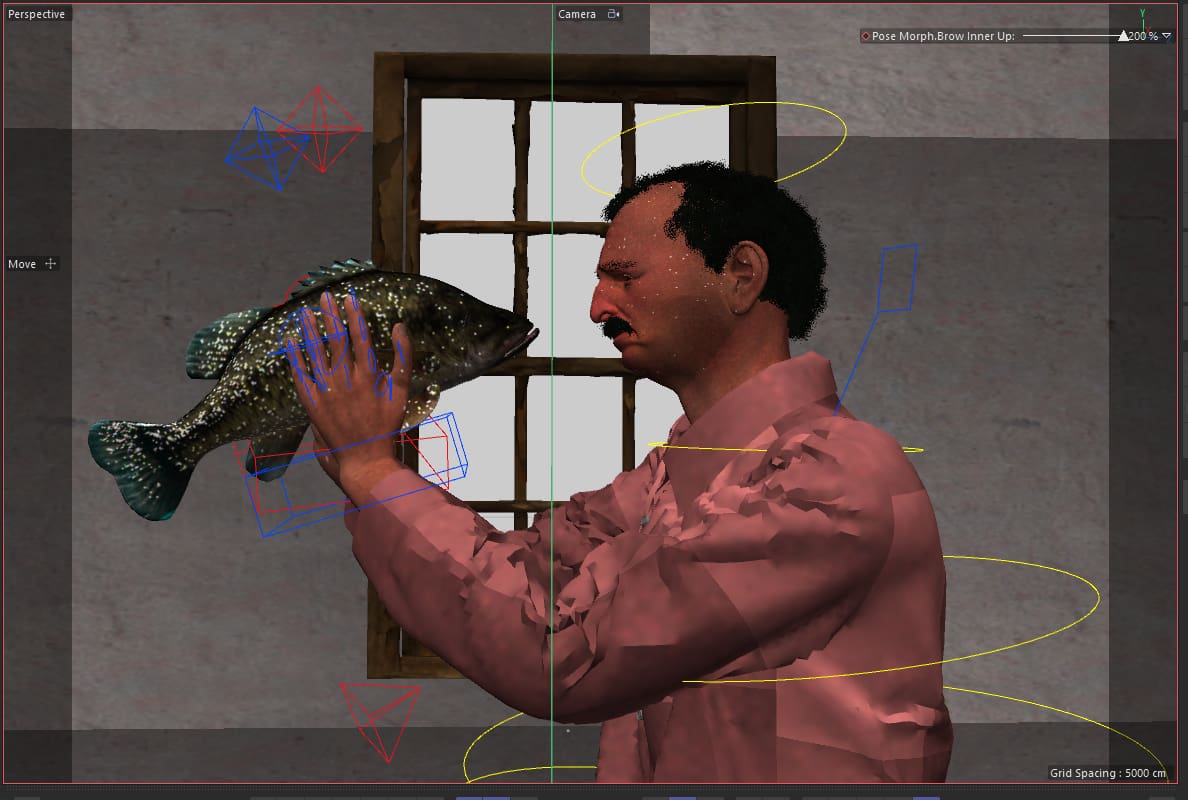
I’ve been working with 3D animation for a long time, but more recently I dove deeper into character animation. Having a background in motion graphics, I still draw from those techniques, particularly for simulations. Part of the animation was done using motion capture, which echoes the film’s theme of performing and having to play a role to fit in.
Visually, I drew a lot of inspiration from the Flemish Primitives, because I wanted to ground the film in my own heritage.
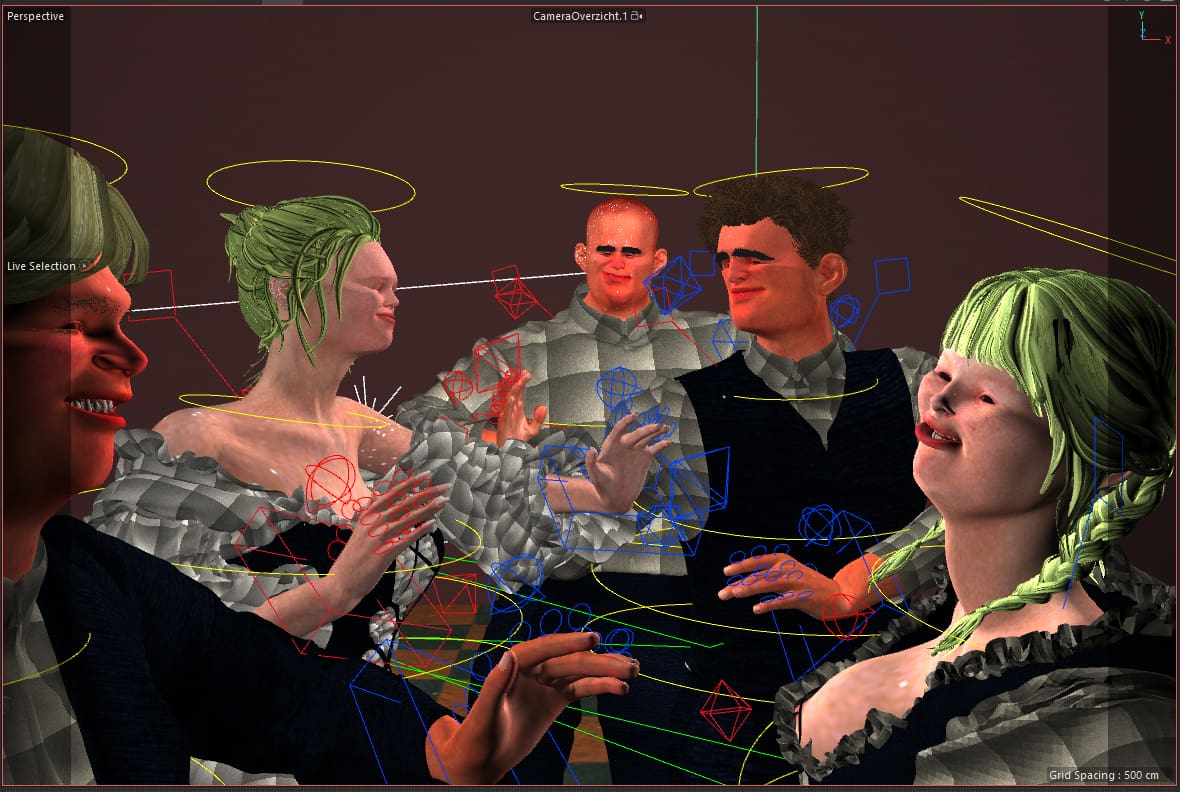
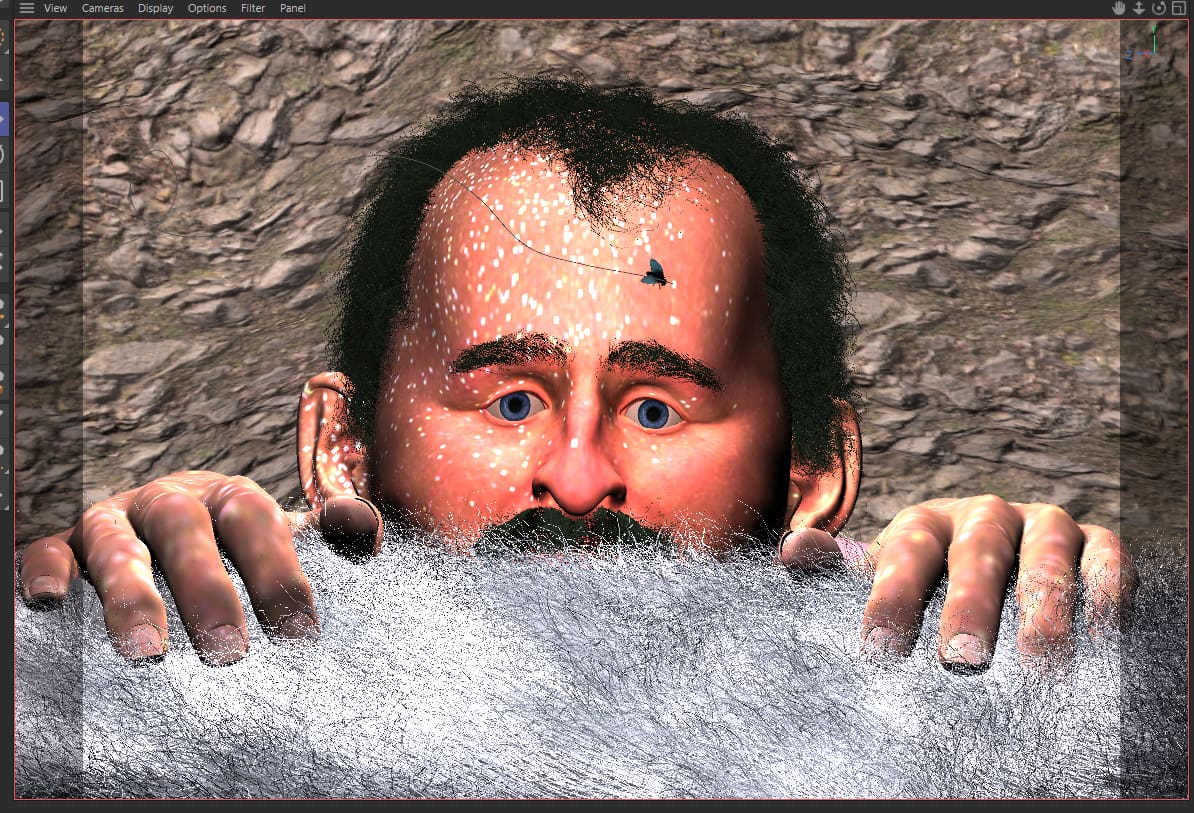
The story begins with a relatively small mistake before spiraling into absolute chaos. How did you decide how far to push that escalation?
I knew from the start that I wanted to push the escalation to a dramatic climax. I was inspired by Greek epics, where the protagonist unknowingly brings about their own downfall, and where the tragedy is often inflicted on them through family ties. The challenge was figuring out how to get to that point while keeping the intentions and motivations of the characters clear.