2027 Oscars Short Film Contenders: ‘Lysistrata’ Producer Imogen Sutton On Richard Williams’ Final Film (EXCLUSIVE TRAILER)
Stay informed with free updates
Sign up to get our news digest — delivered directly to your inbox twice a week.
Welcome to Cartoon Brew’s series of spotlights focusing on the animated shorts that have qualified for the 2027 Oscars. The films in this series have qualified through one of multiple routes: by winning an Oscar-qualifying award at a film festival, by exhibiting theatrically, or by winning a Student Academy Award.
Today’s short is Richard Williams’ Lysistrata, and this installment calls for a departure from our normal qualified shorts format. Our first three questions are usually the same for every filmmaker, giving participants equal space to discuss their work ahead of shortlist voting. Williams, one of the most important figures in animation history, died in 2019, making this our first posthumous entry in the series. Alongside the exclusive trailer debut below, we’re publishing our conversation with producer Imogen Sutton, Williams’ wife and longtime collaborator, about the project that occupied his final years and the small team that brought his surviving work to the screen.
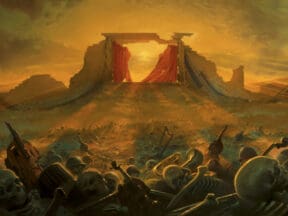
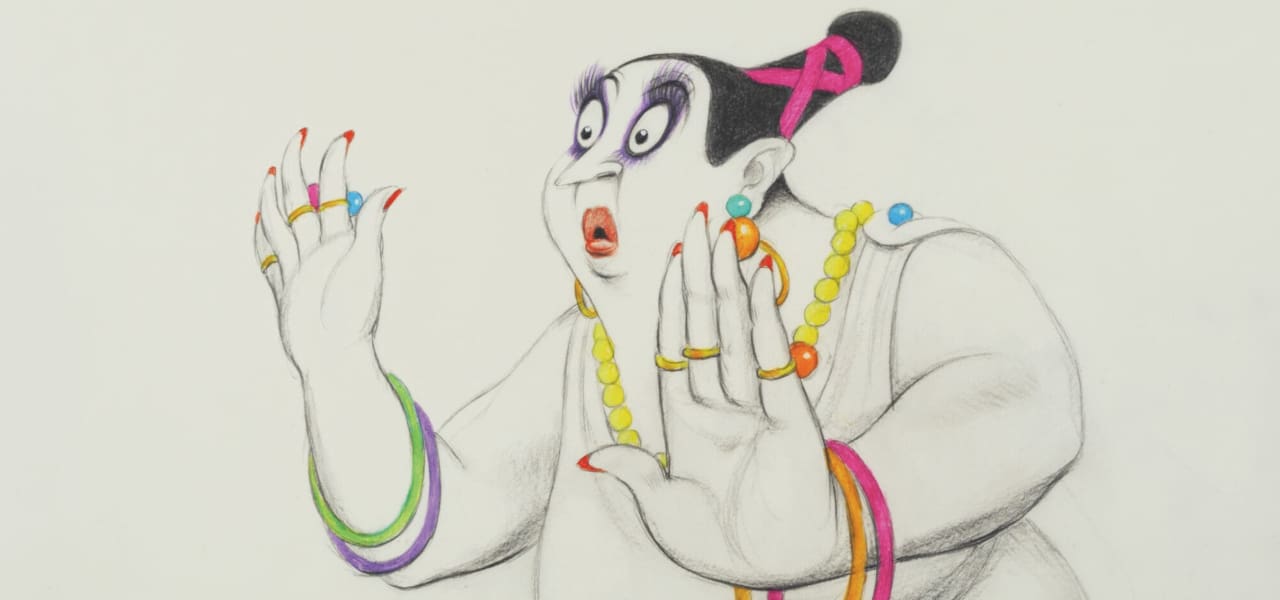
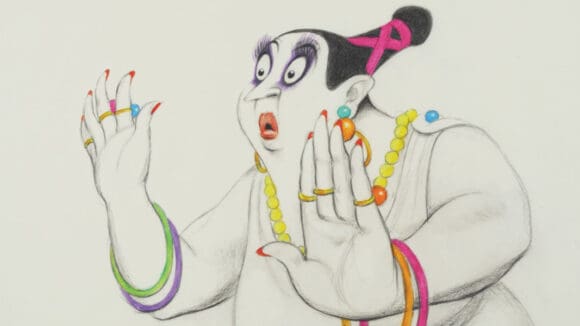
The stunning hand-drawn film adapts Aristophanes’ anti-war comedy about women who organize a sex strike to end the fighting between Athens and Sparta. A sequel to Williams’ Oscar-nominated Prologue, it features more than 9,000 of his drawings, with Meera Syal voicing Lysistrata and Williams himself playing her comic companion Kalonike. The film qualified for Oscar consideration through a theatrical run at Laemmle Glendale.
Williams had wanted to animate the story since his teens, but only felt ready to attempt it after decades of drawing, studying, and teaching. Below, Sutton recalls those ambitions and details the work of preserving his timing, framing, performances, and handmade drawings while preparing his final film for audiences.
Cartoon Brew: Richard first became fascinated with Lysistrata as a teenager, but didn’t feel ready to animate it until decades later. What do you think made this story so important to him?
Imogen Sutton: Both Dick and I read Lysistrata as teenagers and, quite separately, wanted to do something with it. It’s a compelling story written by Aristophanes as a play 2,400 years ago.
It’s about the futility of war and how women from opposing sides can cleverly use the tools at their disposal to stop it.
In the 1926 edition Dick read, he was inspired not just by the story of women going on a sex strike to stop Athenian and Spartan men fighting, but also by the book’s illustrations, which were drawn by the Australian artist Norman Lindsay, whose drawings remained an inspiration for Dick his whole life.
The story feels so modern. It’s an anti-war comedy with both serious and comic characters. At times, it’s uproariously funny. Dick both animated and voiced the comic character Kalonike. He had a great time with her role in the story. While he was working on the film, he tweeted:
“I have a new character, and I really love animating her. She tells me what to do.”
Ancient Greece fascinated Dick, and he spent years researching for the film, finding books on the subject and carefully ripping them apart to make reference boards. It was important to him to be historically accurate.
Because Lysistrata is a story for all times, it’s no coincidence that it has been adapted into films, theater, and now animated by Dick.
Richard was still pushing the boundaries of hand-drawn animation well into his 80s. What aspects of his work on Lysistrata do you think best demonstrate his ambitions as an animator?
Dick was always pushing boundaries, but he was also aware of his limitations. That’s why he brought the great animators of the Disney and Warner Bros. Golden Age to work at his London studio in order to pass on their knowledge. It’s also why he insisted that life drawing was essential: “Life drawing is the best teacher. Draw all the time. Study the great artists. I keep studying.”
Even when he was giving masterclasses and writing The Animator’s Survival Kit, he himself was continuing to learn. He sometimes joked about having to occasionally turn to his own book for advice.
Dick saw learning as a lifelong pursuit. His film Prologue and its sequel, Lysistrata, became vehicles for everything he’d learned over many decades. His understanding of life drawing, the human form, and movement is evident in both films. While he was working on Lysistrata, he said:
“I’ve got to master this damn thing so I can do anything I want.”
Lysistrata is a coming together of all these ambitions. Yet even at the very end of his life, in his last tweet, he says:
“We can never do enough life drawing. That includes me.”


After Richard’s passing, you and his collaborators faced the challenge of bringing his unfinished work to the screen. How did you approach that process, and what was most important to you in preserving his original vision?
When Dick died, I was unsure if I would be able to finish Lysistrata. It was only possible because of the incredible small team of collaborators who had worked with Dick over many years. It was a labor of love for everyone involved.
The first thing that had to happen was we had to find all the material Dick had shot in his studio space at Aardman, so we could use his sync on the dialogue scenes he’d animated. Tom Barnes, the post-production supervisor, went to great lengths to find this material so that Adrian Rhodes, sound designer and composer, could use the original sync with the original dialogue. At the same time, our compositor, Fernando Lechuga, was finishing his work on the final epic scene. Here he describes how he did that:
“My biggest responsibility was to make sure that any timing finesse would be as Dick envisioned it. Also, not to go too hard on this cleanup process. He always wanted the drawing to look tactile and unapologetically handmade, making the animation the true star of the film.”
Tom Barnes describes Dick telling him why he wanted to make Lysistrata:
“Dick first mentioned Lysistrata to me when he was working on Prologue.
“It was the incredibly ambitious film he was now ready to make. He would work alone, drawing every frame himself and testing until he was satisfied with the results.
“When finishing the film, it was critical to preserve Dick’s framing and working edit along with the voice tracks he had selected.”
I was the “temp” voice of Lysistrata, but I knew we’d need to find an exceptional actor for the role. With great good fortune, Meera Syal was available, and we recorded her dialogue as the music and compositing were coming together.
For everyone who worked on the film, it was of utmost importance to complete Dick’s vision of Lysistrata just as he would have wished.
Adrian Rhodes puts it quite beautifully:
“Helping to bring Dick’s characters to life with sounds — giving them weight, character, and adding to the humor, but aiming never to distract from the beautiful fluidity of the drawings — was a privilege for me. Remembering Dick’s love of the detail in the sound, and the subtlety of the music from the first film, Prologue, was always at the forefront of my mind. I hope he would appreciate the trumpet tune in the final credits — a small tribute to a great artist and jazz man.”
Now that Lysistrata has finally reached audiences, what has surprised or moved you most about the response to the film?
What has touched me about the response to the film is the surprise — and excitement — when people learn there is another film by Dick.
When an artist dies, there is no more work, and the work that exists gains an extra preciousness. But to discover more work, and work created at the peak of an artist’s power, is especially exciting.
I’ve had responses along the lines of “I had no idea” or “I really didn’t know Dick had achieved so much more work.” I was especially moved by a comment from a longtime collaborator:
“Seeing this amount of work is completely unexpected — it’s a magnificent gift.”