2027 Oscars Short Film Contenders: ‘Tuna Tartare’ Director Lena Greene
Stay informed with free updates
Sign up to get our news digest — delivered directly to your inbox twice a week.
Welcome to Cartoon Brew’s series of spotlights focusing on the animated shorts that have qualified for the 2027 Oscars. The films in this series have qualified through one of multiple routes: by winning an Oscar-qualifying award at a film festival, by exhibiting theatrically, or by winning a Student Academy Award.
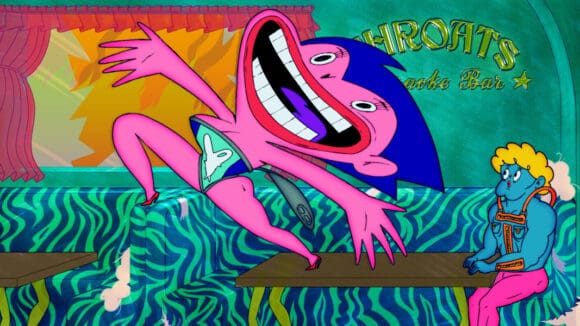
Today’s short is Tuna Tartare, an independent animated musical directed by Lena Greene and co-written by Alessandra Clark. The U.S. short, distributed by Miyu, was animated primarily in hand-drawn 2D, with a nightmare sequence made from 100 watercolor paintings. It qualified for Oscar consideration through theatrical screenings.
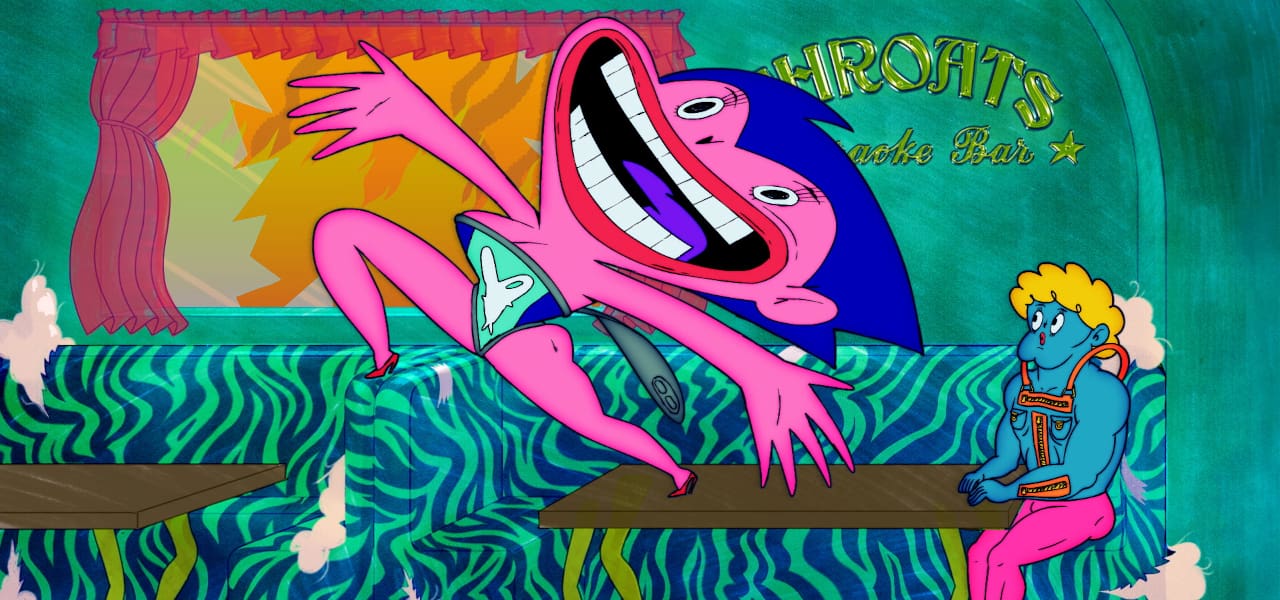
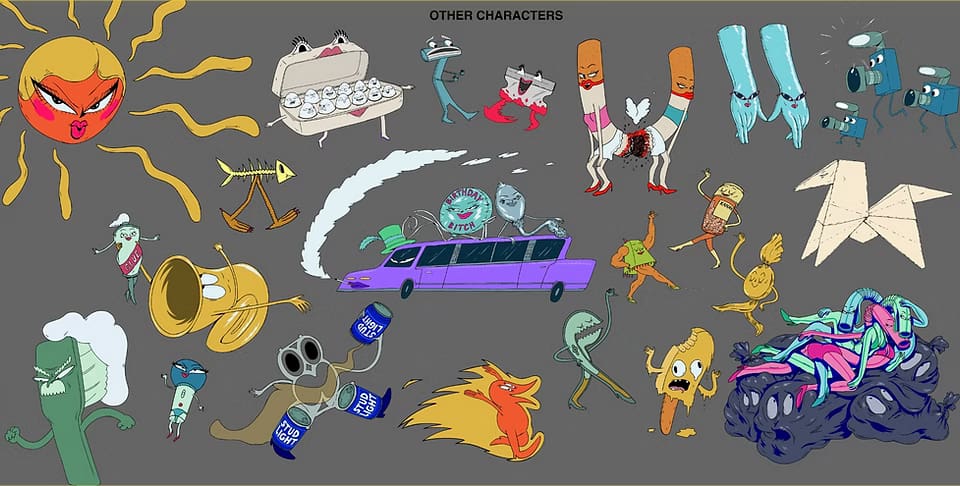
In post-apocalyptic Los Angeles, an expired can of tuna and her best friend Susan, a fake Louis Vuitton purse, run a karaoke bar called Throats. Greene draws on the Hollywood glamour she grew up around and the piles of trash outside her Lower East Side apartment to build a world where even the castoffs get a turn at the mic. A karaoke host herself, she has brought Throats off the screen with pop-ups in Los Angeles and London.
Cartoon Brew: What was it about this story or concept that connected with you and compelled you to direct the film?

Lena Greene: Tuna Tartare is about an expired can of tuna fish whose dreams of being a star never came true, so she opened a karaoke bar with her best friend Susan, a fake Louis Vuitton purse. I can relate. I grew up doing every musical I could, but somewhere along the way became an animator who makes animated musicals instead.
I’ve always been fascinated by the gap between who we dreamed of becoming and who we actually become. That’s why I love karaoke so much. There’s a pop star in all of us! Tuna is a failed performer who created her own stage because the world didn’t give her one. And ultimately, it’s friendship, not professional success, that saves her.
What did you learn through the experience of making this film, either production-wise, filmmaking-wise, creatively, or about the subject matter?
I learned that what I thought would be a six-minute film can very easily turn into ten. More importantly, I learned how crucial it is to edit at the animatic stage and to show it to other people before animating. Things that seem completely obvious to you can get lost on the viewer.
It’s so hard to write comedy sitting alone in a dark room! I co-wrote the screenplay with my best friend and screenwriter Alessandra Clark. You need someone to riff with, and so many of the jokes in the film came from that. I knew the animatic was ready when it was getting sufficient laughs.
Can you describe how you developed your visual approach to the film? Why did you settle on this style and technique?
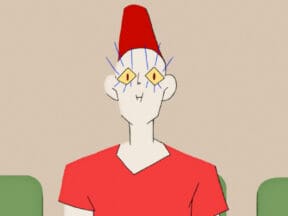
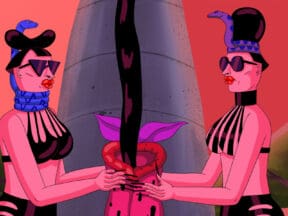
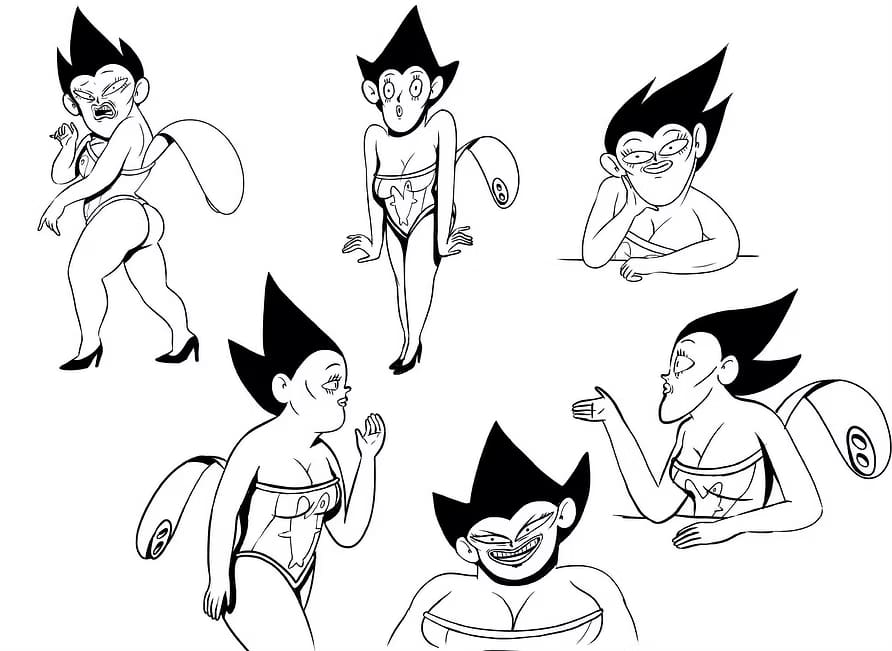
Tuna’s world mixes the glitz and glamour of my Hollywood-adjacent upbringing with the barricades of trash surrounding the rent-stabilized tenement apartment I’ve lived in on NYC’s Lower East Side for 12 years. I’m hugely inspired by Sally Cruikshank, Gladys Nilsson, Liquid Television, and cartoons like SpongeBob, Aaahh!!! Real Monsters, and Ren & Stimpy. I love exaggerated, flawed, grotesque characters who are somehow still glamorous. Think Divine.
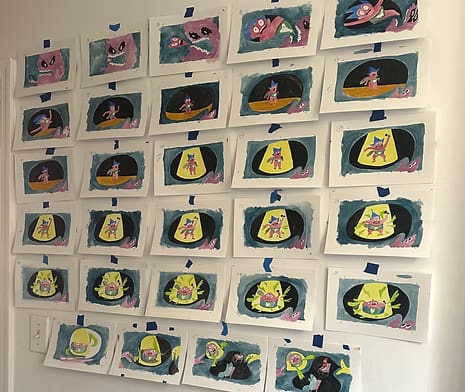
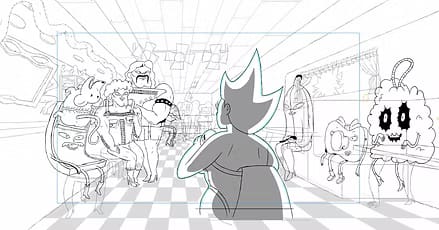
The film is primarily hand-drawn 2D animation using Adobe Animate and Photoshop, but Tuna’s big nightmare sequence was made using 100 watercolor paintings.
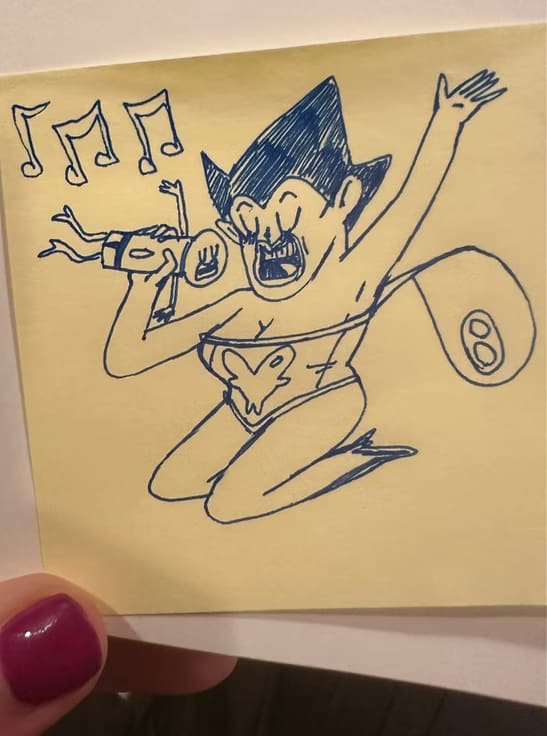
What inspired you to bring Throats Karaoke Bar into the real world, and how did you pull it off?
I’m a KJ (karaoke jockey)! I’ve hosted Montez Got Talent, an annual karaoke contest on Montez Press Radio, since 2019. I’ve brought Throats to life with pop-ups in L.A. and London, and hope to start a regular night in NYC. I love watching someone discover their “star song,” and want to bring the joy Tuna thinks she brings to her bar patrons to life.
For thousands of years, singing was part of everyday human life. Somewhere along the way, we started treating singing like something you need permission to do. I don’t care if you can sing. I care if you can feel.