2027 Oscars Short Film Contenders: ‘Danse Macabre’ Director Hisko Hulsing
Stay informed with free updates
Sign up to get our news digest — delivered directly to your inbox twice a week.
Welcome to Cartoon Brew’s series of spotlights focusing on the animated shorts that have qualified for the 2027 Oscars. The films in this series have qualified through one of multiple routes: by winning an Oscar-qualifying award at a film festival, by exhibiting theatrically, or by winning a Student Academy Award.
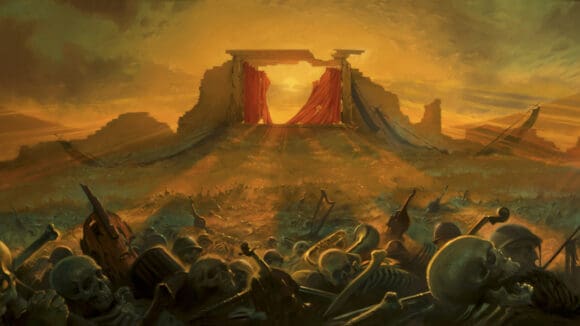
Today’s short is Danse Macabre, written and directed by Hisko Hulsing, whose credits include Undone and The Sandman episode “A Dream of a Thousand Cats.” Produced by Valk Productions with Autour de Minuit, Vivi Film, and Cinemon Entertainment, the film combines oil paintings, 2D animation, and CG, with machine-learning tools trained on Hulsing’s paintings used to polish its painterly textures. The film, one of the most consequential and controversial debuts at Annecy over the summer, qualified for the upcoming Oscars through a theatrical run.
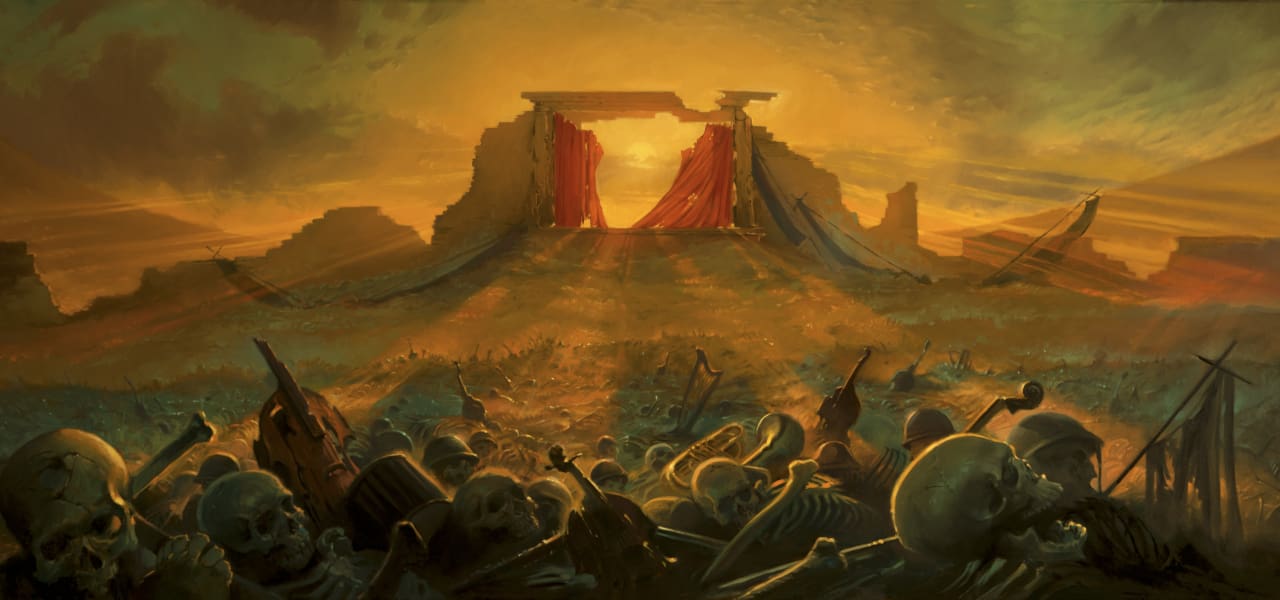
Set to the second movement of Dmitri Shostakovich’s Tenth Symphony, the film follows an army of skeletons from an orderly march into catastrophic violence. Hulsing began developing it in response to Russia’s invasion of Crimea and what he saw as a resurgence of fascism. Orchestral music dictated its structure, while his study of 17th-century Dutch painting shaped a world intended to exist beyond the screen through exhibitions and orchestral performances.
Cartoon Brew: What was it about this story or concept that connected with you and compelled you to direct the film?
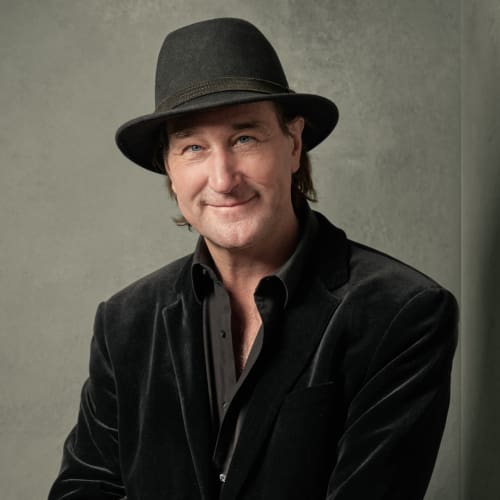
Hisko Hulsing: Twelve years ago, when Russia invaded Crimea and started a war in Ukraine, I began following what was happening in Russia. Putin’s expansionism, the suppression of his own people, and the murder of others seemed like a resurrection of fascism to me. To prepare people’s minds, demons from the past were unearthed; figures like Beria and Stalin were being rehabilitated. I saw this approach being copied by far-right groups in Europe and politicians in the U.S. I wanted to create a nightmarish film to warn people about these tendencies. Sadly, reality has surpassed my apocalyptic vision.
What did you learn through the experience of making this film, either production-wise, filmmaking-wise, creatively, or about the subject matter?
This was a very complex film to make. Eighty people from six studios worked on it in the Netherlands, France, Belgium, and Hungary. All animation was done with traditional software like Blender, Houdini, and TVPaint, and we developed new techniques to create painterly textures for the traditional animation using machine-learning tools trained on my own paintings.
Being one of the first artists to do so was met not with the praise I naively expected, but with protest. I’m curious how many of the protesters will use similar tools once they’ve been implemented in software like Blender.
Can you describe how you developed your visual approach to the film? Why did you settle on this style and technique?
As with all my films and series, my oil paintings form the basis for the look of the film.
I’ve studied 17th-century Dutch painters for decades and developed a very classical technique. I love the organic, warm nature of real paint, which allows me to create mysterious and dreamy worlds. For Danse Macabre, I painted all the characters into the paintings, which is unusual.
I made an oil painting for each shot and removed the characters after photographing them. Danse Macabre is a film, but it will also be a traveling exhibition and a series of orchestral performances.
How closely did Shostakovich’s music dictate the film’s editing, choreography, and pacing? And how did you adapt the instrumental piece into a cohesive narrative?
Shostakovich’s music dictated almost everything. I was constantly listening to this scherzo to come up with ideas and images. The film doesn’t follow a classical narrative, but there’s still a strong structure derived directly from the music. It starts with a march, an appearance of military order and intentionality, but soon descends into chaos, panic, and total destruction, as most wars do.
Some say this Allegro was meant to be a terrifying portrait of mass killer Joseph Stalin. I didn’t take that literally, but I tried to stay as truthful as possible to this beautiful and terrifying piece of music.