2027 Oscars Short Film Contenders: ‘Paradaïz’ Director Matea Radic
Stay informed with free updates
Sign up to get our news digest — delivered directly to your inbox twice a week.
Welcome to Cartoon Brew’s series of spotlights focusing on the animated shorts that have qualified for the 2027 Oscars. The films in this series have qualified through one of multiple routes: by winning an Oscar-qualifying award at a film festival, by exhibiting theatrically, or by winning a Student Academy Award.
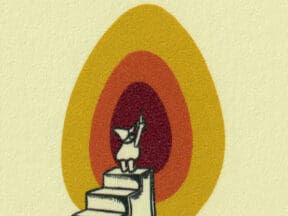
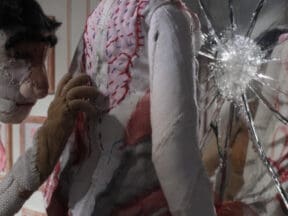
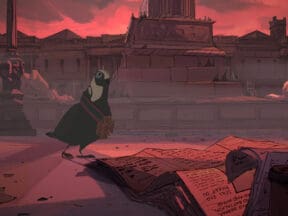
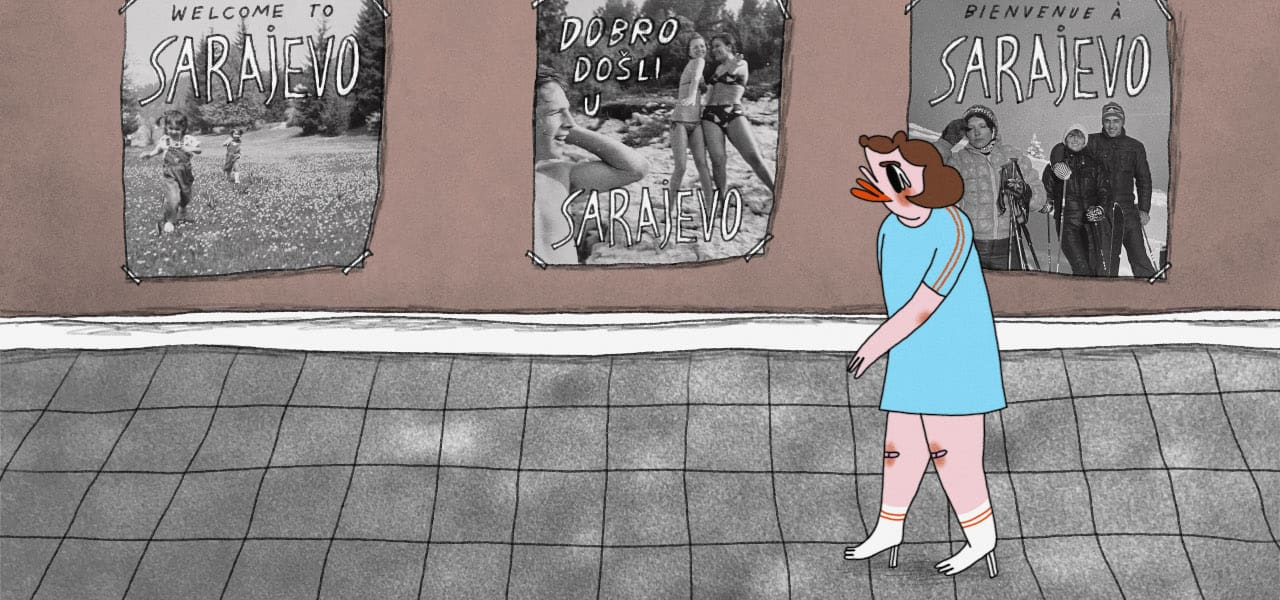
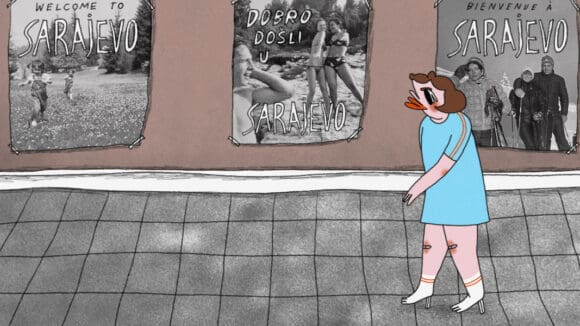
Today’s short is Paradaïz, the filmmaking debut of Sarajevo-born, Winnipeg-based artist Matea Radic, produced by Jelena Popović for the National Film Board of Canada. Animated entirely on an iPad, the film combines hand-drawn imagery, family photographs, and archival television footage. It qualified for Oscar consideration by winning the Golden Dove for short animated film in the international competition at DOK Leipzig.
Returning to Sarajevo for the first time in 25 years, Radic experienced a sudden fear that war might break out again and imagined pulling a hillside over herself like a blanket. That image became the starting point for a surreal exploration of memory, displacement, and belonging. Drawing on childhood recollections of her family’s apartment and an absurdist furniture commercial, she builds a world where familiar surroundings become both hiding places and reminders of what has been lost.
Cartoon Brew: What was it about this story or concept that connected with you and compelled you to direct the film?
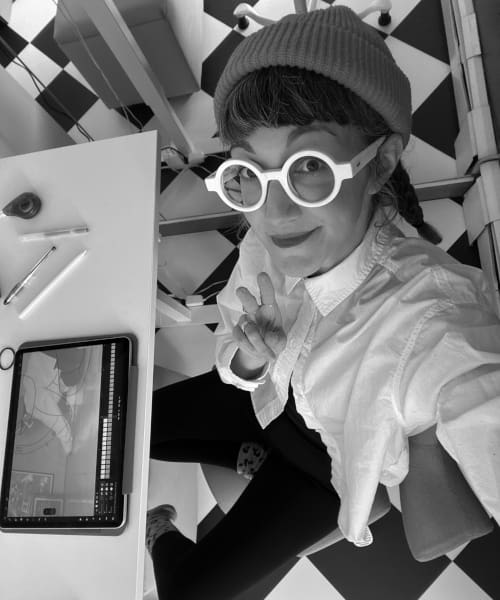
Matea Radic: It was 25 years after having fled Sarajevo that I decided to return for the very first time. As the plane was descending toward the city, I was looking out the window at the rolling hills, and suddenly, a fear came over me. I started to wonder what I would do if the war started again. And in that moment, I imagined myself pulling up the hill as if it were a blanket and hiding underneath it. This image haunted me for some time before I decided to follow myself under that hill and write Paradaïz.
What did you learn through the experience of making this film, either production-wise, filmmaking-wise, creatively, or about the subject matter?
I learned so much! This was my first film, and I learned something new at every step of the way. One of the biggest lessons was how important it is to have a team to lean on. I was so lucky to have the wonderful people at the NFB supporting me throughout this project. I’m so used to working on my own, but when you spend so much time on a project and become so close to it, having fresh eyes and new perspectives is essential.
I animated the entire film on my iPad, which made for a really streamlined and accessible process. That said, I found myself craving a more analog experience, and I’m excited to explore a more tactile approach in my next project.
Can you describe how you developed your visual approach to the film? Why did you settle on this style and technique?
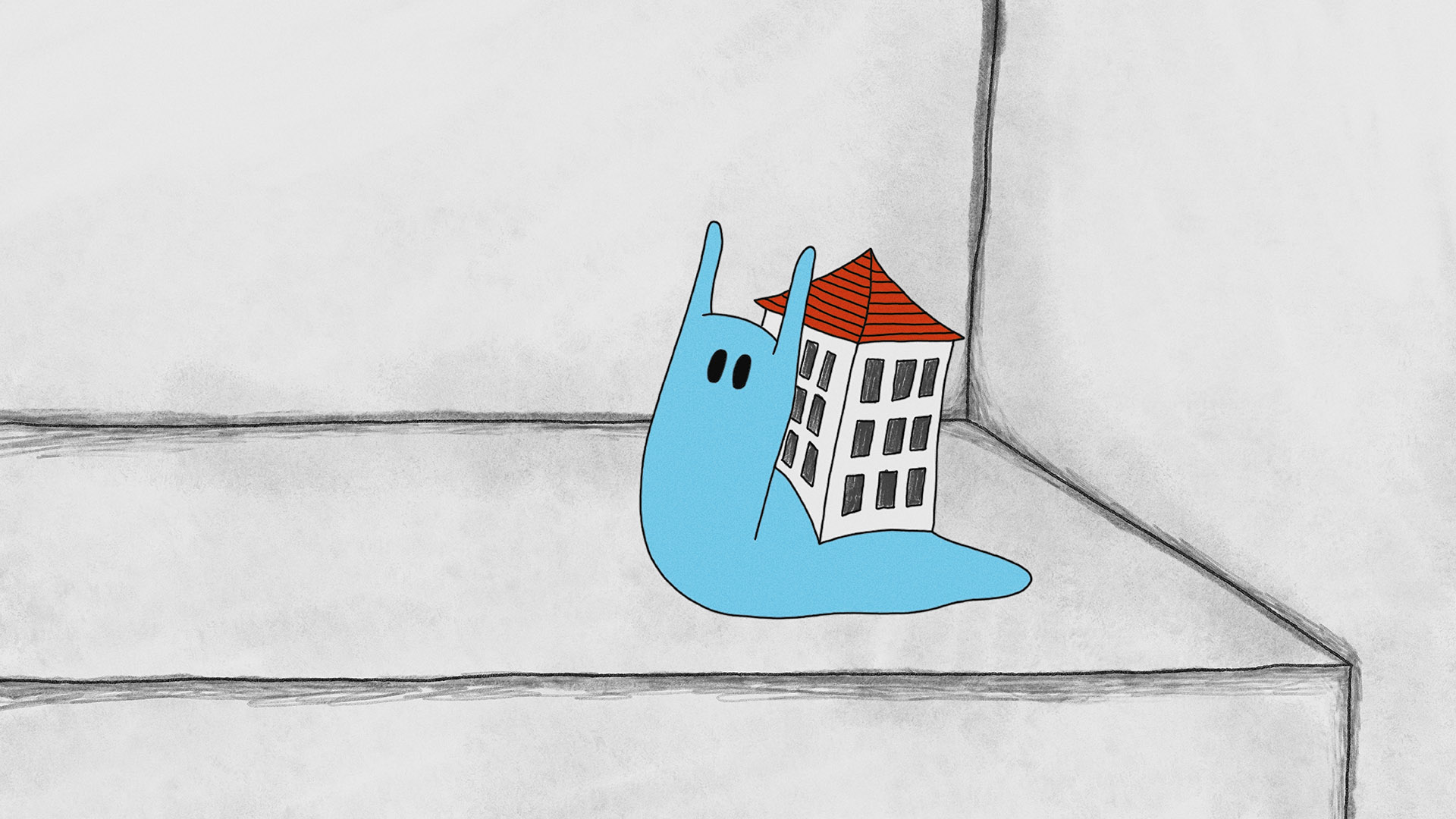
I drew heavily on my own childhood memories to build the world of the film. After immigrating to Canada, I became obsessed with drawing the floor plan of our apartment in Sarajevo. I think it was my way of holding on to home, of making sure I wouldn’t forget it. Creating the backgrounds for this film really gave me the chance to put that memory to the test.
I’ve long been interested in the space where the absurd and reality intersect. Through the combination of archival elements and my own animation style, I aimed to explore and bridge these two worlds. The photographs in the film are old family photos, and the commercial is from the ’90s, for a furniture company called Šipad. As a kid, I was obsessed with this commercial because I always wanted to live on the ceiling, and these people were actually doing it.



Did making the film change how you think about your memories of Sarajevo or your idea of home?
It brought me closer to my identity as a Sarajevan. I find myself increasingly drawn to music, literature, and visual art from the former Yugoslavia, exploring a side of my identity I hadn’t connected with before. I’ve always had this little “what if” in the back of my mind about who I might have been had the war never happened, and it’s been meaningful to explore that part of myself. Growing up in the diaspora, I often felt that I was somehow incomplete, but I’ve come to realize the opposite is true. Home isn’t necessarily a place, but rather a feeling of being grounded in yourself.