.png)
2026 Oscars Short Film Contenders: ‘Il Burattino E La Balena’ Director Roberto Catani
Stay informed with free updates
Sign up to get our news digest — delivered directly to your inbox twice a week.
Welcome to Cartoon Brew’s series of spotlights focusing on the animated shorts that have qualified for the 2026 Oscars. The films in this series have qualified through one of multiple routes: by winning an Oscar-qualifying award at a film festival, by exhibiting theatrically, or by winning a Student Academy Award.
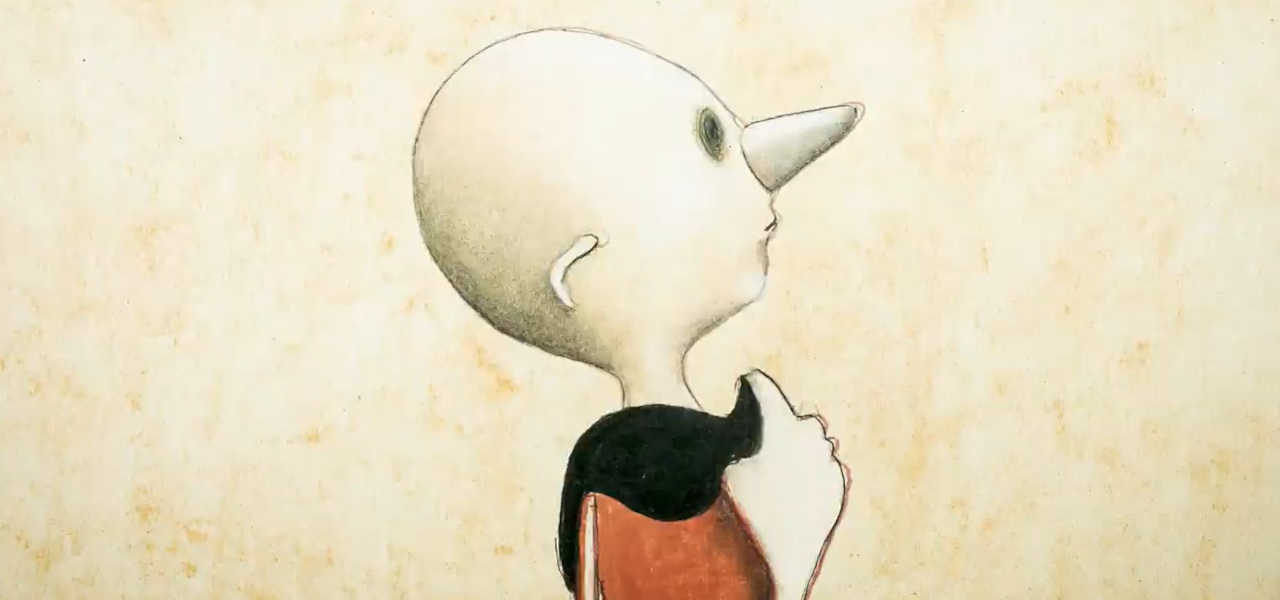
Today’s short is Roberto Catani’s Il burattino e la balena (The Puppet and the Whale), produced by Miyu Productions and Withstand Film. Having screened at Annecy, Venice, Zagreb, and Clermont-Ferrand, it qualified for the Oscars after winning best animated short at Ottawa.
The dialogue-free short is a haunting, often uncomfortable examination of a puppet who, unlike Pinocchio, never transforms into a child, instead drifting through a world shaped by longing, fragility, and the quiet ache of its unrealized metamorphosis. Rendered entirely through Roberto Catani’s hand-drawn animation, the film’s aesthetic is central to its emotional force: each frame is created on white paper using Oilbar, chalk, pastel, and drypoint, giving the imagery a raw, tactile presence with smudged textures and trembling outlines. The aesthetic choice creates a dreamlike atmosphere in which the puppet’s movements feel entirely human, further emphasizing the protagonist’s inability to transform. Through its expressive illustrations and slow, contemplative rhythm, the film is hardly a linear story but rather a visual meditation on identity, desire, and the limits of transformation.
Cartoon Brew: What was it about this story or concept that connected with you and compelled you to direct the film?
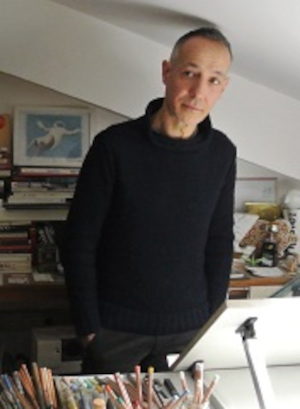
Roberto Catani: The idea, or concept, that drove me to create this film is tied to the possibility of telling the story of a character, different from humans, who decides not to accept the rules and models that humans represent. The idea of rejection and nonconformity or disobedience is at the heart of the film.
What did you learn through the experience of making this film, either production-wise, filmmaking-wise, creatively, or about the subject matter?
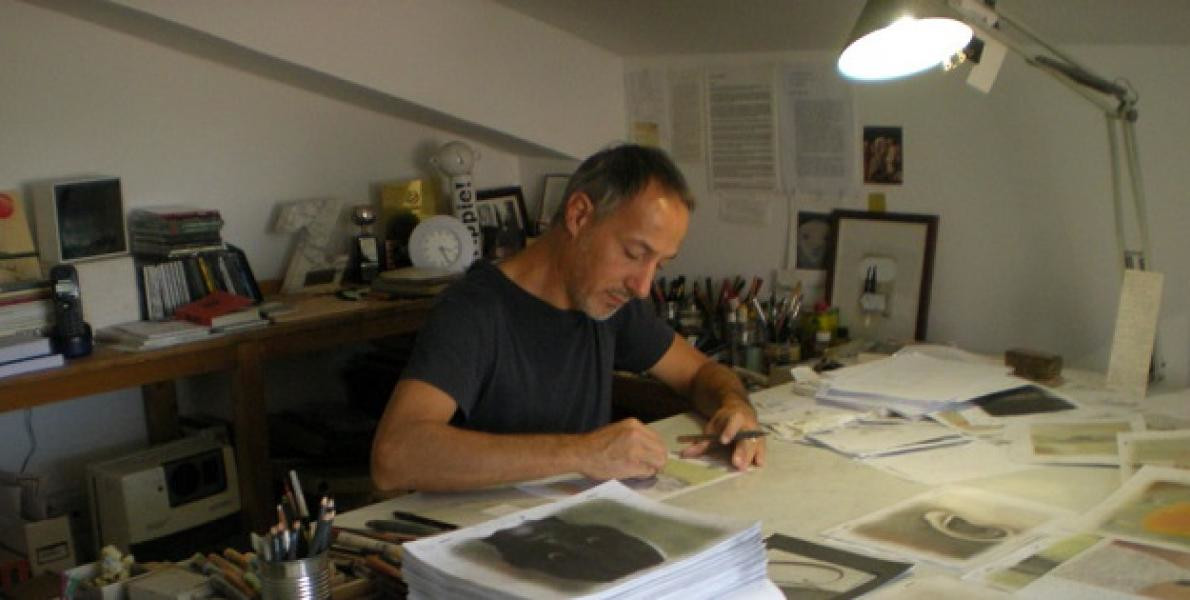
Every film involves a journey of learning and growth. But in this film, more than in others, the greatest lesson came from the experience of working in a team. For the first time, I had collaborators who made a fundamental contribution to the project’s realization. Furthermore, the “teamwork” extended to dialogue and collaboration with the production team. In short, I understood the value of teamwork much more deeply.
Can you describe how you developed your visual approach to the film? Why did you settle on this style/technique?
The stylistic and visual work on the film stems from research that has been developing and evolving for years. It comes from afar; each film is a step forward, a discovery. For this film, what I had experimented with in the past was further synthesized into shapes, movements, and colors that I felt were more appropriate to the narrative dynamics, the content, and the concepts expressed.
Your film draws inspiration from Pinocchio yet subverts its central idea: this puppet doesn’t become a child. What symbolic meaning were you seeking in reversing that classic narrative, and how does this shift reframe the puppet’s relationship to humanity and autonomy?
As I’ve partially mentioned previously, Pinocchio was the ideal subject/character to describe the process of growth and transformation I needed to tell my story. I needed a character who was “different,” both formally and in character. A character with the necessary qualities to embark on a journey of change, but also to engage with the world around him, the human world, in fact. Pinocchio becomes aware of what humanity is becoming or has become. He sees himself reflected in it and rejects the model (conformity, blind obedience, cynicism, etc.) that humanity represents and interprets.


