.png)
2026 Oscars Short Film Contenders: ‘Luz Diabla’ Directors Gervasio Canda, Patricio Plaza, And Paula Boffo
Stay informed with free updates
Sign up to get our news digest — delivered directly to your inbox twice a week.
Welcome to Cartoon Brew’s series of spotlights focusing on the animated shorts that have qualified for the 2026 Oscars. The films in this series have qualified through one of multiple routes: by winning an Oscar-qualifying award at a film festival, by exhibiting theatrically, or by winning a Student Academy Award.
Today’s short is Luz Diabla from directors Gervasio Canda, Patricio Plaza, and Paula Boffo, produced by Lakeside Animation and Ojo Raro. The film won best animated short at Sitges, best international short at Oculto Film Festival, and qualified for the Oscars by winning best animated short at Guadalajara.
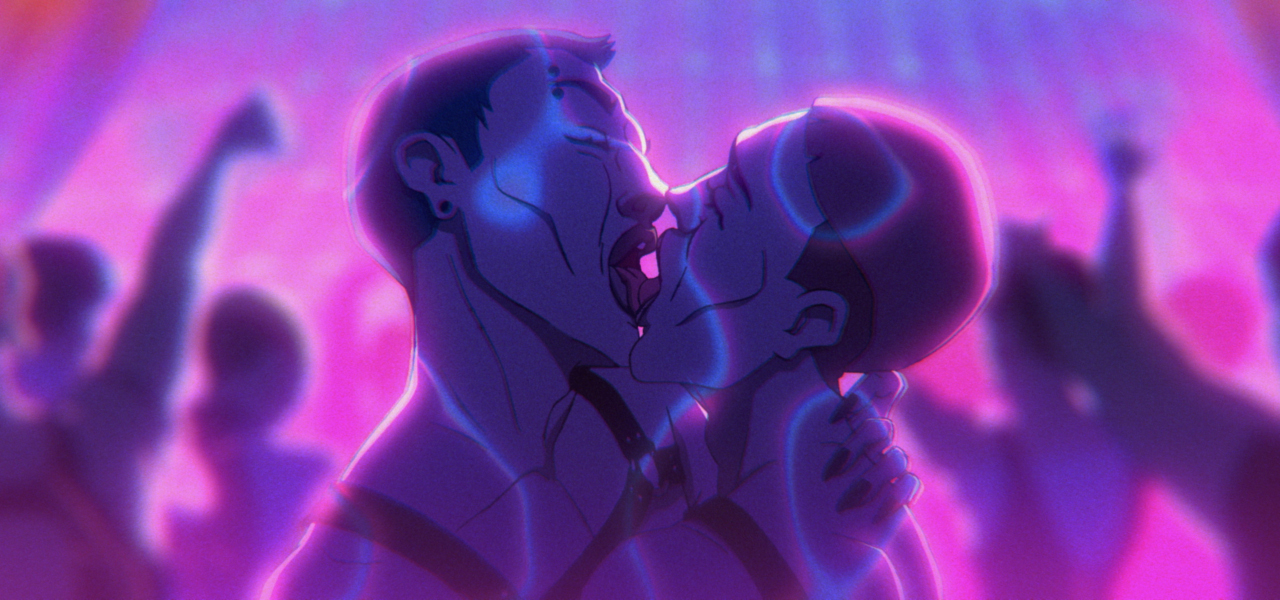
Devil’s Beacon follows Martín, a flamboyant urban raver whose night spirals into the uncanny after a mysterious roadside light forces him to crash in the vast Argentine Pampas (grassland). Seeking shelter in a remote bar tended by two enigmatic gauchos, Martín’s psychotropic-fueled paranoia intensifies as reality fractures around him, unleashing disturbing visions and supernatural forces that blur the line between myth and hallucination. Crafted by the team behind the standout 2022 short Carne de Dios, the film shares a visual fidelity, an otherworldly blend of 2D digital animation, hallucinatory texture, and folkloric dread, immersing the viewer in a tense, sensorial nightmare where folk horror meets modern-day Latin American culture.
Cartoon Brew: What was it about this story or concept that connected with you and compelled you to direct the film?
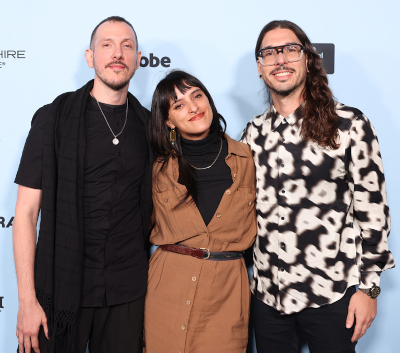
Gervasio Canda, Patricio Plaza, and Paula Boffo: What connected with us was the collision of two worlds that rarely coexist onscreen: the rural gaucho imaginary and the urban queer raving experience. The myth of La Luz Mala, rooted in our regional memory, was central to what we wanted to explore. We wanted to revitalize pagan identities and build supernatural horror from light itself as an entity that seduces and reveals desires. Through this remake, we framed tensions between folkloric tradition and modern queer life inside a folk-horror language, playing with horror and comedy. We believe there are still conversations in the LGBTIQ+ community about excess and intimacy. Using comedy-horror, we wanted to speak about identity, vulnerability, and community.
What did you learn through the experience of making this film?
Luz Diabla taught us the strength of collective creation. It was our first co-directed project as a trio, and we learned how our distinct sensibilities could merge into a shared vision and a common creative language. Creatively, we learned to trust humor and tenderness inside a horror framework, especially with queer identity and excess. We reaffirmed telling stories from our “sudaka gaze” in a way that worldwide audiences can connect to. Production-wise, we learned the value of flexibility, working with pipelines different from our usual ones and with teams from diverse cultural backgrounds. The cultural encounter in the film extended to the production itself, and we are happy with the results and the way the team came together.
Can you describe how you developed your visual approach to the film? Why did you settle on this style/technique?
The visual approach grew from the collision of queer rave culture’s vibrant neon intensity and the raw countryside atmosphere of rural folk horror and Latin American artists. We drew from 90s independent animation, anime, new queer cinema, and South American visual art, literature, and traditional myths. We chose a 2D frame-by-frame hybrid style to manage imperfections in characters and the physical world, holding both the rawness of the pampas and the stylized intensity of raving culture. The countryside uses a pale, desaturated palette and quiet light, while the rave erupts in saturated neons and sharp contrasts. This mix between muted rural life and hallucinatory queer nightlife became the core of the film’s language.
The film blends folk horror, queer identity, rave aesthetics, and the mythology of La Luz Mala. How did you approach adapting this myth in a way that feels culturally authentic yet modern, while keeping Martin’s queer journey at the center?
We approached La Luz Mala as a living myth that could be reinterpreted through a queer, contemporary lens. We transformed a myth linked to hidden treasures into an entity that confronts fears and desires, guiding Martín’s journey. To remain authentic, we anchored the film in the geography of the Argentine pampas, rural atmospheres, local iconography, and pagan saints such as Gauchito Gil, crossed with rave aesthetics. The music blends our original techno score with traditional practices such as payadas and décimas. We also brought in the emotional states of queer rave culture. This contrast between rural and urban created space for vulnerability and desire, questioning the “evil queen” archetype and bringing folk horror into dialogue with queer tenderness.


