.png)
2026 Oscars Short Film Contenders: ‘The Night Boots’ Director Pierre-Luc Granjon
Stay informed with free updates
Sign up to get our news digest — delivered directly to your inbox twice a week.
Welcome to Cartoon Brew’s series of spotlights focusing on the animated shorts that have qualified for the 2026 Oscars. The films in this series have qualified through one of multiple routes: by winning an Oscar-qualifying award at a film festival, by exhibiting theatrically, or by winning a Student Academy Award.
Today’s short is The Night Boots from director Pierre-Luc Granjon, produced by Yves Bouveret. The film earned its Oscar qualification by winning the Cristal for a short film at Annecy, where it also won best French short and the audience award.
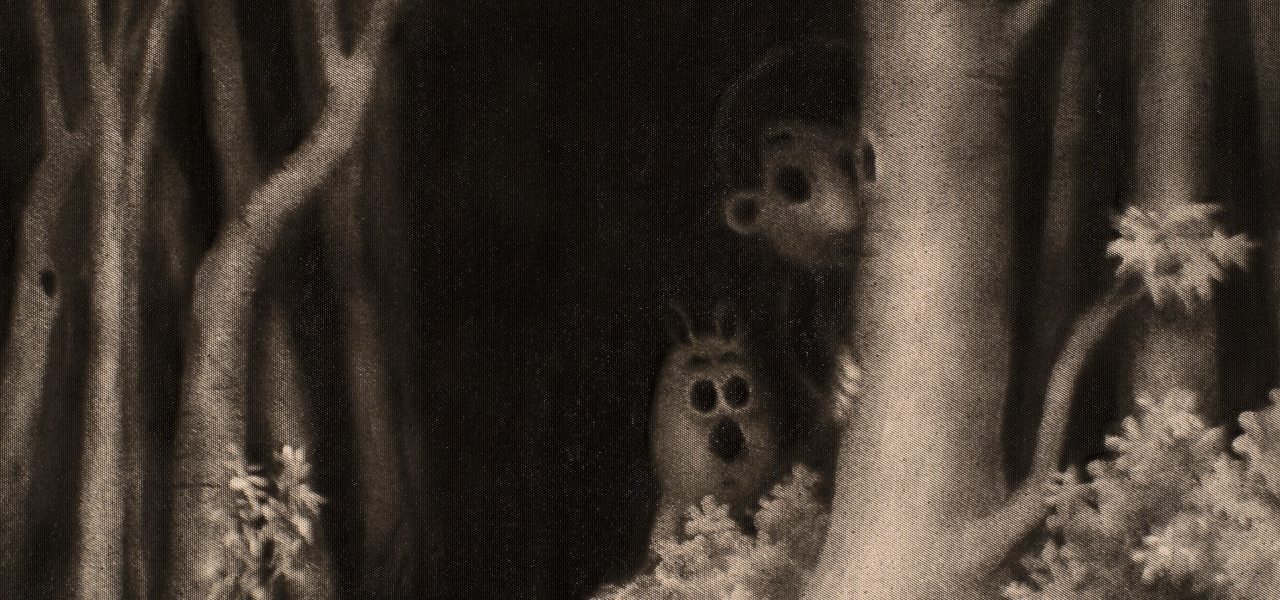
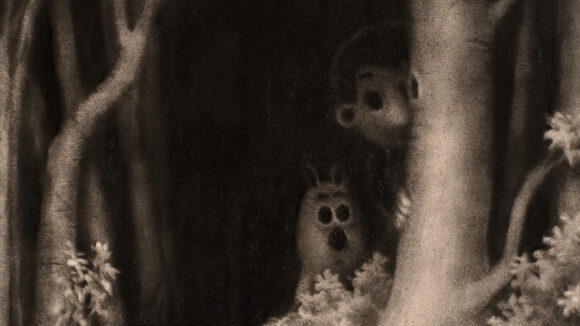
During a dinner party, as his parents are entertaining guests, a boy sneaks out of the house in the middle of the night and enters the forest wearing his protective rubber boots. There, he meets a strange and charming creature who leads him on an epic woodland adventure. The Night Boots features expressive monochromatic pinscreen animation that makes it one of the year’s most unforgettable animated shorts.
Cartoon Brew: What was it about this story or concept that connected with you and compelled you to direct the film?

Pierre-Luc Granjon: I grew up in a house surrounded by a forest, and to me, it’s a familiar place — a true playground, far from the witches, ogres, or wolves that inhabit fairy tales. We’re living through a very peculiar, dark, and troubling time, and I didn’t want to add darkness to darkness. Speaking of gentleness and tenderness, of a budding friendship, seemed just as important to me as addressing the serious issues of our world today.
What did you learn through the experience of making this film, either production-wise, filmmaking-wise, creatively, or about the subject matter?
The technique I chose to create The Night Boots — the pin screen developed by Alexeieff and Parker — requires working alone for many months, unlike most of my previous films, which were made as part of a team. I had to impose a strict work discipline on myself in order to stay on schedule. On the production side, working with Yves Bouveret was extraordinary; being supported in this way made the entire filmmaking process pleasant and smooth.
Can you describe how you developed your visual approach to the film? Why did you settle on this style/technique?
I first came across the pinscreen at the NFB in Montreal, where Michèle Lemieux was working with it. The way she talked about it made me dream of one day being able to use it myself. The pinscreen is more than just an object — I would compare it to a musical instrument, but one designed for drawing. It allows you to sculpt shadow and light, and although it’s made of metal, it offers remarkable softness. I’ve never managed to achieve on paper the same depth and delicacy that the pinscreen allows.
The film’s black and whites are reversed from what might normally be expected about a film set at night, like a photonegative. Can you discuss that choice, and how light and shadow not only define space but suggest mood or psychological states in the film?
With The Night Boots, I was embarking on a film set entirely at night, yet I didn’t want the visuals to be too dark. One of the great advantages of cinema is that you can create a unique language for each film. Once the viewer understands that the story takes place on a full-moon night, there’s no need to keep reminding them of it. So I had fun erasing the background whenever it wasn’t important — which allowed me both to “brighten” the film and to refocus the narrative on the characters and what they’re feeling. When the forest and the night became the main characters, I drew them in full detail.