2027 Oscars Short Film Contenders: ‘God Is Shy’ Director Jocelyn Charles
Stay informed with free updates
Sign up to get our news digest — delivered directly to your inbox twice a week.
Welcome to Cartoon Brew’s series of spotlights focusing on the animated shorts that have qualified for the 2027 Oscars. The films in this series have qualified through one of multiple routes: by winning an Oscar-qualifying award at a film festival, by exhibiting theatrically, or by winning a Student Academy Award.
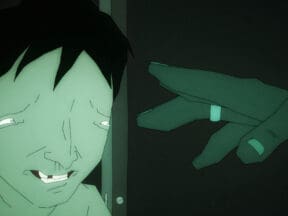
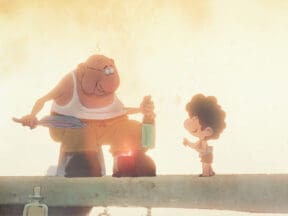
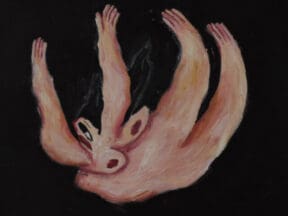
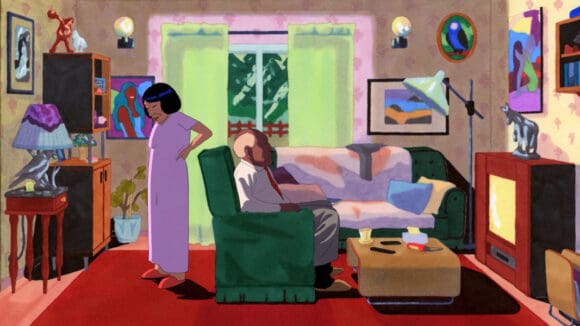
Today’s short is Jocelyn Charles’ God Is Shy (Dieu est timide), produced by Remembers in France. The cosmic horror short contrasts saturated colors and cartoonish characters with increasingly disturbing imagery. Its festival run has yielded at least seven Oscar-qualifying awards, including wins at Annecy, Bucheon, Interfilm Berlin, and the Hong Kong International Film Festival.
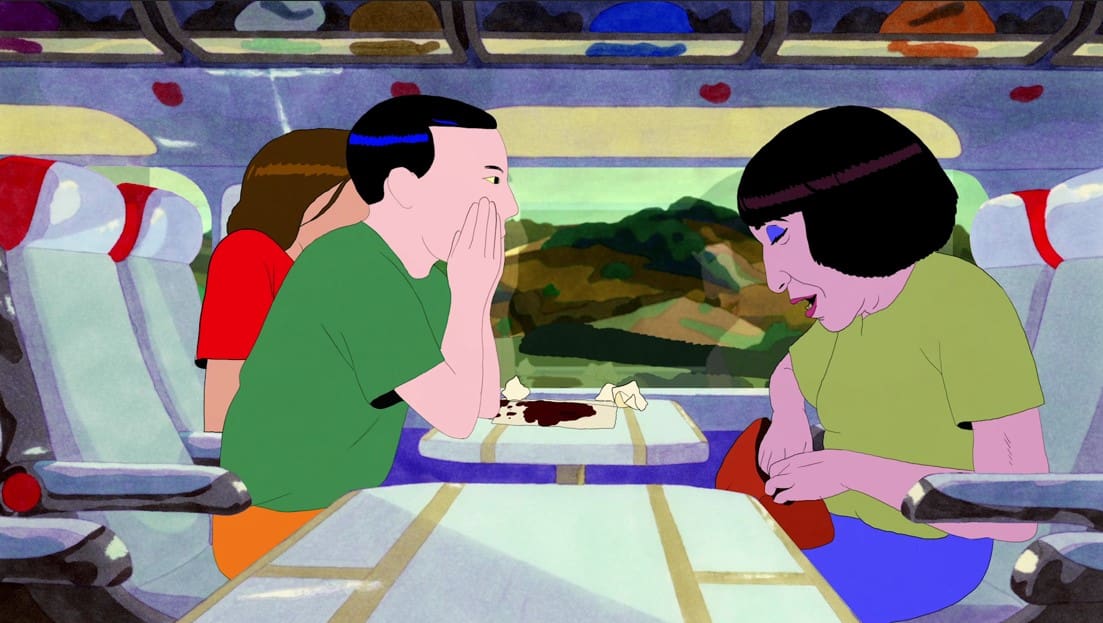
During a train journey, Ariel and Paul amuse themselves by drawing their greatest fears. Their game takes a darker turn when Gilda, a mysterious fellow passenger, joins the conversation with a very different understanding of fear. Drawing on his fascination with metaphysical questions and the supernatural, Charles moves from a familiar social encounter toward the unsettling possibility of a universe beyond human comprehension.
Cartoon Brew: What was it about this story or concept that connected with you and compelled you to direct the film?
Jocelyn Charles: First of all, I found horror to be a very fertile genre to explore through animation. I felt there were so many images and graphic situations I could play with. I had already experimented with horror in two music videos, and I felt that with a more complex story, I could take it much further.
I’m also fascinated by metaphysical questions and the supernatural. In the spirit of Lovecraft, I wanted to play with the immensity of the universe, an immensity so vast and unreasonable that it becomes almost unreal, and therefore terrifying. I later discovered that this was called cosmic horror, and that it was a genre in its own right, somewhere between science fiction and horror.
I think I may continue exploring subjects in that direction.
What did you learn through the experience of making this film, either production-wise, filmmaking-wise, creatively, or about the subject matter?
I learned an enormous amount while making this film. One of the main things was the importance of a character’s personality, and how much their individual traits can influence the story.
I think there is a tendency in animation to create characters that are either caricatural or somewhat flat. I wanted to create characters who, thanks in large part to the voice actors, could become unique, believable, and subtle. I really understood the importance of that during the voice recording sessions.
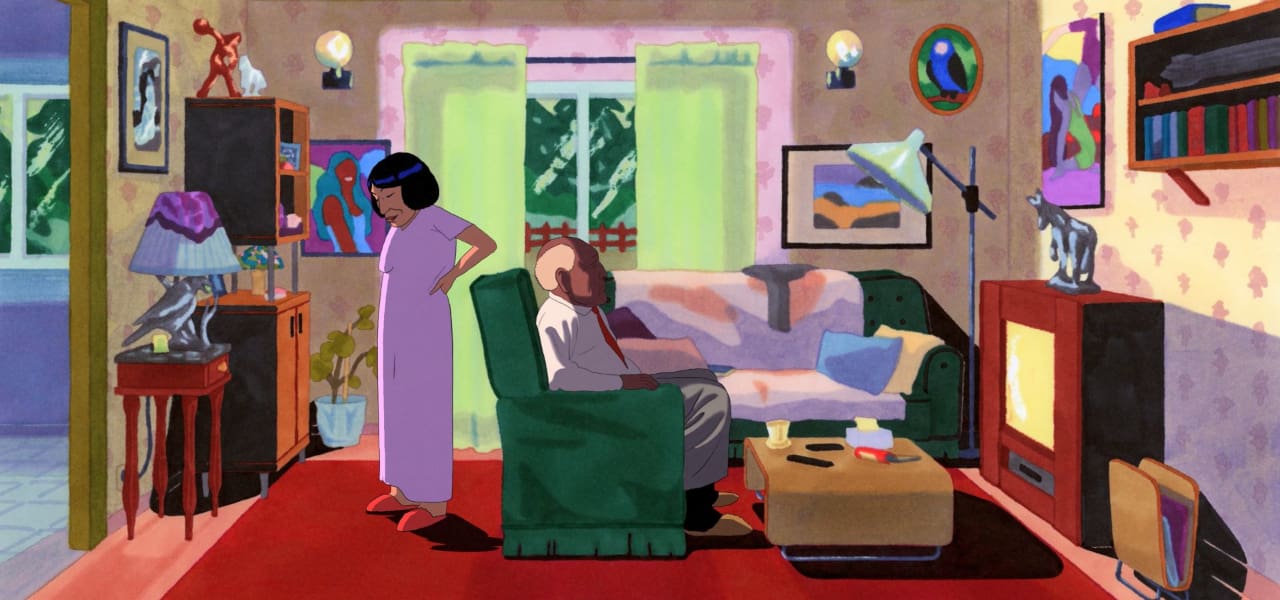
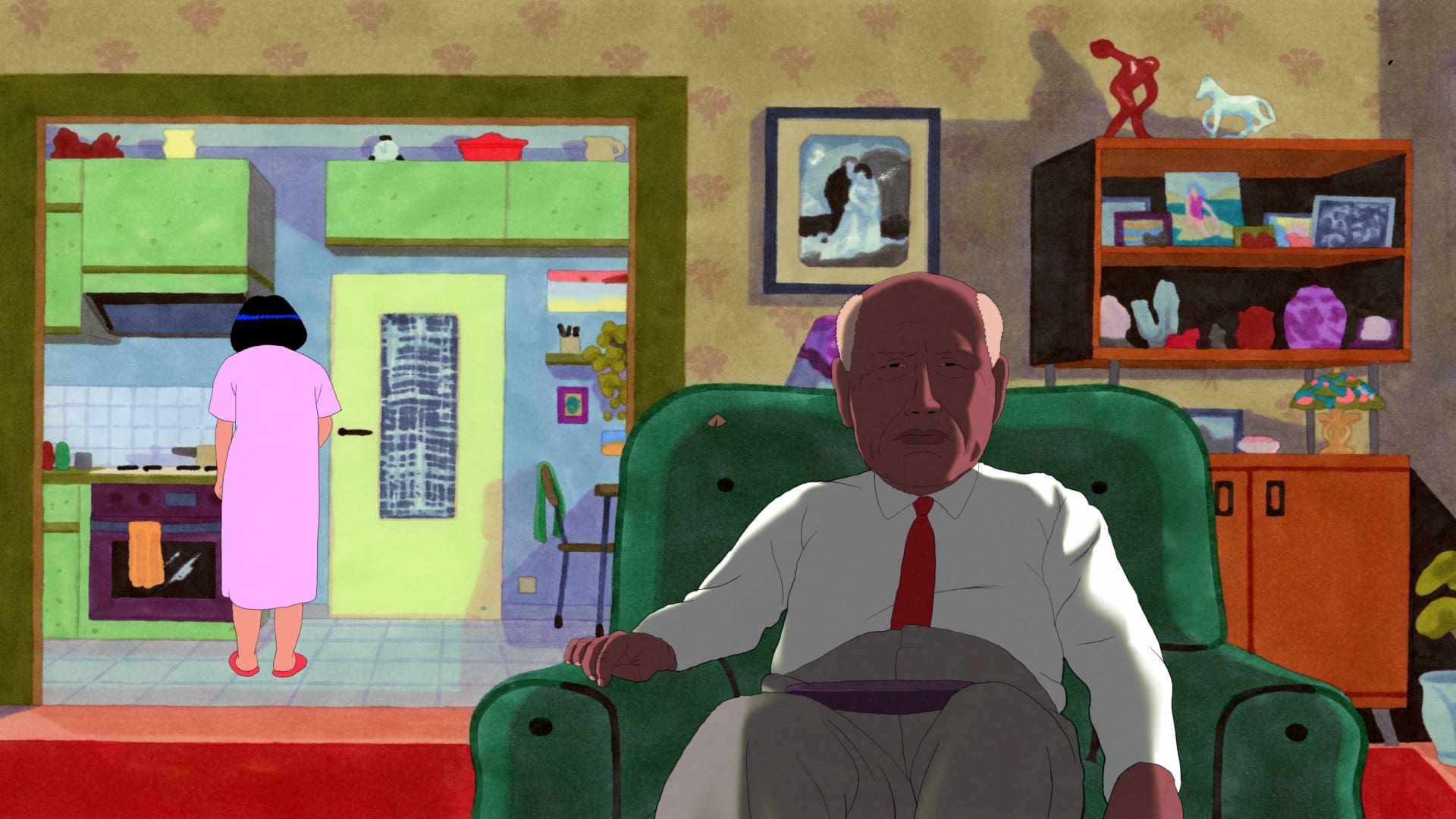
I also learned how important it is to have a production designer whose mind is completely focused on the set design, on putting together the furniture, the objects, and all the little details that make a world feel believable and alive.
And, above all, I discovered what kind of films I like making. I like taking the codes of live-action filmmaking as a starting point rather than trying to make a purely visual film. I want to take advantage of what animation can do to transcend certain emotions or certain scenes, and push them somewhere further than live action necessarily could.
Can you describe how you developed your visual approach to the film? Why did you settle on this style and technique?
I spent a long time hesitating between two approaches. One was to have the characters and the environments treated in the same way, in order to create a strong overall graphic coherence. The other was to make the backgrounds much more painterly, while keeping the characters much flatter, closer to the look of a more traditional cartoon.
In the end, I chose the second option. I wanted the backgrounds to have a felt-tip, hand-drawn quality, because I felt that the charm of traditional techniques could make the film more visually enjoyable than having everything follow the same graphic treatment, with flat areas of color like the characters.
I also wanted the colors to be saturated, so that the film would feel fun and visually pleasing, almost playful or even comical at times. For the same reason, I gave the characters slightly cartoonish proportions, with large heads. This allows us to focus more on their eyes and mouths rather than on their entire bodies.
All of these choices were also intended to create a contrast with the horrific nature of the story. I wanted the film to be visually inviting and playful while dealing with something much darker underneath.
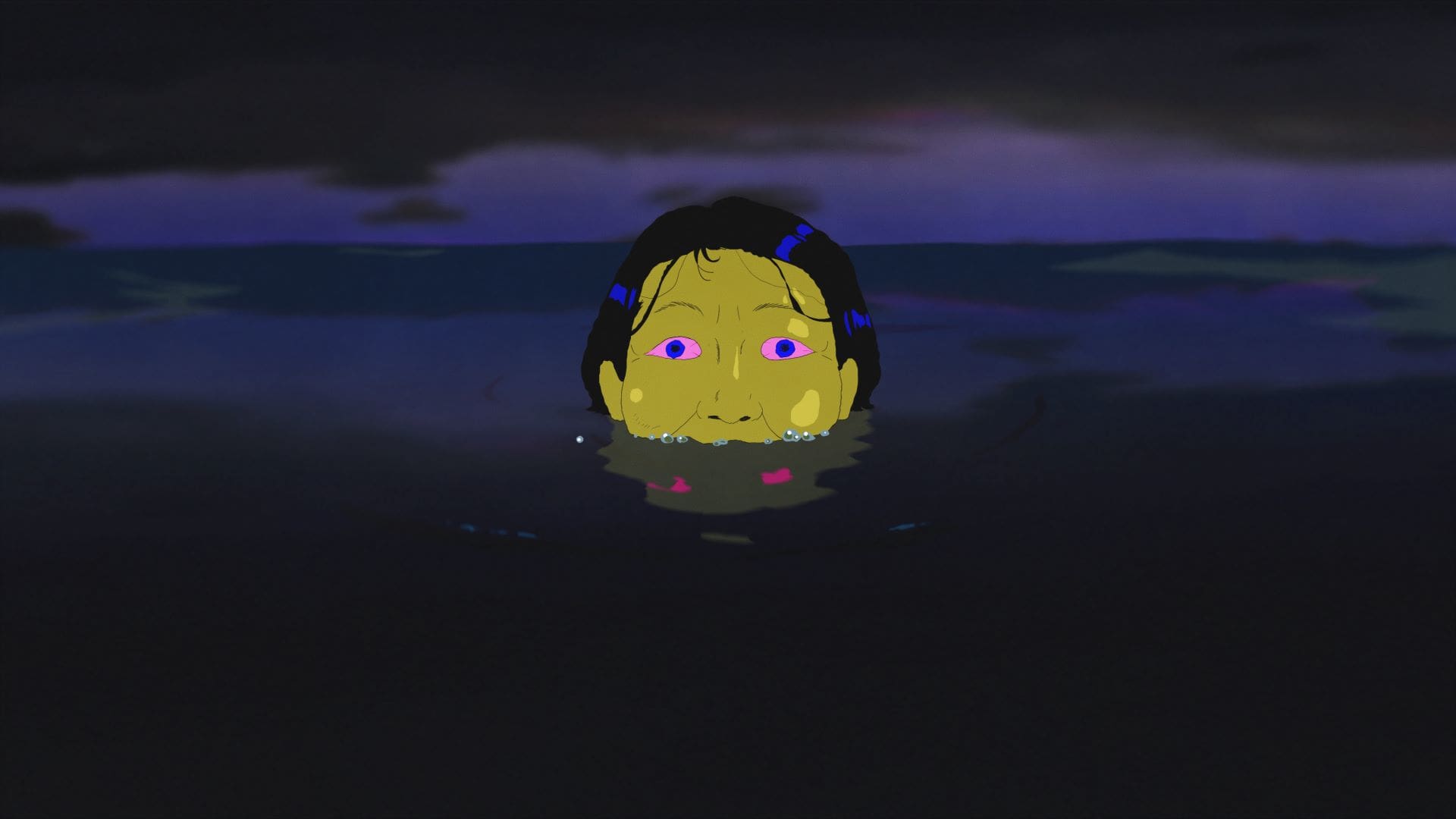
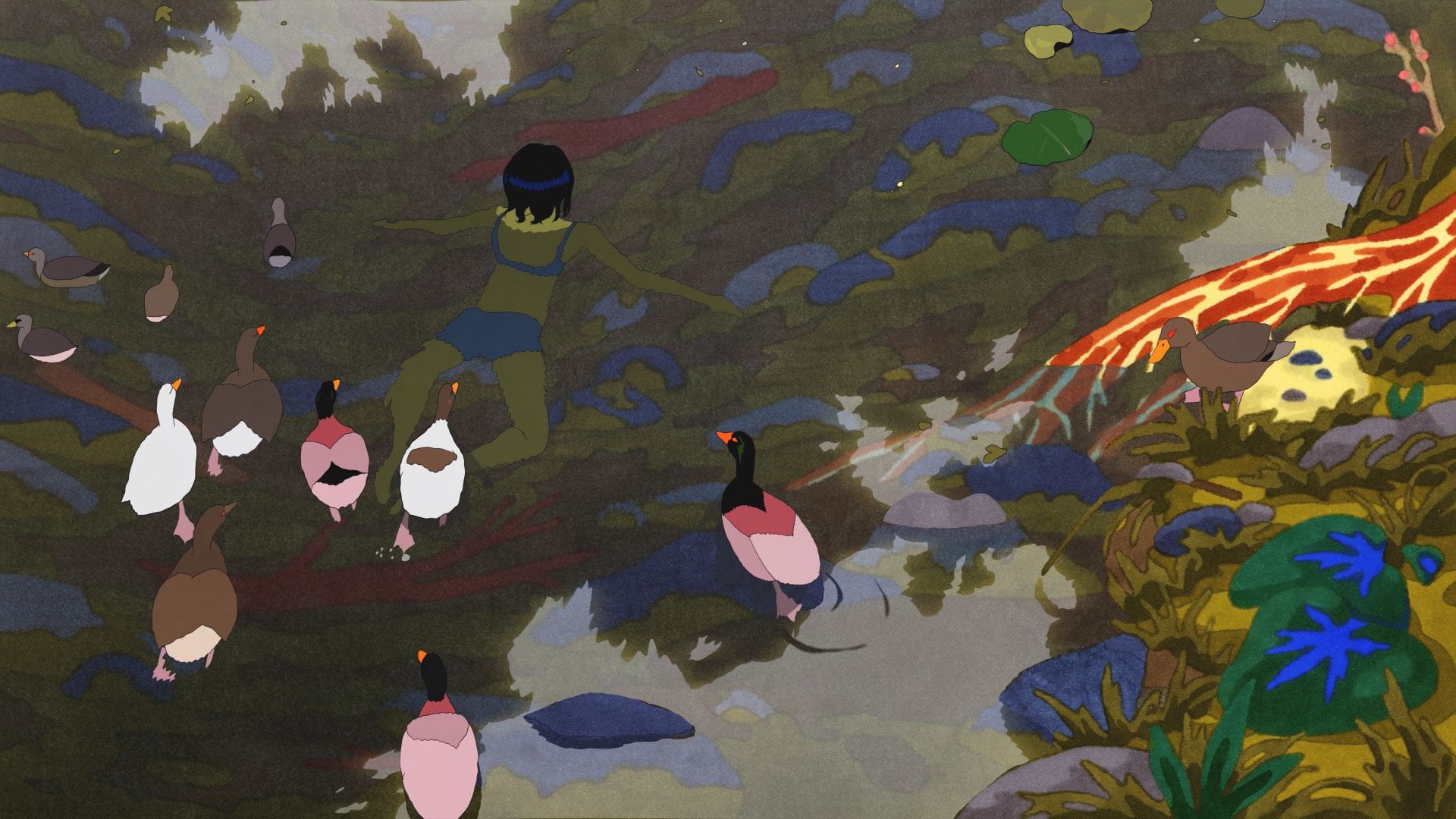
Why did you choose fear as the idea around which to build the film, and what interested you about exploring it through these three characters?
I think horror has often been treated as a kind of subgenre, almost as if it were something inherently cheesy or disposable. But over the past few years, with filmmakers like Jordan Peele, Ari Aster, or Julia Ducournau, horror has gained a different kind of recognition, and I was eager to explore what the genre could bring to animation.
Because, ultimately, animation can deal with any kind of story. It can be a crime film, a comedy, film noir, fantasy, science fiction, and so on. But horror allows you to add another color to that spectrum, another dimension of emotion.
And I think that is one of the strengths of animation: being able to play with that additional dimension and explore fear in a way that can be both visually striking and emotionally powerful.