.png)
2026 Oscars Short Film Contenders: ‘No Vacancy’ Director Miguel Rodrick
Stay informed with free updates
Sign up to get our news digest — delivered directly to your inbox twice a week.
Welcome to Cartoon Brew’s series of spotlights focusing on the animated shorts that have qualified for the 2026 Oscars. The films in this series have qualified through one of multiple routes: by winning an Oscar-qualifying award at a film festival, by exhibiting theatrically, or by winning a Student Academy Award.
Today’s short is No Vacancy from Colombia-born, Oakland-based director Miguel Rodrick. The short earned Oscar qualification after winning the Best U.S. Latino Animated Short Film at the Los Angeles Latino International Film Festival.
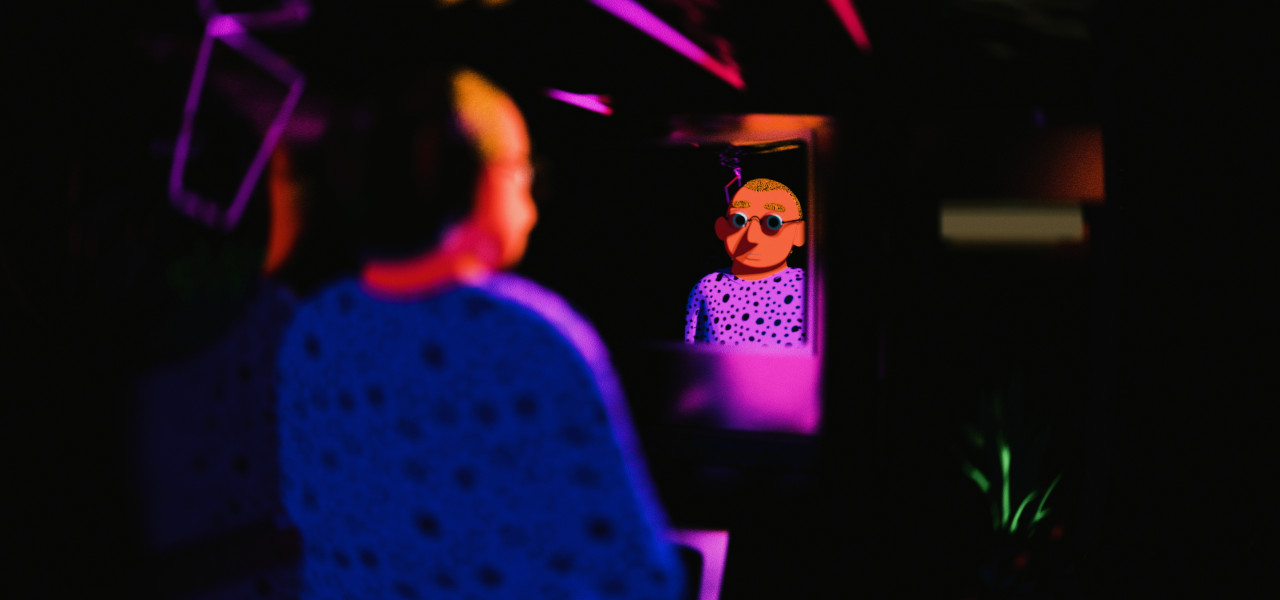
Bathed in retro, neon CGI, Rodrick’s film unfolds within the fractured psyche of Jack, whose pent-up guilt drives him toward a breakdown while holed up in a decaying roadside motel. Amid restless, delirious nights, he drifts through a haze of strange phone calls, intrusive visitors, haunting memories, and an ongoing battle with addiction.
Cartoon Brew: What was it about this story or concept that connected with you and compelled you to direct the film?

Miguel Rodrick: This short stems from the idea of trying to represent how thought works and unfolds, not what we think, but how our minds shift and flow from one thought to another. I’ve always been very curious about how similar or different our streams of consciousness might be, and in making this film, I attempt to represent my own. I don’t mean ideas or preferences, but rather how our inner monologue, imagery, and unsymbolized thoughts alternate moment to moment.
What did you learn through the experience of making this film, either production-wise, filmmaking-wise, creatively, or about the subject matter?
Apart from the technical knowledge I gained from doing every role (from directing to sound design) almost all by myself, there’s a lot you learn about your limits that I guess every indie filmmaker with little to no budget discovers while making a film. “You just have to keep going.” There’s a moment in the process that’s disheartening: when you’re 50% done and the other 50% is still black frames, and you think, “This is crazy, I’m exhausted, and I’m only halfway there.” But just keep pushing, because once you hit around 65%, the finish line starts to feel achievable.
Can you describe how you developed your visual approach to the film? Why did you settle on this style/technique?
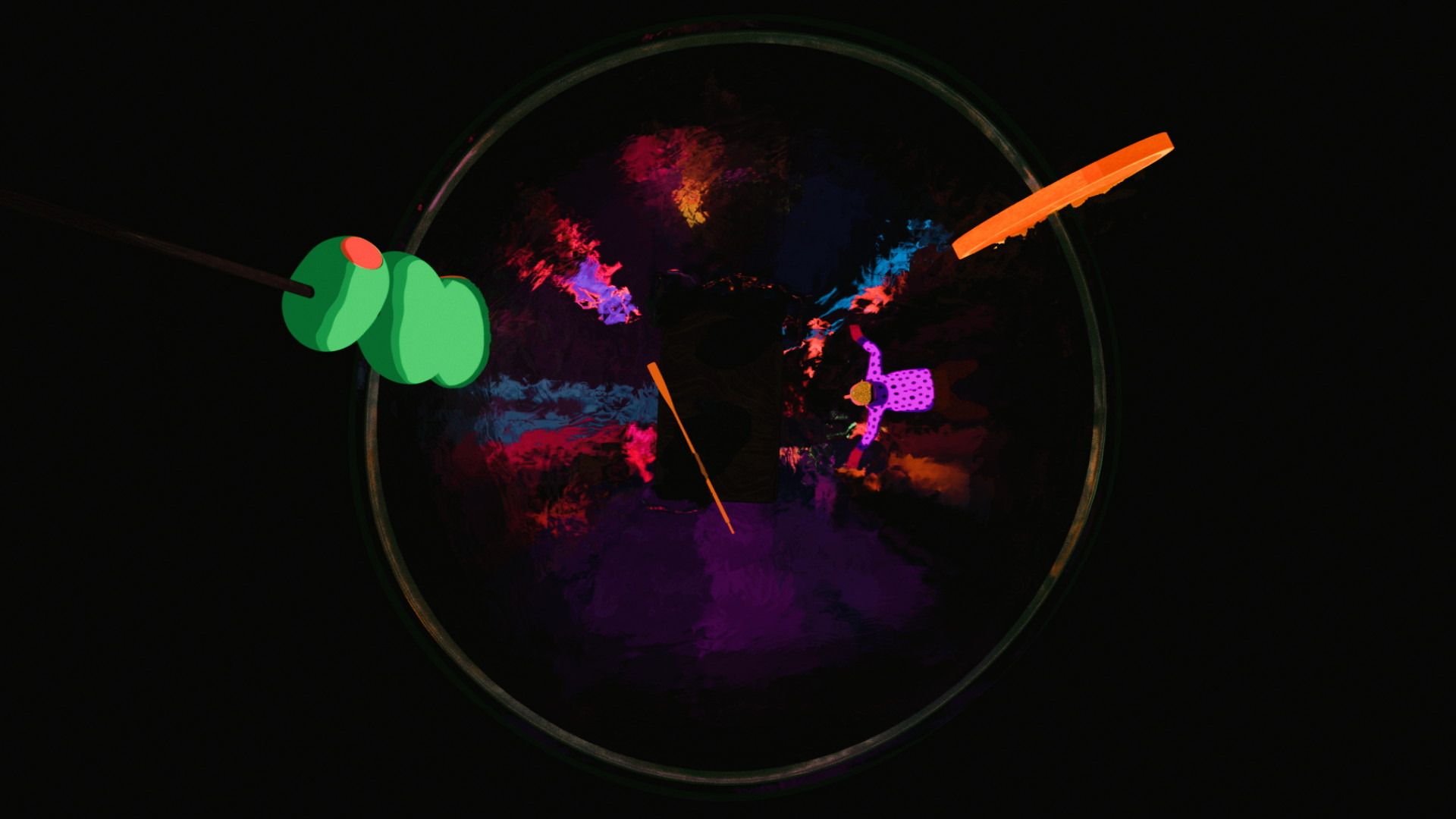
I originally started the project as a very simple 2D flat illustration with a reduced color palette, but in the second year, I started to get tired of it. The simplicity began to feel boring, and I felt like it was holding me back. So I began adding subtle metallic and glass textures to some objects, and the way the flat colors created gradients by reflecting off the metal and glass gave me a whole new toolset to work with.
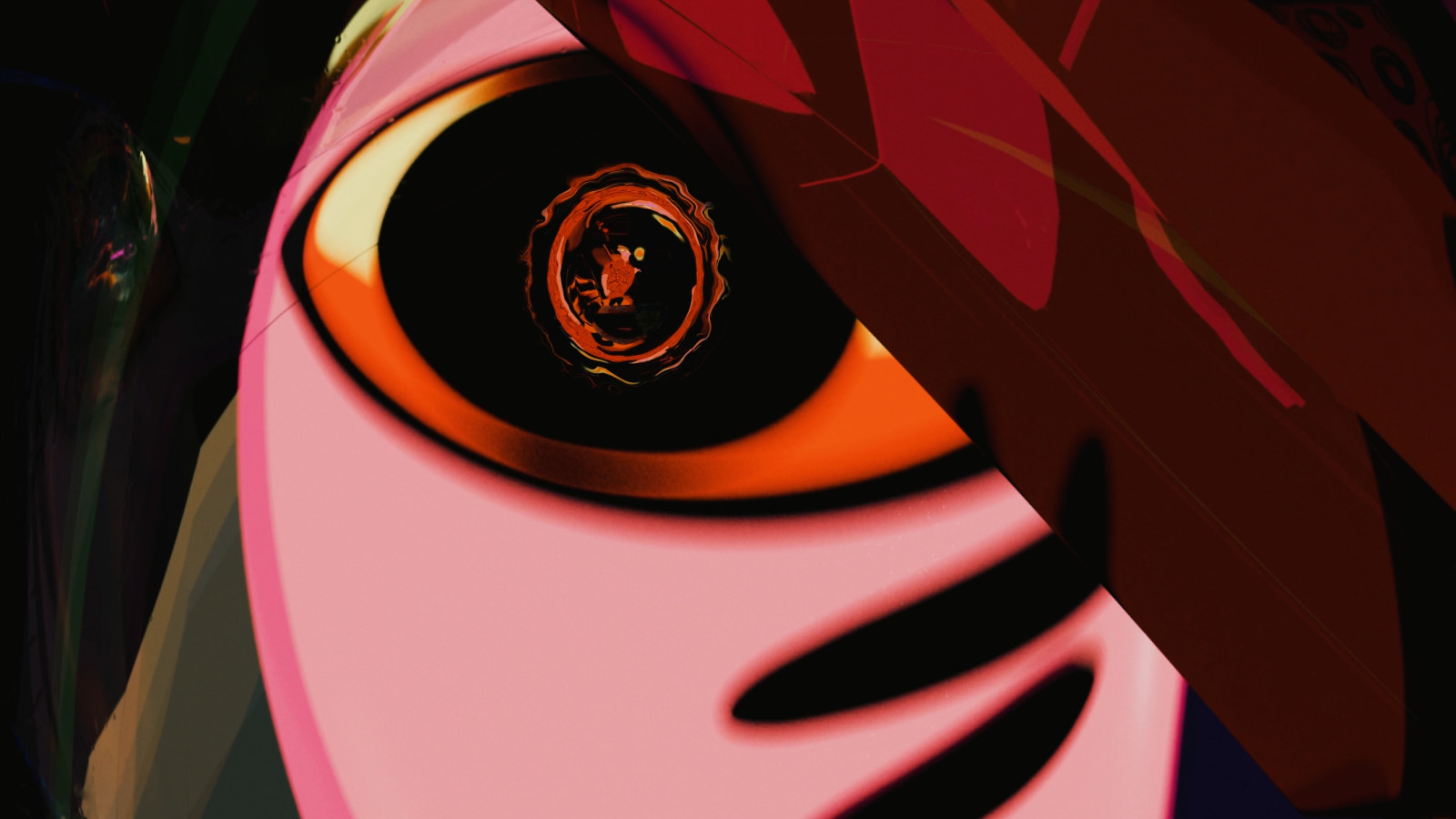
The uncanny way the film bounces around from shot to shot and replays certain scenes time and again, often from different angles, seems to mirror the way our minds hold on to regret and can often distort memory. Can you talk about how you edited the film to show what the main character was experiencing emotionally and psychologically?
Going back to the original idea of trying to represent how thought works and unfolds, I wanted the film to be one continuous shot with seamless transitions from one shot to the next, so it would mirror how thought feels (at least to me), morphing from one idea to another. But creating a seamless transition from shot to shot was taking me two to three times longer than animating the shots at the head and tail of the transition, so I kept seamless transitions only on key moments and used hard cuts when there wasn’t a strong narrative beat or an easy way to execute one.