.png)
2026 Oscars Short Film Contenders: ‘Transferable’ Directors Jacob Gardner And David Hubert
Stay informed with free updates
Sign up to get our news digest — delivered directly to your inbox twice a week.
Welcome to Cartoon Brew’s series of spotlights focusing on the animated shorts that have qualified for the 2026 Oscars. The films in this series have qualified through one of multiple routes: by winning an Oscar-qualifying award at a film festival, by exhibiting theatrically, or by winning a Student Academy Award.
Today’s short is Transferable from directors Jacob Gardner and David Hubert, produced by Agora Studio. The short screened at SIGGRAPH, Spark, and Hollyshorts, among several other key festivals, and earned its Oscar qualification through a theatrical release in San Francisco.
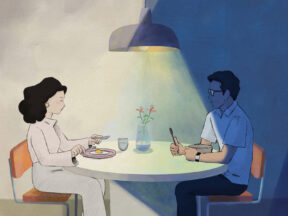
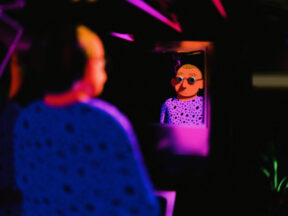
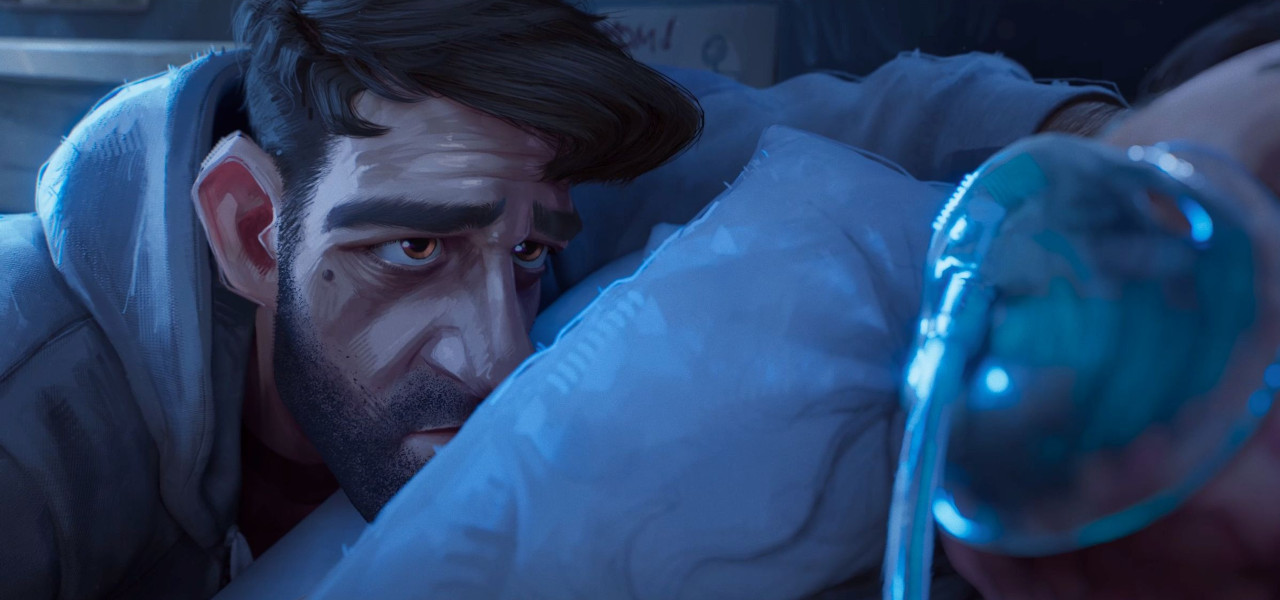
Transferable follows a devoted husband struggling with an impossible moral choice as an incurable illness threatens the life of the woman he loves. Told entirely without dialogue, the film relies on its stylized visual storytelling to explore themes of love, sacrifice, and identity. The animation blends cinematic CG rendering with moody lighting, rich textures, and expressive character work, creating a familiar yet foreign dystopian atmosphere.
Cartoon Brew: What was it about this story or concept that connected with you and compelled you to direct the film?

Jacob Gardner and David Hubert: We wanted a story we could truly connect with on a personal level, something meaningful and challenging enough to keep us motivated through production hell. We were drawn to universal themes like love and sacrifice, emotions everyone can relate to, even within a dystopian near-future world. Transferable story was a perfect creative sandbox to push our storytelling and animation skills, bringing complex emotions to life without relying on dialogue. In the end, it was as much a decision to challenge ourselves on a personal level as directors, while crafting a first original creation for Agora that the entire team would be proud of.
What did you learn through the experience of making this film, either production-wise, filmmaking-wise, creatively, or about the subject matter?

We learned so many things along the way. We learned to develop multiple areas of expertise and truly work as a team. We discovered new tools like Unreal Engine and explored novel ways to craft a visual style we’d never attempted before. We learned resilience when inspiration faded, and the value of letting go of details no one else would notice. We learned humility, too, particularly when seeking external feedback when the story and emotions weren’t really landing. As co-directors, we learned to trust each other’s strengths and push the project forward together, all the way to the finish line.
Can you describe how you developed your visual approach to the film? Why did you settle on this style/technique?
Our initial goal was simple: to achieve high animation and visual quality, with subtle yet deep performances, and a visual style that didn’t look traditionally CG. These ambitions reflected both Agora’s strengths and our own creative sensibilities. To reach that look, we developed a technique of painting over CG renders and mapping them in Nuke. It’s worth noting that we started Transferable before Spider-Verse, Arcane, and TMNT were released. While they later became key benchmarks for visual excellence, they weren’t part of our original inspiration.
This story is very self-contained, but hints at a much larger world and canon. What inspired the decision to use a fictional disease and a sort of lo-fi, sci-fi universe to tell your story? Would you like to delve further into this world?
The choice to tell our story in a near-future sci-fi setting, though inspired by personal events, was primarily to give us a broader creative sandbox. We’d love to further explore this world if given the opportunity, as the sickness serves as a vessel to explore universal human experiences like empathy, loss, and sacrifice. How do social and economic disparities shape different societies’ responses? How has the technology to manage the disease evolved across regions? What about the political and religious ramifications? There are countless stories waiting to be told in this universe.