.png)
2027 Oscars Short Film Contenders: ‘Acid City’ Directors Jack Wedge And Will Freudenheim
Stay informed with free updates
Sign up to get our news digest — delivered directly to your inbox twice a week.
Welcome to Cartoon Brew’s series of spotlights focusing on the animated shorts that have qualified for the 2027 Oscars. The films in this series have qualified through one of multiple routes: by winning an Oscar-qualifying award at a film festival, by exhibiting theatrically, or by winning a Student Academy Award.
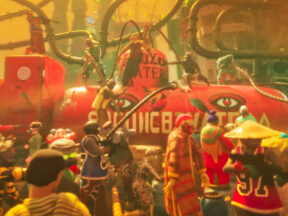
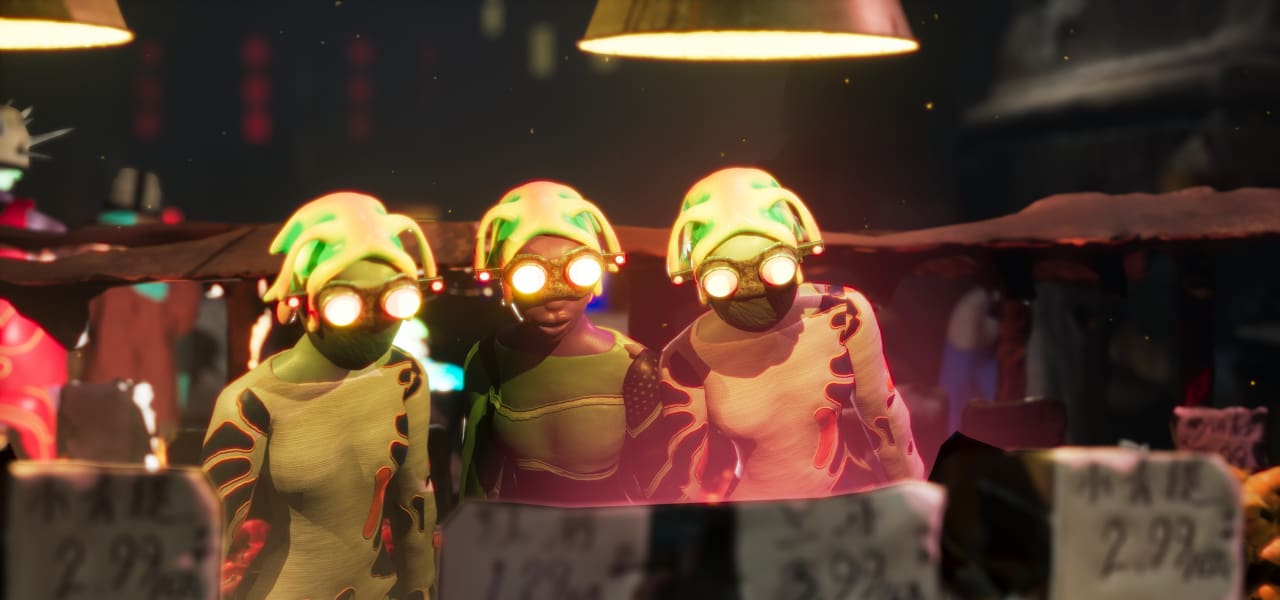
Today’s short is Jack Wedge and Will Freudenheim’s Acid City, a 12-and-a-half-minute U.S. film produced by Laser Days Studio and co-produced by Tom C J Brown. The CG short uses game-engine animation, motion capture, and real-life street recordings to build its strange, flooded world. It qualified for the upcoming Oscars by winning the Golden Dragon at the Krakow Film Festival.
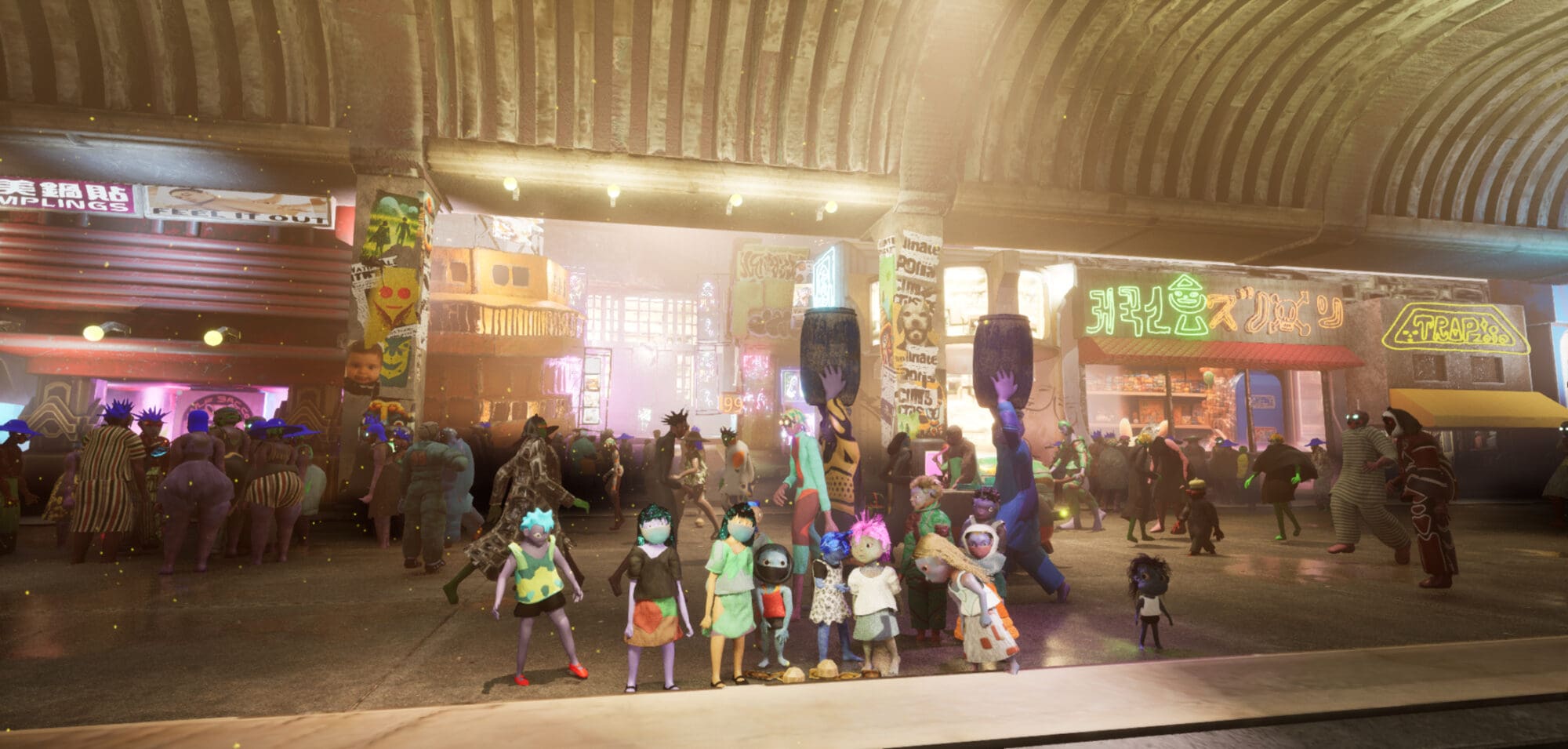
Set in a fictional city adrift in a vast acidic ocean, Acid City follows a documentary crew over the course of a day as it records life in the isolated community. The film mixes invented characters with real interviews recorded around New York City, including conversations with scientists, emergency responders, children, and people on the street, recontextualizing those voices inside a psychedelic sci-fi world shaped by extreme heat, water, and the climate crisis.
Cartoon Brew: What was it about this story or concept that connected with you and compelled you to direct the film?
Jack Wedge and Will Freudenheim: We’re both drawn to science fiction that builds a world in order to test an idea against everyday life. Climate change is often discussed through temperature curves, emissions targets, sea-level projections, but it is lived through much smaller things: a neighborhood changing, a water system failing, a season becoming unfamiliar. Acid City let us imagine how those pressures might accumulate across generations, not only into infrastructure and architecture, but into habits, rituals, jokes, memory, and a culture that has learned to live inside conditions we would currently describe as extreme.
What did you learn through the experience of making this film, either production-wise, filmmaking-wise, creatively, or about the subject matter?
We spent months making a much more conventional version of Acid City, with a central protagonist moving through the city, before realizing that structure was narrowing the film. Letting go of it was painful because we had already put so much work into that version. The documentary framework gave us another way to organize the story. Instead of asking every scene to push one character forward, we could let meaning accumulate across interviews, locations, routines, and bits of infrastructure. One crucial lesson was that stories about places can be built through the accumulation of many characters and places, rather than through a single character’s arc.
Can you describe how you developed your visual approach to the film? Why did you settle on this style and technique?
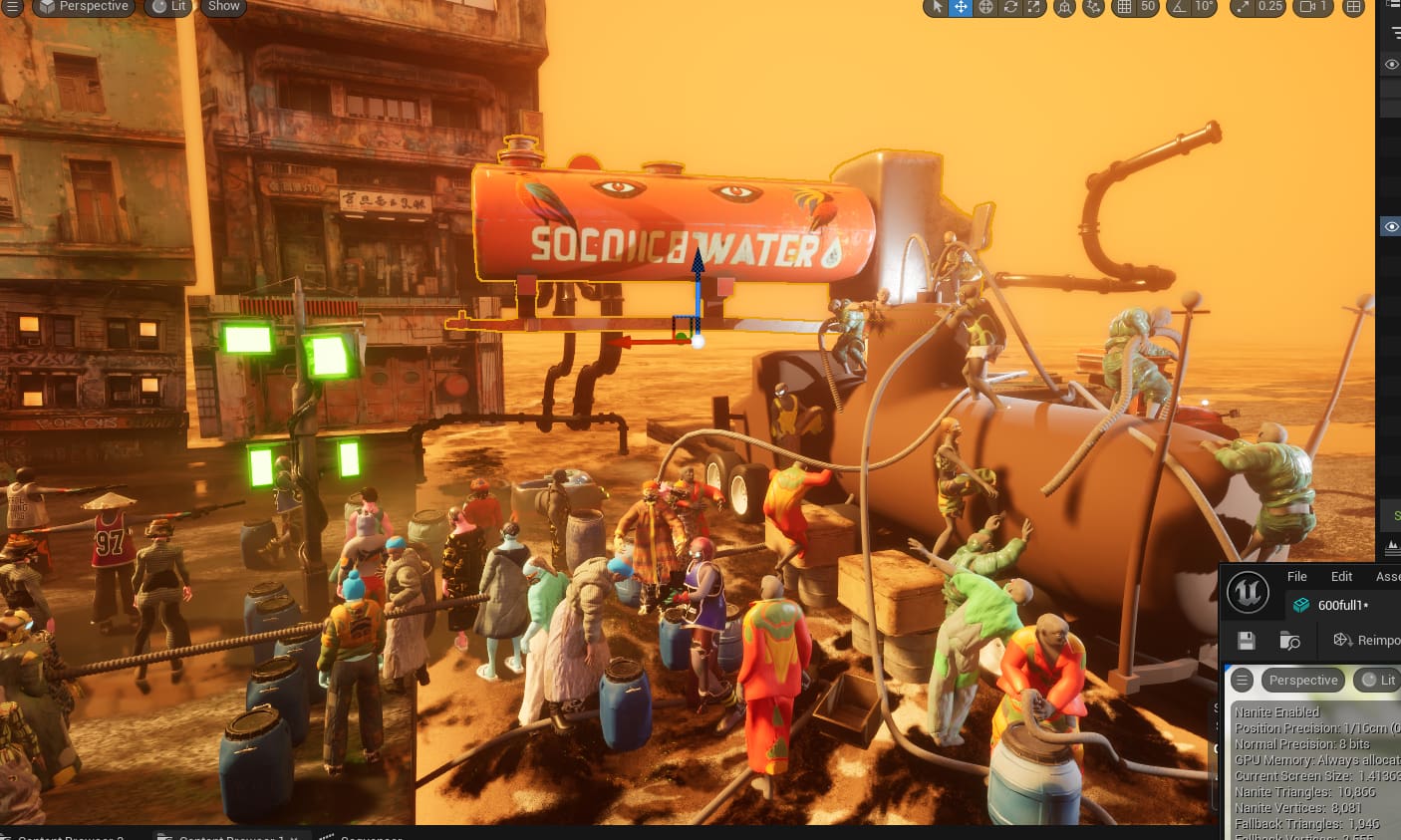
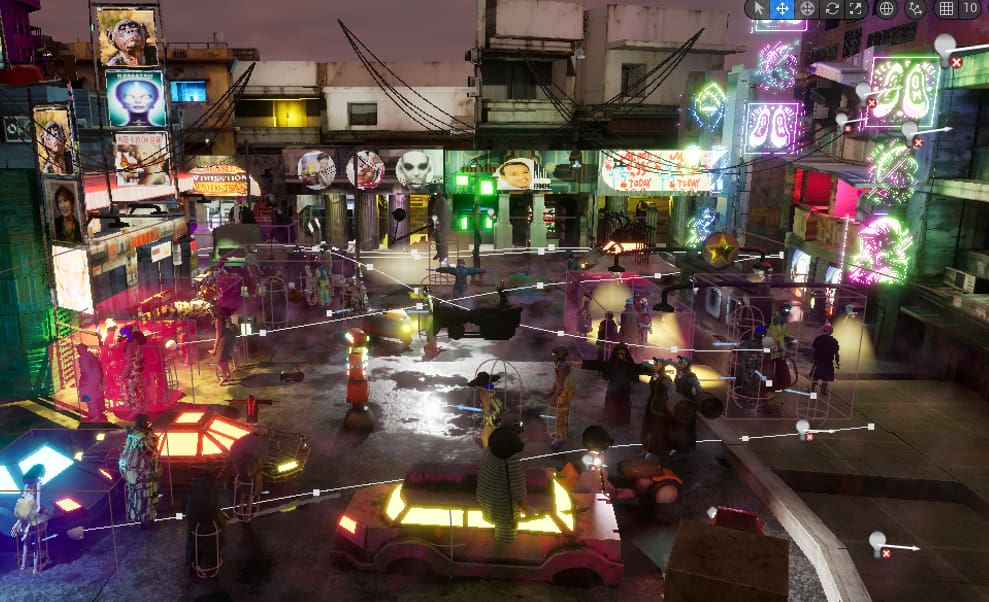
There were two of us trying to produce the visual density of an entire city, so the method became partly about how to multiply detail without flattening it. Jack would hand-build characters, architecture, signs, and pieces of infrastructure, while Will built procedural systems that could scatter, deform, recombine, and produce variations from them. This gave us environments much larger than any individual shot required. We could explore those environments almost as location scouts, finding places for scenes after much of the world had already been built, then going back in and reshaping things when a scene needed something more specific.
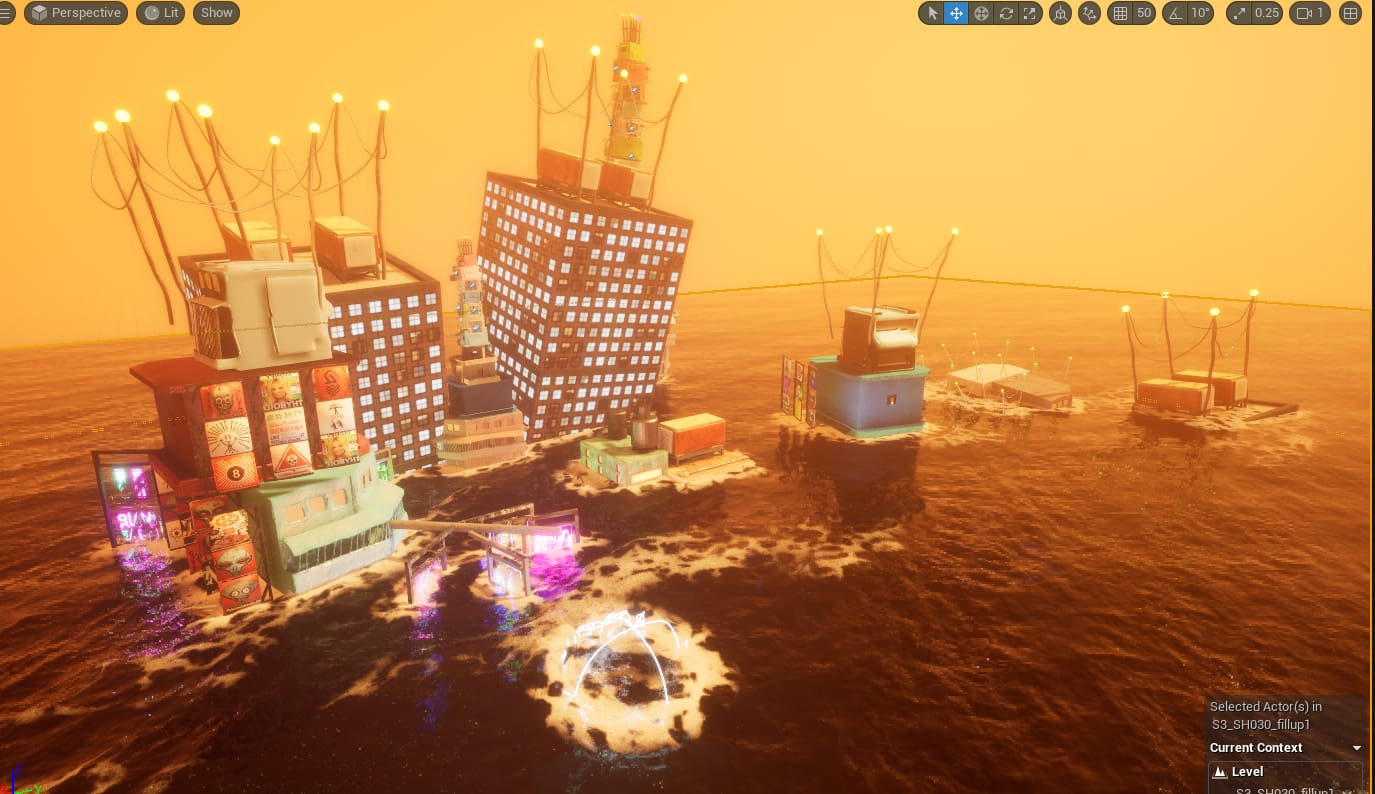
The film combines an invented future with interviews from real people. How did you approach building a fictional narrative around documentary testimony, and where did you draw the line between shaping those voices and preserving them?
Jack spent a lot of time around New York with a field recorder, approaching strangers on the street, talking to kids in parks, scientists, emergency workers. Acid City was being invented at the same time, so neither process was really illustrating the other. They developed in parallel. Things people said would change how we thought about characters, neighborhoods, or what daily life in the city might actually feel like. At other times, research or worldbuilding would send us back out looking for different conversations. We changed bodies, locations, and context quite radically, but tried to leave the actual meaning of what people said intact.